Everyone knows client revision requests can be a pain. They pile up, they’re vague, they sometimes feel like they’re changing the brief entirely. Most agencies react by just… doing the revisions. It feels like the only way forward.
But that’s not managing them. That’s just surviving them.
The hard truth? The real problem isn’t the requests themselves. It’s the lack of a systematic process to handle them. Without a client revision requests checklist, you’re stuck in a reactive loop, burning time and money on work that might not even be what the client *really* wants.
1. The 'Just One More Thing' Trap
You’ve delivered the design. It’s approved. Then the email lands: “Just one small tweak…” Sound familiar?
This isn’t about being difficult. It’s about scope. And scope creep is the silent killer of agency profitability. Each “small tweak” adds up, eroding margins and delaying future projects.
Why does this happen?
- Unclear initial brief.
- Lack of a formal sign-off at key stages.
- Client doesn’t fully grasp the implications of their requests.
- Agency doesn’t have a clear process for logging and evaluating requests.
Your client isn’t trying to sabotage you. They’re likely just trying to get the best possible outcome, and they might not realize the cost of their “small tweaks.” Your job is to guide them.
2. Building Your Client Revision Requests Checklist
A checklist isn’t just a piece of paper; it’s a communication tool. It sets expectations and defines boundaries. Here’s what yours needs:
Pre-Project Setup
Before any work begins, establish the ground rules. This is where your checklist starts.
- Define Scope Clearly: What exactly is included in this project phase? What’s out of scope?
- Establish Revision Rounds: How many rounds of revisions are included? Be specific (e.g., “two rounds of revisions on the final design concept”).
- Set Turnaround Times: How long do clients have to provide feedback? How long will you take to implement revisions?
- Clarify Communication Channels: Where should feedback be submitted? (Hint: Not a random Slack message or email thread).
- Define Approval Process: What constitutes final approval? (e.g., Signed-off PDF, email confirmation).
During the Project
When feedback comes in, your checklist becomes your guide.
- Log Every Request: Use a system (like Revue!) to capture all feedback. Date, time, who submitted it, and the request itself.
- Review Against Brief: Does the request align with the original project brief and objectives?
- Assess Scope Impact: Is this revision within the agreed-upon scope? Or is it a change request?
- Communicate Clearly: Respond to the client with your assessment. If it’s out of scope, explain why and provide a quote for the additional work.
- Assign and Track: If the revision is approved and within scope, assign it to a team member and track its progress.
- Seek Confirmation: After implementing a revision, get confirmation from the client that it meets their needs.
Post-Project
Even after delivery, the checklist has a role.
- Final Sign-off: Ensure all deliverables are formally signed off.
- Archive Feedback: Keep a record of all feedback and approvals for future reference.
3. The 'Feedback is Feedback' Fallacy
This is where many agencies trip up. They treat all feedback as equally valid and actionable. It’s not.
Feedback needs context and evaluation. A client might say, “I don’t like the blue.” Is that useful?
Not really.
A better request would be: “The blue feels too corporate. Could we explore options that feel more energetic and playful, perhaps in the green or orange family?”
Your checklist should prompt questions like:
- What is the *goal* of this revision?
- What specific problem is this revision trying to solve?
- Does this revision align with the project’s strategic objectives?
- Is this feedback from the primary decision-maker?
If you can’t answer these, push back politely. You’re not being difficult; you’re ensuring the project’s success.
4. Defining 'Approved'
What does “approved” actually mean in your agency? It’s not just a verbal “looks good.”
A formal approval process is critical. This is where your client revision requests checklist needs teeth.
- Written Confirmation: Email is the minimum. A dedicated approval button in a review tool is better.
- Decision-Maker Sign-off: Ensure the feedback is coming from the person with the authority to approve.
- Version Control: Clearly label versions (e.g., v1, v2, final). No more “the latest one” confusion.
- Scope Adherence Check: Before final sign-off, do one last check against the agreed scope.
When a client signs off, they’re agreeing that the work meets the objectives and is ready for delivery. This protects both parties.
5. Where Revue Fits In
Managing client revision requests effectively requires structure. Ad hoc email chains and scattered feedback documents are a recipe for disaster.
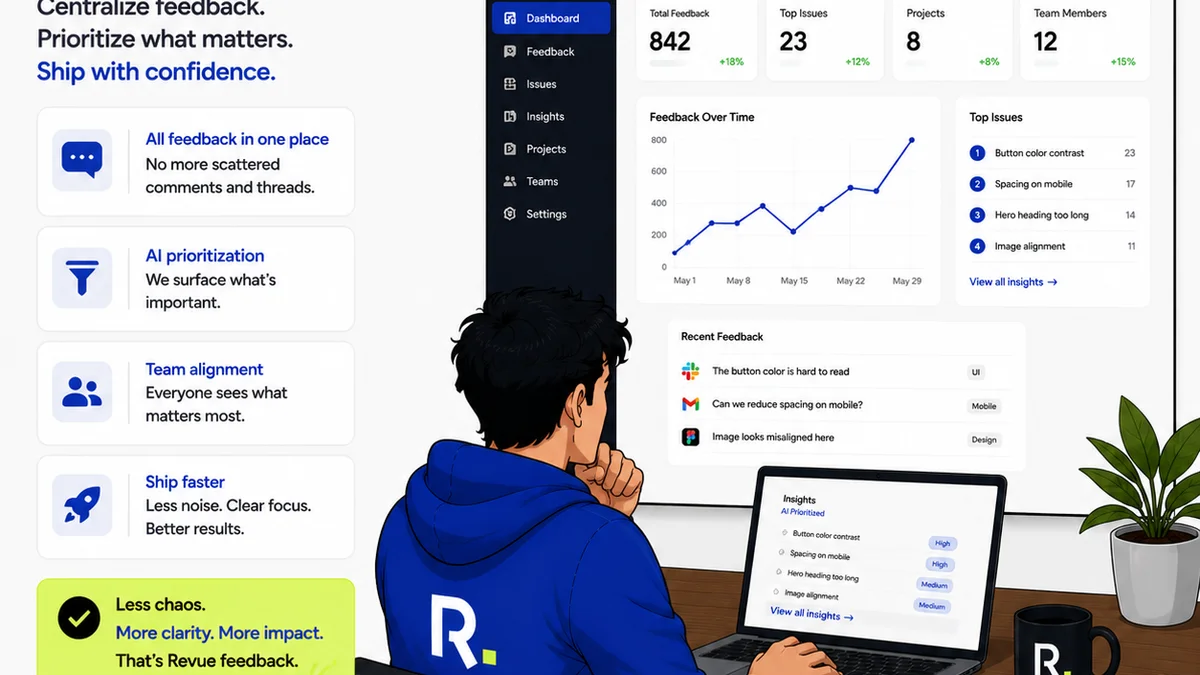
Revue is built for this. It centralizes all client feedback, revisions, and approvals in one place.
- Centralized Feedback: All comments and markups live on the asset itself. No more hunting through emails.
- Clear Revision Tracking: See every version, every comment, and every approval history in one dashboard.
- Streamlined Approvals: Clients can approve or request revisions directly within the platform, with clear audit trails.
- Scope Management: By having a single source of truth for feedback and approvals, it’s easier to identify when requests go beyond the agreed scope.
This visibility turns a chaotic process into a manageable workflow. It means your team spends less time deciphering feedback and more time creating great work.
6. The Cost of 'Free' Revisions
Every hour spent on out-of-scope revisions is an hour not spent on billable work, business development, or team training. It’s a direct hit to your bottom line.
Your client revision requests checklist is your first line of defense against this.
It forces a conversation about value. It clarifies expectations. It protects your profitability.
Think of it as an investment in efficiency and sanity.
Final Thought
Are you managing client feedback, or is it managing you? Implementing a structured client revision requests checklist isn't about adding bureaucracy; it's about building a more predictable, profitable, and less stressful agency. What’s the first step you’ll take to tighten up your revision process today?
Frequently asked questions
What is the main benefit of a client revision requests checklist?
The primary benefit is transforming chaotic, time-consuming feedback into a structured, manageable process. This prevents scope creep, protects agency profitability, reduces stress, and ensures clearer communication with clients.
How do I handle feedback that is outside the agreed scope?
Your checklist should prompt you to identify out-of-scope requests. Politely communicate this to the client, explain why it's outside the original scope, and provide a clear quote for the additional work required. This maintains transparency and protects your project margins.
What constitutes a 'formal approval' in the revision process?
Formal approval typically means written confirmation from the designated decision-maker. This could be an email, a signed document, or an approval click within a project management tool. It signifies agreement that the work meets the project objectives and is ready for delivery.
How often should revision rounds be defined?
Revision rounds should be clearly defined during the initial project scoping phase, before any work begins. Specify the number of revision rounds included in the project fee and the process for handling additional rounds, which usually involves a change request and additional cost.