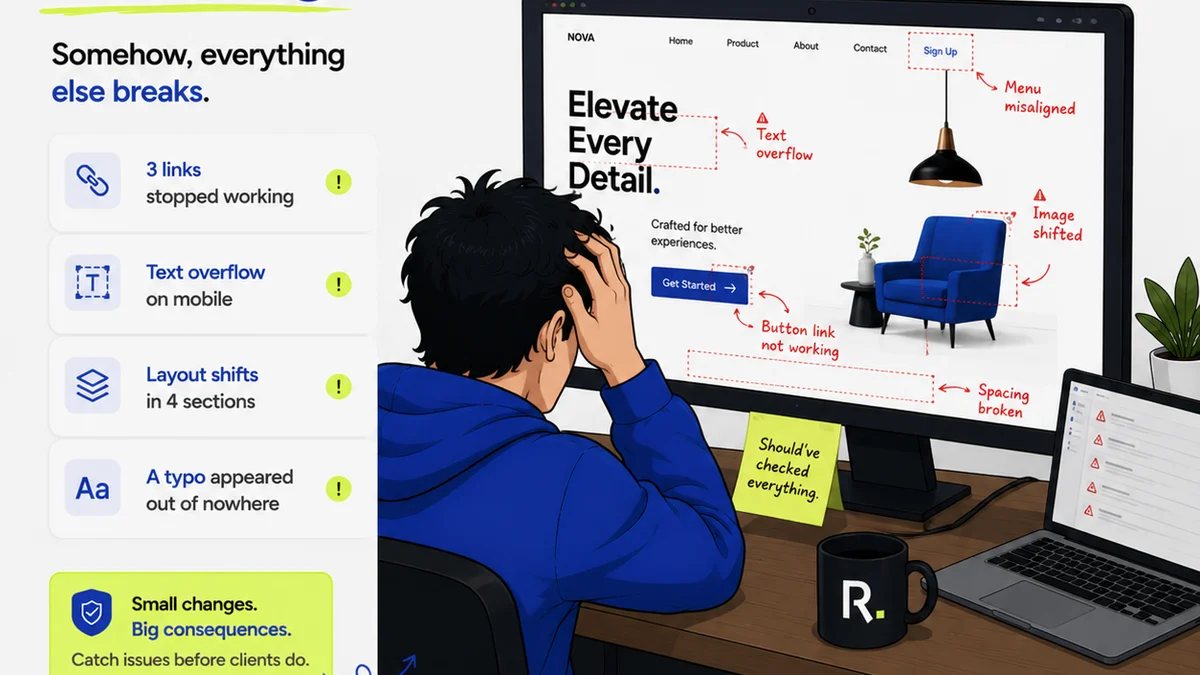
Everyone assumes client revision requests are just part of the job. That endless back-and-forth is a necessary evil. That you just have to grin and bear it.
None of that is wrong. But it’s incomplete.
The hard truth is that the *way* most agencies handle client revisions is broken. It’s not just inefficient; it’s actively eroding your team’s productivity, creativity, and morale.
1. The Assumption: Revisions = Scope Creep
It’s easy to see every change request as a threat. A sign the client doesn’t know what they want, or worse, is trying to get more than they paid for. This often leads to a defensive posture, where feedback is grudgingly accepted or outright resisted.
This mindset is a trap.
While scope creep is a real problem, not all revision requests signal it. Many are simply a natural part of the creative process. The client is reacting to the work, refining their vision, or discovering new needs as the project progresses. Your job isn't to shut down feedback; it's to manage it effectively.
The Real Problem: Lack of Clarity and Process
The real issue isn't the *volume* of revisions, but the *chaos* surrounding them. When feedback is scattered across emails, Slack messages, and random meeting notes, it becomes impossible to track, prioritize, and implement efficiently.
This is where the assumption that revisions equal scope creep really bites you. Without a clear system, you can’t easily distinguish between a minor tweak and a major project shift. Everything feels like a battle.
2. The Deeper Truth: Revisions Are a Feature, Not a Bug
Think about it: clients hire you for your expertise. They expect you to guide them. If the first draft is *exactly* what they envisioned, that might mean you didn’t understand their needs well enough in the first place.
Revisions are how you and the client arrive at the *best* possible outcome, together. They are an opportunity for collaboration and refinement.
But this only works if you have the right infrastructure.
The Cost of Unmanaged Revisions
- Wasted Time: Digging through email chains, deciphering vague feedback, redoing work that was already approved.
- Team Burnout: Constant context switching, frustration with unclear direction, feeling like you’re always putting out fires.
- Eroded Client Relationships: Misunderstandings, missed deadlines, and the perception of inefficiency can damage trust.
- Compromised Quality: Rushed revisions, missed details, and a lack of clear approval stages can lead to subpar final deliverables.
You’re not just losing hours; you’re losing momentum and potentially damaging your reputation.
3. Symptoms of Revision Chaos
How do you know if your revision process is costing you more than it should?
- Feedback arrives in a dozen different places: email, Slack, Google Docs comments, Zoom call notes, carrier pigeon.
- You spend more time *managing* feedback than *acting* on it.
Frequently asked questions
What's the best way to centralize client feedback?
Use a dedicated platform where all feedback, comments, and annotations can be logged in one place, tied directly to the creative asset being reviewed. This eliminates searching through scattered emails and messages.
How can I prevent scope creep during revisions?
Establish a clear revision process upfront, including the number of revision rounds included in the project scope. Use a system that tracks all feedback and makes it easy to identify requests that fall outside the original scope for discussion and potential change orders.
How do I handle vague or conflicting client feedback?
When feedback is unclear, ask clarifying questions immediately. If feedback from different stakeholders conflicts, facilitate a conversation between them or with the primary point of contact to get a unified direction before proceeding with revisions.
What are the key benefits of a structured revision process?
A structured process leads to faster turnaround times, reduced team frustration, clearer communication with clients, improved final deliverables, and a stronger client-agency relationship built on efficiency and trust.