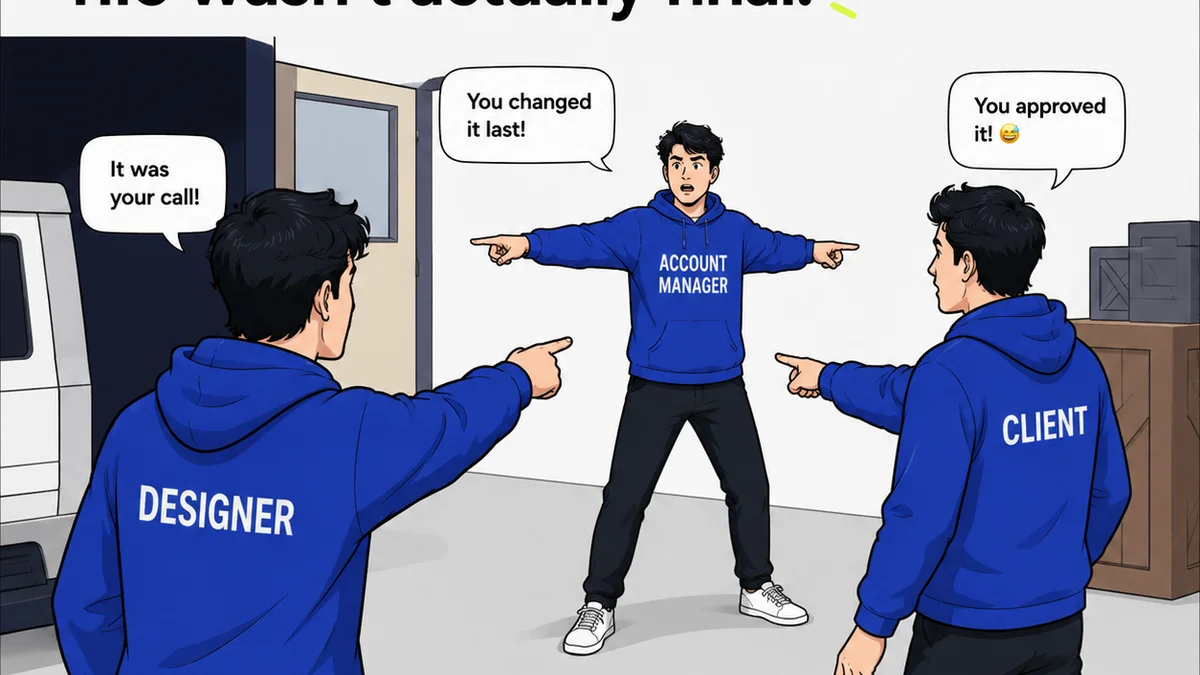
Everyone thinks client revision requests software is all about tracking changes. Tick a box, get a notification, move on. That’s the surface level.
But that’s not the whole story. It’s not just about the *request*. It’s about the entire process.
The hard truth? Most revision software focuses on the wrong thing. They’re built for the symptom, not the disease. The disease is a broken, inefficient feedback loop that bleeds agencies dry.
Finding the right client revision requests software means looking beyond the basic annotation tools. It’s about building a system that prevents problems before they start.
1. The Problem: Feedback Chaos Is a Symptom
Your inbox is a warzone. Slack channels are a black hole. Client feedback arrives in dribs and drabs, often contradictory, sometimes nonsensical. You spend more time deciphering notes than designing.
This isn't just annoying. It’s expensive. Every hour spent chasing clarification, reconciling conflicting notes, or redoing work because feedback was missed is money out the door. It erodes your margins and your team’s morale.
Common assumptions about solving this:
- We just need better project management.
- We need clearer briefs.
- We need to train the client.
None of that is wrong. But it’s incomplete. These are all *preventative* measures. What happens when the feedback *does* come in, messy and unstructured?
That’s where effective client revision requests software becomes critical. Not just as a repository, but as a control system.
2. The Deeper Truth: Control Over Chaos
The real value of revision software isn't in *collecting* feedback. It’s in *controlling* the flow of feedback and ensuring accountability.
Think about it. What’s the goal?
- To get clear, actionable feedback.
- To ensure all feedback is seen and addressed.
- To prevent scope creep disguised as revisions.
- To speed up the approval process.
- To maintain a clear audit trail.
If your current tools don’t actively facilitate these, you’re just organizing the mess.
The right software transforms revision management from a reactive firefighting exercise into a proactive, structured process. It’s about building guardrails.
3. What to Look For: Core Functionality
When evaluating client revision requests software, focus on these critical areas:
Centralized Feedback Hub
No more hunting across emails, chat logs, and random documents. All feedback for a specific asset or project phase must live in one place.
- Visual Annotation: Direct markup on images, PDFs, videos, and web pages.
- Contextual Comments: Comments tied to specific elements, not just general notes.
- Version Control: Clear tracking of which version feedback applies to.
This prevents the
Frequently asked questions
What's the biggest mistake agencies make when choosing revision software?
Focusing solely on annotation features and ignoring the need for centralized communication, clear version control, and accountability tracking. The best software manages the entire feedback loop, not just the markup.
How can revision software help prevent scope creep?
By providing a clear, auditable trail of all feedback and approvals. When feedback falls outside the original scope, it's immediately visible. This allows for a clear discussion about additional time and budget requirements.
Is client revision software only for visual assets?
No. While visual annotation is common, robust software can handle feedback on documents, code, and even general project status updates, consolidating all project communication.
How does centralized feedback improve team efficiency?
It eliminates time wasted searching for scattered feedback across multiple platforms. Everyone works from the same, up-to-date information, reducing confusion and the need for constant clarification.