Everyone knows that getting client feedback and approvals is crucial for creative projects. It’s the gatekeeper to launch, the final nod before delivery. But if you think that’s all there is to it, you’re missing the real story.
The hard truth? Most agencies fumble content approval. Not because they don’t get feedback, but because they don’t manage it effectively. This isn't just about hitting deadlines; it’s about protecting your creative output, your margins, and your sanity.
1. Treating Feedback as a Monolith
You get a PDF back. It’s covered in red lines, scribbled notes, and maybe a few emojis. It feels like a single document, right? That’s the first mistake. Feedback is rarely a monolith. It’s usually a messy pile of opinions, edits, and sometimes, outright misunderstandings.
This lack of structure leads to chaos. You don’t know who said what, why they said it, or which comments actually matter. Was that note from the marketing director or the intern who just happened to see the screen?
The Myth of the 'Final' Feedback Round
Many agencies operate with a false sense of security around 'final' feedback. They expect one last pass to catch everything. Reality bites. There are almost always follow-up questions, minor tweaks, or new ideas that pop up even after what was supposed to be the end.
This expectation sets you up for scope creep and frustration. It’s better to assume that 'final' is a suggestion, not a decree.
Deconstructing the Feedback Mess
- Identify the Source: Always know who is providing each piece of feedback.
- Categorize Comments: Are they strategic, aesthetic, technical, or simply personal preference?
- Prioritize Edits: Not all feedback is created equal. Differentiate must-haves from nice-to-haves.
- Seek Clarification: Ambiguous comments need a follow-up. Don't guess.
Ignoring these layers turns feedback into noise. Structured feedback, on the other hand, becomes actionable intelligence.
2. The Email Black Hole of Approvals
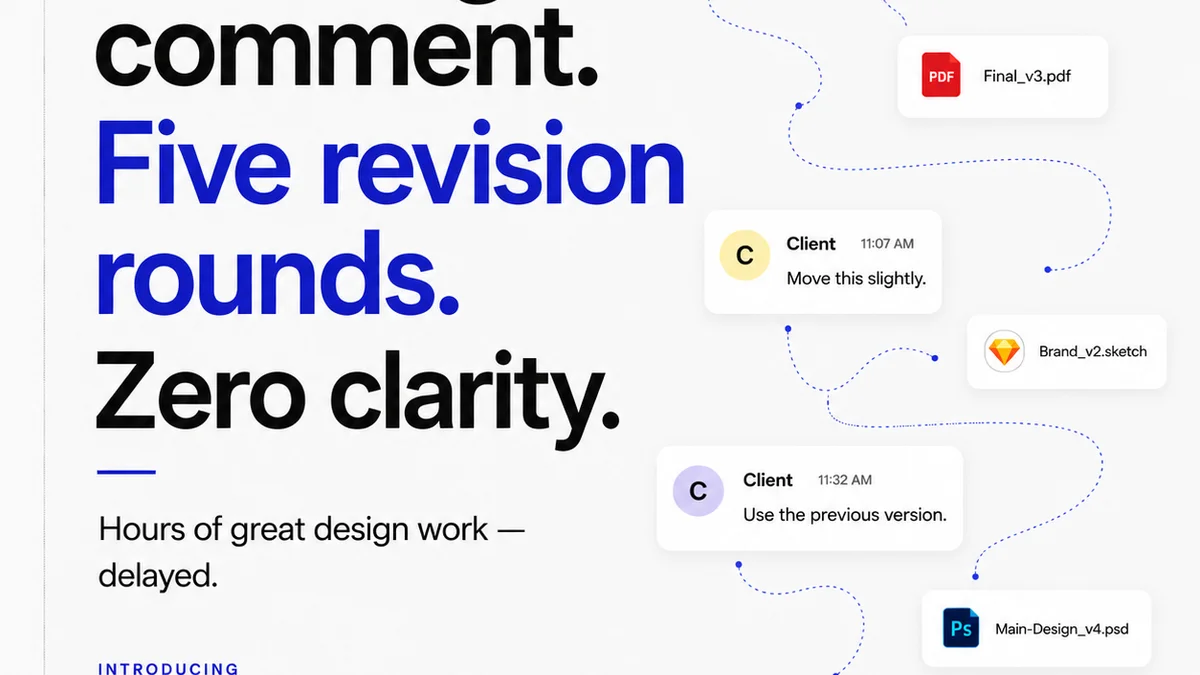
Email. It’s the default. And it’s a disaster for managing approvals. You send a draft. The client replies. Someone else replies to that. Attachments get versioned incorrectly. Important decisions get buried under a mountain of CC’d emails.
This is where projects go to die. Important instructions vanish. Approvals are missed. And suddenly, you’re weeks behind schedule because someone didn’t see the 'approved' email buried three pages down.
Why Email Fails Creatives
- Lack of Centralization: Feedback is scattered across multiple threads and inboxes.
- Version Control Nightmares: Which PDF is the *actual* latest version?
- No Visual Context: Comments are often detached from the specific design element they refer to.
- Delayed Responses: Waiting for email replies can halt entire workflows.
This isn’t just inefficient; it’s a recipe for miscommunication and costly errors. You’re operating blind.
The Illusion of 'Sent for Approval'
Simply sending a file via email and marking it 'sent for approval' is not a process. It's a hope and a prayer.
You need a system that tracks the status of each review, flags outstanding items, and provides a clear audit trail. Without it, you’re relying on memory and luck.
3. The 'Everyone Gets a Say' Trap
This is a classic agency pitfall, especially when dealing with larger clients or internal teams. The assumption is that if a stakeholder is involved, their opinion must be heard and acted upon. This sounds democratic. It’s usually destructive.
When every single person who glances at a screen has the power to dictate changes, your creative vision gets diluted into a bland, committee-designed mess. The result is often a compromise that satisfies no one and weakens the overall impact.
Who Owns the Decision?
The core problem here is a lack of clear ownership and decision-making authority. If the marketing manager’s feedback contradicts the brand manager’s, who wins? If there’s no designated final approver, you’re doomed.
This often stems from a failure to establish roles and responsibilities at the project's outset. You need to know, upfront, who has the final say.
Navigating Stakeholder Input
- Define Roles Early: Clearly identify decision-makers and reviewers.
- Establish a Feedback Hierarchy: Not all input is equal. Prioritize based on role and expertise.
- Facilitate Focused Reviews: Instead of open-door feedback, schedule specific review sessions with key stakeholders.
- Push Back Strategically: If feedback undermines the strategy or brief, have the confidence to explain why and propose alternatives.
Protecting the creative integrity of the work requires strong leadership in managing feedback, not just passively collecting it.
4. Ignoring the 'Quality Check' Phase
You’ve got the final sign-off. Hooray! Time to export and deliver. But wait. Did anyone actually check for typos? Is the image resolution correct? Does the interactive element work on the target device?
Skipping a dedicated quality assurance (QA) or proofreading step before final delivery is a massive mistake. This is the last line of defense against embarrassing errors that undermine your agency's professionalism.
The Cost of Skipping QA
A stray comma or a broken link might seem minor. But they erode client confidence. They suggest a lack of attention to detail. And in some cases, like accessibility issues, they can have significant legal and financial repercussions.
Think about it: You’ve spent weeks crafting a brilliant campaign, only for it to launch with a glaring typo on the homepage. It’s a preventable disaster.
Implementing a Robust QA Process
- Dedicated Proofreaders: Assign specific individuals to meticulously check copy for errors.
- Technical Checks: Verify functionality across browsers, devices, and platforms.
- Asset Verification: Ensure all images, videos, and fonts are correctly sized, formatted, and licensed.
- Accessibility Audit: Confirm compliance with standards like WCAG to ensure usability for all.
- Final Stakeholder Walk-Through: A brief, focused review of the *final* approved version before it goes live.
A strong QA process isn't about finding fault; it's about ensuring excellence and protecting your reputation.
5. Lack of Clear Briefing and Strategy Alignment
Often, feedback issues aren't about the approval process itself, but about what came before it. If the initial brief was vague, or if the strategy wasn't clearly communicated and agreed upon, then feedback will inevitably be all over the place.
Clients might react to visuals based on unspoken expectations or misinterpretations of the project goals. This makes their feedback seem arbitrary, when in reality, it’s a symptom of a misaligned starting point.
The Brief is Your Compass
A well-defined brief acts as your North Star throughout the project. It outlines objectives, target audience, key messages, and success metrics. When feedback deviates from the brief without a compelling strategic reason, it’s a red flag.
Your job is to guide the client back to the agreed-upon strategy, not just chase their latest whim.
Strengthening the Foundation
- Collaborative Briefing: Involve key client stakeholders in the initial brief development.
- Strategic Alignment Meetings: Hold sessions to ensure everyone understands and agrees on the 'why' behind the creative.
- Document Everything: Ensure the brief, strategy documents, and any agreed-upon changes are clearly documented and signed off.
- Refer Back to the Brief: Use the brief as a reference point when discussing feedback and making decisions.
A solid brief and ongoing strategic alignment prevent much of the subjective 'noise' that plagues the approval process.
Where Revue Fits In
Managing creative feedback and approvals effectively is a core challenge for agencies. You need a system that brings clarity to the chaos.
Revue centralizes client feedback directly on creative assets. Instead of digging through emails or deciphering scribbled notes, your team sees comments pinned to the exact element they refer to. This provides crucial visual context.
Revision tracking within Revue gives you a clear audit trail of who said what, when, and what changes were made. This eliminates ambiguity and makes stakeholder management far more transparent.
The ability to easily manage versions and track approval statuses means you’re never guessing what the 'final' version is. This streamlines workflows, reduces errors, and ensures your quality checks are performed on the most up-to-date assets.
Final Thought
Content approval isn't just a hurdle to clear; it's an opportunity to refine your process and strengthen client relationships. Are you treating it as a critical stage of creative production, or just an administrative task to get through?
Frequently asked questions
What is the biggest mistake agencies make in content approval?
The biggest mistake is treating feedback as a single, undifferentiated block. Agencies often fail to identify feedback sources, categorize comments, or prioritize edits, leading to confusion and wasted effort.
How can agencies avoid the 'email black hole' for approvals?
Move beyond email for feedback and approvals. Utilize specialized tools that centralize comments on creative assets, provide clear version control, and offer an audit trail of all communication and decisions.
What's the best way to manage feedback from multiple stakeholders?
Clearly define roles and decision-making authority early in the project. Establish a feedback hierarchy, prioritize input based on expertise, and facilitate focused review sessions rather than open-ended feedback loops.
Why is a quality check phase important after client approval?
A quality check phase is crucial to catch any remaining errors, typos, technical glitches, or accessibility issues before final delivery. This protects your agency's reputation for professionalism and attention to detail.
How does a clear brief help with content approval?
A clear, well-defined brief ensures everyone is aligned on project goals and strategy from the start. This minimizes subjective feedback and helps guide decisions back to the core objectives, making the approval process more focused and effective.