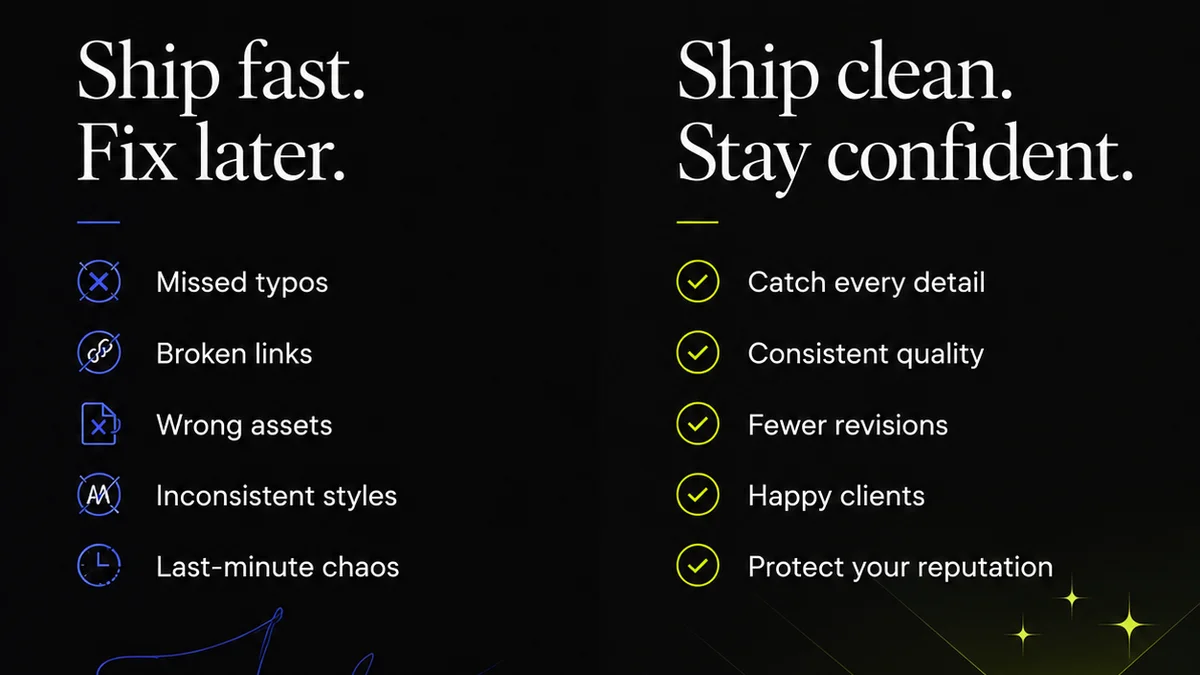
Everyone talks about the importance of a content approval workflow. They say it’s key to hitting deadlines and keeping clients happy. And, sure, that’s not wrong. But focusing solely on the *approval* part misses the bigger operational picture.
The real truth? A functional content approval workflow isn't about the final sign-off. It’s about building a system that prevents the chaos that makes final approvals a nightmare in the first place.
1. Define the Stakes: What Are We Really Approving?
Before you can approve anything, you need to know what you’re approving. Is it a single social media graphic? A full website redesign? A 30-page report? The scope dictates the process.
Think about it:
- A quick social post might only need a quick glance from the account manager.
- A major campaign requires multiple rounds of feedback from legal, marketing, and the client stakeholders.
- A website requires technical reviews for functionality and accessibility, not just creative.
Get this wrong, and you’ll either over-process simple tasks or under-process complex ones. Both lead to delays and frustration.
2. Map the Journey: Who Does What, and When?
A workflow is a map. Where does the creative start? Who touches it next? What are the decision points?
Start with the raw asset. Who creates it? Who reviews it for the first time (usually internal)? Who provides client-level feedback? Who signs off?
The Internal Gatekeepers
Don't push all the work to the client. Your internal team needs to be the first line of defense. This typically includes:
- The creative lead or art director checking for brand consistency and quality.
- The project manager ensuring it meets the brief and timeline.
- A senior team member for a final sanity check.
This internal review catches most errors before they ever reach the client. It saves everyone time.
Client Touchpoints
Identify *exactly* who on the client side needs to see what. Is it one person? A committee? A department?
Be explicit. If the client says, “Get it approved by Marketing,” ask, “Which specific person in Marketing? And what’s their email?” Vague requests lead to vague feedback and endless back-and-forth.
The Feedback Loop
How is feedback collected? Via email? A Slack channel? A dedicated platform?
Each method has its pitfalls. Email gets lost. Slack messages are ephemeral. A centralized system is essential for tracking.
3. Set the Rules of Engagement: Feedback and Revisions
This is where most workflows break down. People don’t know how to give feedback, or how to handle it.
Feedback Guidelines
Establish clear rules for feedback. Is it constructive? Actionable? Tied to the brief?
Discourage subjective comments like “I don’t like it.” Push for specifics: “The headline is too long for the available space,” or “This image doesn’t convey the feeling of innovation.”
Revision Limits
How many rounds of revisions are included? What happens if more are needed?
This needs to be clear from the project kickoff. Usually, 2-3 rounds of revisions are standard. Anything beyond that should trigger a discussion about scope creep and potential additional costs.
Approval Criteria
What constitutes an approval? A formal sign-off email? A checkmark in a system? A documented response?
Define what success looks like for the approval stage itself. It’s not just “yes” or “no.” It’s “yes, this meets the defined criteria” or “no, it needs X, Y, Z to meet the criteria.”
4. The Technology Layer: Tools for Sanity
You can have the best process in the world, but if your tools are fighting you, you’ll fail.
Relying on scattered emails, shared docs, and random chat messages is a recipe for disaster. You lose version control, feedback gets buried, and accountability vanishes.
This is where dedicated tools come into play. They centralize everything:
- Asset storage
- Feedback collection (with annotations!)
- Revision history
- Approval tracking
Choosing the right tools means less time chasing ghosts and more time doing good work.
Where Revue Fits In
Revue is built to solve these exact operational headaches. It’s not just another place to store files; it’s a system designed to streamline the entire creative lifecycle, from brief to final approval.
With Revue, you can:
- Centralize Feedback: All comments, annotations, and stakeholder input live in one place, tied directly to the asset. No more digging through email chains or Slack messages.
- Manage Revisions Visibly: Track every version, every change, and who requested it. This provides clear context for the creative team and accountability for stakeholders.
- Streamline Approvals: Define clear approval stages and get explicit sign-offs. Everyone knows what needs to be approved and by whom, reducing ambiguity.
- Ensure Quality Checks: Integrate quality control points directly into your workflow. Catch issues early, before they become costly problems or derail a launch.
By bringing structure to the chaos, Revue helps ensure that your approval process is efficient, transparent, and ultimately, successful.
5. The Human Element: Communication and Culture
Even with perfect processes and tools, people are still people.
A healthy feedback culture is crucial. This means:
- Encouraging open, honest, and constructive criticism.
- Fostering trust between the creative team and stakeholders.
- Training everyone on the workflow and their role in it.
If your team fears giving feedback or clients feel their input isn’t valued, your workflow will crumble.
Training and Onboarding
Don't assume everyone knows how to use the system or why it's important. Regularly train your internal team and onboard new clients onto your preferred process.
Explain the benefits: faster turnarounds, clearer communication, better final products.
Accountability
Hold people accountable for their roles. If a stakeholder is consistently late with feedback, address it. If the creative team isn't following the revision process, course-correct.
This isn't about blame; it's about reinforcing the system that benefits everyone.
Final Thought
A robust content approval workflow isn't just about getting a final “yes.” It’s about building a predictable, transparent, and efficient system that minimizes friction, maximizes quality, and keeps projects moving forward. Are you building a system for approval, or a system for success?
Frequently asked questions
What is a content approval workflow?
A content approval workflow is a defined process that outlines the steps and individuals involved in reviewing and approving creative content before it's finalized or published. It ensures that work meets quality standards, aligns with objectives, and receives necessary sign-offs.
Why is a clear approval process important for agencies?
A clear process prevents delays, reduces miscommunication, manages client expectations, ensures brand consistency, and minimizes scope creep. It leads to more efficient project delivery and happier clients.
How many revision rounds are typical?
Typically, 2-3 rounds of revisions are included in a project scope. This should be clearly communicated upfront. Additional rounds often require a change order or scope adjustment.
What's the difference between feedback and approval?
Feedback is input, suggestions, or critique on the work. Approval is the formal sign-off indicating that the work meets the project requirements and is ready to move forward or be published. Feedback informs revisions; approval signifies completion of a stage.
How can technology help with content approvals?
Technology, like dedicated review and approval platforms, centralizes feedback, tracks revisions, manages versions, and provides clear audit trails. This reduces manual effort, prevents lost information, and improves transparency.