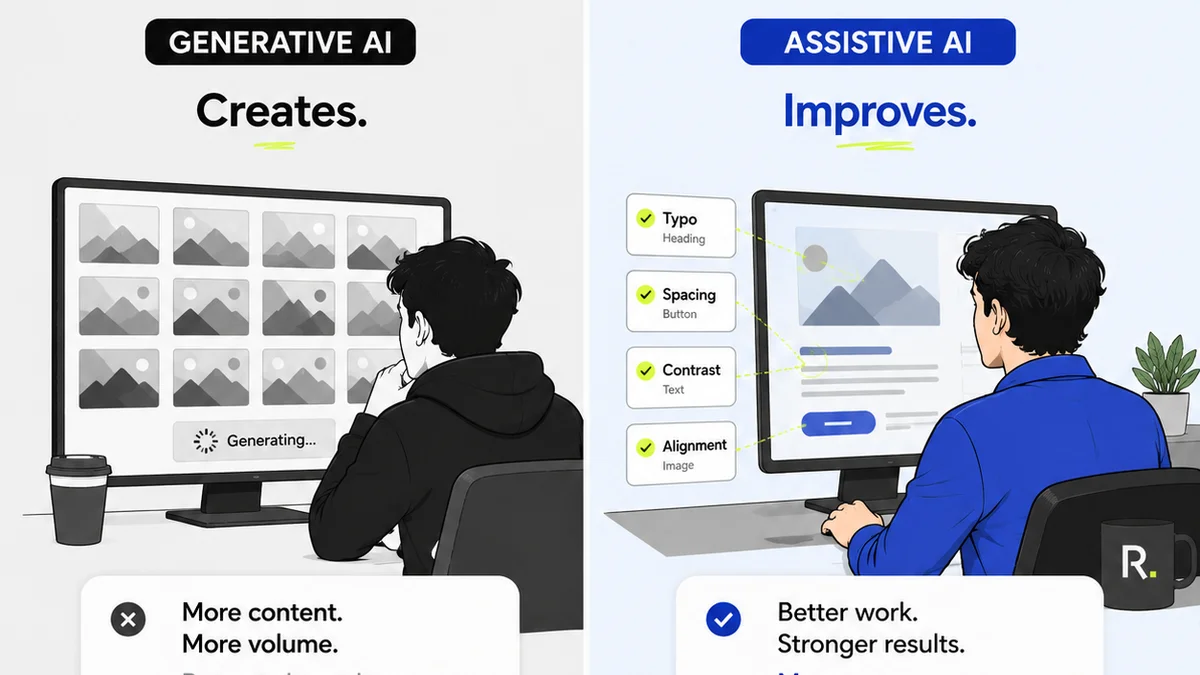
Everyone's looking for the best content review software for 2026. They want a tool that streamlines feedback, manages revisions, and speeds up approvals. None of that is wrong. But it’s incomplete.
The hard truth? Most software focuses on the symptoms of bad reviews, not the disease. It’s about capturing comments, not about improving the quality of the conversations that lead to them.
1. The Illusion of Control: What 'Feature-Rich' Really Means
You see the lists: version control, annotation tools, stakeholder dashboards, deadline tracking. These are table stakes. They promise order.
But what happens when the system is complex? Users find workarounds. Feedback becomes fragmented again, just in a different place. The tool becomes another hurdle, not a help.
The Feature Trap
- Endless toggles and settings that confuse more than clarify.
- Integrations that break more often than they work.
- Complex permission structures that require a manual to navigate.
- A focus on *capturing* feedback, not on the *quality* of the feedback itself.
This isn't about shaming features. It's about recognizing that more isn't always better. Sometimes, it's just more.
2. The Real Bottlenecks: Where Feedback Goes to Die
Think about your last few projects. Where did things actually get stuck?
It wasn't usually the software’s inability to log a comment. It was the lack of clear direction *before* the review. It was the ambiguous feedback that led to endless clarification loops. It was the missing context that made revisions a guessing game.
Common Workflow Killers
- Vague Notes: "Make it pop." "I don't like the blue."
- Conflicting Input: Two stakeholders saying opposite things without resolution.
- Delayed Responses: Waiting days for a single sign-off, blocking progress.
- Lack of Process: No defined steps for who reviews what, and when.
- Context Switching: Designers jumping between email, Slack, and a review tool.
The best content review software doesn't just collect these problems; it actively prevents them.
3. The Unspoken Goal: Clarity, Not Just Comments
What are you *really* trying to achieve with content review? It's not just about getting more comments logged. It's about getting to a final, approved piece of work efficiently.
This means the software must foster clarity. It needs to guide reviewers toward providing actionable input. It must make the revision and approval process transparent.
What True Clarity Looks Like
- Actionable Feedback: Comments tied to specific elements, with clear intent.
- Contextual Understanding: Reviewers see the brief, previous versions, and project goals.
- Defined Accountability: Clear ownership for feedback and approvals.
- Streamlined Communication: Centralized discussion, reducing back-and-forth.
- Version Integrity: Always knowing which version is current and approved.
This shifts the focus from a passive logging system to an active workflow enabler.
4. Evaluating True Efficiency: Beyond Time Saved on Clicks
When agencies evaluate content review tools, they often look at how quickly a reviewer can add a comment. That’s a shallow metric.
Real efficiency is measured by the reduction in project delays, the decrease in revision cycles, and the improvement in final output quality. It's about reducing the *friction* in the entire creative process.
Metrics That Matter
- Reduction in time from first draft to final approval.
- Decrease in the number of revision rounds per project.
- Fewer instances of scope creep due to unclear feedback.
- Improved stakeholder satisfaction with the review process.
- Reduced time spent by creative teams clarifying feedback.
A tool that saves 5 seconds per comment but adds 5 hours to project clarification isn't efficient. It's a costly illusion.
5. Where Revue Fits In
This is why Revue was built. It’s not just another place to dump feedback.
Revue focuses on the operational realities of creative work. It centralizes client feedback directly within the assets being reviewed, eliminating scattered communication channels.
It provides clear visibility into revision history and approval status. This means everyone knows where a project stands, reducing ambiguity and speeding up decision-making.
By structuring feedback and approvals, Revue helps teams conduct more effective quality checks and ensures that the final output meets client expectations and project goals. It tackles the workflow bottlenecks, not just the comment box.
Final Thought
The search for the
Frequently asked questions
What are the most common problems with content review software?
Many tools focus on capturing comments rather than improving the quality of the feedback itself. This leads to issues like vague or conflicting input, delayed responses, context switching for teams, and a general lack of clear process, ultimately hindering rather than helping the creative workflow.
How can I measure the true efficiency of content review software?
Look beyond the speed of adding comments. True efficiency is measured by the reduction in project delays, fewer revision cycles, less scope creep due to unclear feedback, and improved stakeholder satisfaction. It's about reducing overall friction in the creative process.
What is the difference between capturing feedback and improving feedback quality?
Capturing feedback means simply logging comments. Improving feedback quality involves using software and processes that guide reviewers to provide clear, actionable, and contextual input, directly tied to project goals, thus minimizing confusion and rework.
How does centralized feedback help creative agencies?
Centralized feedback consolidates all comments and discussions around specific creative assets in one place. This eliminates scattered communication across emails, chat, and documents, providing a single source of truth, improving clarity, and reducing the time spent clarifying or searching for input.