Everyone wants more conversions. It’s the holy grail of digital marketing. You’ve probably read countless articles about A/B testing, landing page design, and compelling calls-to-action. None of that is wrong. But it’s incomplete.
The hard truth? Most businesses aren't just leaving money on the table; they're actively throwing it away by focusing on the wrong things. They're optimizing the symptoms, not the disease.
1. Focusing on Vanity Metrics Over Real Business Impact
Your website might be getting more clicks, but are those clicks turning into paying customers? Are they leading to qualified leads? Or are you just making yourself feel better with inflated traffic numbers?
Vanity metrics are easy to track and look good on a report. Things like page views, bounce rate (in isolation), and social shares. They don't directly correlate with revenue or profit.
The Real Metrics That Matter
- Customer Acquisition Cost (CAC)
- Customer Lifetime Value (CLV)
- Conversion Rate (of valuable actions, not just any action)
- Average Order Value (AOV)
- Revenue per Visitor (RPV)
Stop chasing clicks. Chase customers. Chase revenue. Every optimization effort should tie back to a tangible business outcome. If it doesn't, question why you're doing it.
2. Neglecting the User Journey for Isolated Page Optimization
You tweak a button color on your homepage. You change the headline on a product page. You think you’ve optimized. But have you considered how a user *gets* to that page? And where they go *after*?
Conversion optimization isn't about individual pages in a vacuum. It’s about the entire journey. A leaky bucket can’t be fixed by patching one hole; the whole structure is compromised.
Mapping the True Customer Path
- Where do users come from? (Channels: organic search, paid ads, social media, email)
- What are their initial pain points and goals?
- How do they navigate your site? Are there points of friction?
- What information do they need at each stage?
- What is the ultimate desired action, and what are the steps to get there?
If a user lands on your page from a highly targeted ad, but the page doesn’t align with their expectation, they’ll bounce. The problem wasn't the page headline; it was the disconnect between the ad and the landing experience. This is a fundamental aspect of user experience (UX).
3. Over-Reliance on A/B Testing Without Qualitative Insights
A/B testing is powerful. It tells you *what* is working. But it rarely tells you *why*.
You might find that Button A converts 2% better than Button B. Great. But why? Was it the color? The text? The placement? Or was it something else entirely that you haven't even considered?
The danger is testing endlessly without understanding user behavior. You’re just guessing.
Unlocking the 'Why'
- User Testing: Watch real people interact with your site.
- Heatmaps & Session Recordings: See where users click, scroll, and get stuck.
- Surveys & Feedback Forms: Ask users directly about their experience and pain points.
- Customer Support Logs: Identify recurring issues and questions.
Combine quantitative data (A/B tests) with qualitative insights (user feedback). This gives you the full picture. You can then form hypotheses that are grounded in reality, not just guesses.
4. Ignoring Mobile-First Experience in a Mobile-Dominated World
“We checked it on desktop, it looks fine.” Famous last words.
The vast majority of web traffic and a significant portion of conversions happen on mobile devices. If your mobile experience is clunky, slow, or difficult to navigate, you are actively repelling customers.
This isn't just about responsive design. It's about touch targets, readability, loading speed, and intuitive navigation specifically for smaller screens and on-the-go users.
Mobile Optimization Checklist
- Page Load Speed: Is it lightning fast? Use tools like Google PageSpeed Insights.
- Tap Targets: Are buttons and links easy to tap with a thumb?
- Readability: Is font size appropriate? Is there enough contrast?
- Form Simplicity: Are forms easy to fill out on mobile? Use autofill where possible.
- Navigation: Is the mobile menu intuitive and easy to access?
Don't treat mobile as an afterthought. Design and optimize for it first. Your desktop experience will benefit from this clarity and efficiency too.
5. Inconsistent Brand Messaging and Visuals
Your marketing campaigns might promise one thing, but your website delivers another. Or perhaps different departments within your organization are using different messaging, logos, or color palettes.
This creates confusion and erodes trust. If a user sees an ad for a premium product, then lands on a page that looks cheap or uses amateurish visuals, they’ll question the legitimacy of the entire offer.
Consistency builds recognition and trust. Inconsistency breeds doubt.
The Power of Cohesion
- Unified Brand Guidelines: Ensure all teams adhere to a single set of rules for tone, voice, visuals, and messaging.
- Campaign-to-Landing Page Alignment: Make sure the landing page directly reflects the ad or link the user clicked.
- Cross-Departmental Communication: Marketing, sales, and product teams must be on the same page.
Every touchpoint a customer has with your brand should feel familiar and reinforce your core message. This is crucial for building a strong brand identity and driving conversions.
6. Failing to Segment Audiences for Personalized Experiences
The “one-size-fits-all” approach to conversion optimization is dead. Users expect personalized experiences tailored to their needs and interests.
Showing the same content, offers, and calls-to-action to every single visitor is a massive missed opportunity. It’s like shouting the same message to a crowd and hoping everyone hears what they need.
Segmentation allows you to deliver the right message to the right person at the right time.
Segmentation Strategies
- Demographics: Age, location, gender.
- Behavioral Data: Past purchases, browsing history, engagement level.
- Traffic Source: Users from specific campaigns or channels.
- Customer Lifecycle Stage: New visitor, returning customer, lapsed customer.
By segmenting your audience, you can create targeted landing pages, personalized email campaigns, and dynamic website content that resonates deeply, significantly boosting conversion rates. This is a core principle behind effective personalization.
7. Not Having a Clear and Compelling Value Proposition
Why should a customer choose you? What makes you different? What problem do you solve better than anyone else?
If your website can’t answer these questions immediately and clearly, you’re losing potential customers. A weak or missing value proposition is a black hole for conversions.
Your value proposition isn't just a slogan; it's the core promise you make to your customers.
Crafting a Strong Value Proposition
- Identify Your Target Audience: Who are you trying to reach?
- Understand Their Pain Points: What problems do they face?
- Highlight Your Unique Solution: How do you solve those problems better?
- Be Clear and Concise: Get straight to the point. Avoid jargon.
- Focus on Benefits, Not Just Features: What’s in it for them?
Your primary headline and the first few seconds a visitor spends on your site should clearly communicate your unique value. If it’s ambiguous, they’ll leave.
Where Revue Fits In
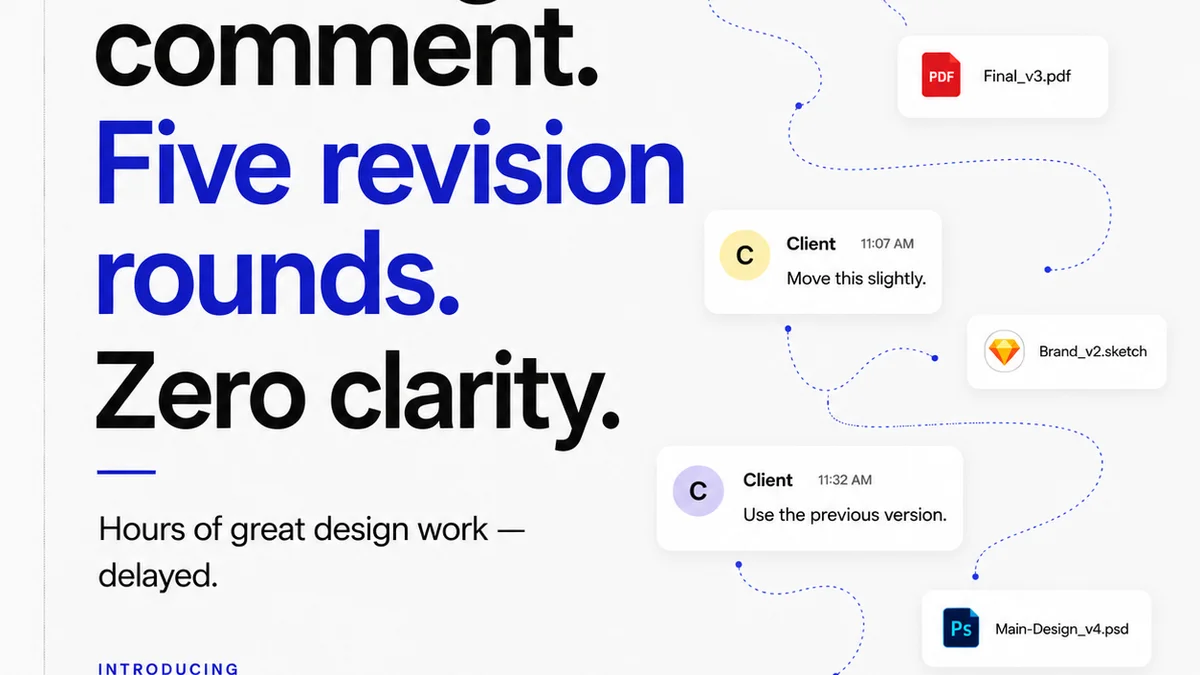
All these optimization efforts require clear communication, streamlined workflows, and accurate tracking. This is where managing creative feedback and approvals becomes critical.
Imagine running an A/B test on a new landing page design. You need to be confident that the design itself is finalized and approved, not still in revision hell. You need a centralized system to gather feedback from stakeholders, manage revisions efficiently, and get that final sign-off.
Revue provides that clarity. By centralizing client feedback, managing revision cycles, and ensuring quality checks are documented, you eliminate the chaos that can derail even the best optimization strategies. You ensure the foundation—your creative assets—are solid before you start testing.
Final Thought
Are you optimizing for the sake of optimizing, or are you strategically driving business growth? The difference lies in moving beyond superficial metrics and isolated page tweaks to understand the holistic user journey and deliver genuine value. What’s one assumption about conversion optimization you’re willing to challenge today?
Frequently asked questions
What are vanity metrics in conversion optimization?
Vanity metrics are statistics that look good on paper but don't directly contribute to business goals like revenue or profit. Examples include page views, social shares, or raw website traffic without context. Focusing on these can lead to misguided optimization efforts.
Why is user journey mapping important for conversion optimization?
Optimizing individual pages is less effective than understanding how users navigate your entire site. Mapping the user journey helps identify friction points, understand user intent at each stage, and ensure a cohesive experience from initial contact to conversion.
How can I uncover the 'why' behind A/B test results?
Combine quantitative A/B testing data with qualitative insights. Use tools like user testing, heatmaps, session recordings, surveys, and customer feedback to understand user behavior and the underlying reasons for test outcomes.
What is a value proposition and why is it crucial for conversions?
A value proposition clearly communicates the unique benefits a customer receives from your product or service. It answers 'Why should I choose you?' A strong, clear value proposition is essential for capturing attention and driving conversions.