Everyone talks about scope creep. It’s the bogeyman under the agency bed, the reason projects go sideways and clients get angry. It’s a convenient scapegoat.
None of that is wrong. But it’s incomplete.
The real, insidious money-drainers in agency projects are rarely about clients asking for “just one more thing.” They’re deeper. They’re embedded in your workflows, your communication, and your internal processes. These are the creative agency mistakes that truly cost businesses money.
The hard truth? Often, it’s not the client who’s causing the overspend. It’s us. Our own operational blind spots and inefficiencies are the real budget killers.
1. The Feedback Black Hole
You think you have a clear feedback process. Clients send emails, Slack messages, maybe even leave comments on a PDF. You collect it all. But is it truly clear?
A feedback black hole is where feedback goes to die, get misinterpreted, or cause chaos. It’s the result of scattered communication channels and a lack of a single source of truth.
Symptoms of a Feedback Black Hole:
- Client emails get buried under other client requests.
- Different team members get conflicting feedback from the same client.
- Feedback is vague, subjective, and lacks context.
- Revisions loop endlessly because the core issues weren’t addressed.
- Key stakeholders’ opinions are missed entirely.
This isn’t just annoying; it’s expensive. Every extra revision cycle costs billable hours, delays launch dates, and erodes client trust. It’s the easiest way to turn a profitable project into a money pit.
2. Unseen Revision Cycles
Related to the feedback black hole, but distinct. This is about the *management* of revisions, not just their collection. Do you have a clear, documented path for every change request?
Without visibility into the revision history, it’s impossible to track what’s been changed, why, and by whom. This lack of oversight is a silent killer of agency profitability.
The Cost of Opaque Revisions:
- Wasted Effort: Teams might redo work that was already approved or tweak something that wasn’t the real issue.
- Miscommunication: Multiple versions of a file float around, leading to confusion and the wrong assets being used.
- Scope Creep by Stealth: Small, unlogged changes accumulate, gradually expanding the project scope without formal approval.
- Accountability Issues: When things go wrong, it’s hard to pinpoint where the breakdown occurred.
Clients expect to see progress and understand the evolution of their project. When that process is murky, they get anxious. And anxious clients often lead to scope creep and budget disputes.
3. Lack of Standardized Quality Assurance
You have designers, developers, copywriters – all skilled professionals. You trust them to deliver quality. But quality assurance is more than just individual talent; it’s a process.
Skipping or improvising QA is a major agency mistake. It’s assuming that because your team is good, everything they produce will be perfect. It’s a gamble that rarely pays off.
The QA Deficit:
- Bugs and Errors: Websites with broken links, apps with glitches, copy with typos – these are direct hits to your client’s brand reputation and user experience.
- Inconsistent Branding: Colors are off, logos are misused, tone of voice is inconsistent. This dilutes brand impact.
- Accessibility Failures: Ignoring standards like WCAG means alienating a significant portion of users and potentially facing legal issues.
- Missed Requirements: The final output doesn’t quite match the brief because a crucial detail was overlooked during final checks.
The cost of fixing errors *after* launch is exponentially higher than catching them before. It involves developer time, client frustration, and potential reputational damage.
4. Poor Project Kick-offs
The project kick-off meeting. It feels like a formality, a chance to introduce teams and set a date. Many agencies treat it as such.
A weak kick-off is a direct precursor to project failure. It’s where the foundation for success or disaster is laid. If that foundation is shaky, the whole structure is at risk.
What Makes a Kick-off Fail?
- Unclear Objectives: The client’s true goals aren’t deeply understood or documented.
- Undefined KPIs: How will success be measured? If this isn’t clear, how can you prove value?
- Assumptions, Not Agreements: Key decisions are glossed over, with everyone *assuming* they’re on the same page.
- Lack of Stakeholder Alignment: Not all key decision-makers are present or have their input captured.
- No Documented Process: The plan for communication, feedback, and approvals is vague.
This lack of upfront clarity forces the agency to make educated guesses throughout the project, leading to rework, missed expectations, and budget blowouts. It’s like building a house without blueprints.
5. Underestimating Complexity
Agencies are often guilty of over-optimism. Clients present a vision, and the agency, eager to impress, says, “We can do that!” without fully dissecting the *how*.
Underestimating the technical, creative, or logistical complexity of a project is a classic agency mistake. It’s promising the moon without checking if you have a rocket.
The Complexity Blind Spot:
- Technical Hurdles: Integrating with legacy systems, building complex custom features, or handling large data sets are often underestimated.
- Creative Nuance: Developing a truly unique brand identity or a highly interactive user experience requires more time and expertise than initially assumed.
- Content Requirements: The sheer volume or complexity of content needed (e.g., video production, extensive copywriting, detailed product descriptions) is often overlooked.
- Third-Party Dependencies: Relying on external APIs, vendors, or client-provided assets that introduce unforeseen delays or complications.
When complexity bites, projects get delayed, features get cut, and costs skyrocket. This often happens because the initial estimate was based on an idealized version of the project, not the messy reality.
Where Revue Fits In
These aren’t just abstract problems; they’re workflow challenges. And workflow challenges are precisely what Revue is built to solve.
Centralizing client feedback is key. Instead of scattered emails and Slack messages, all comments, annotations, and approvals live in one place, tied directly to the creative asset. This eliminates the feedback black hole.
Visibility into revisions is another core strength. Revue provides a clear audit trail of every change, every approval, and every stakeholder’s input. You know exactly where the project stands, who signed off on what, and when.
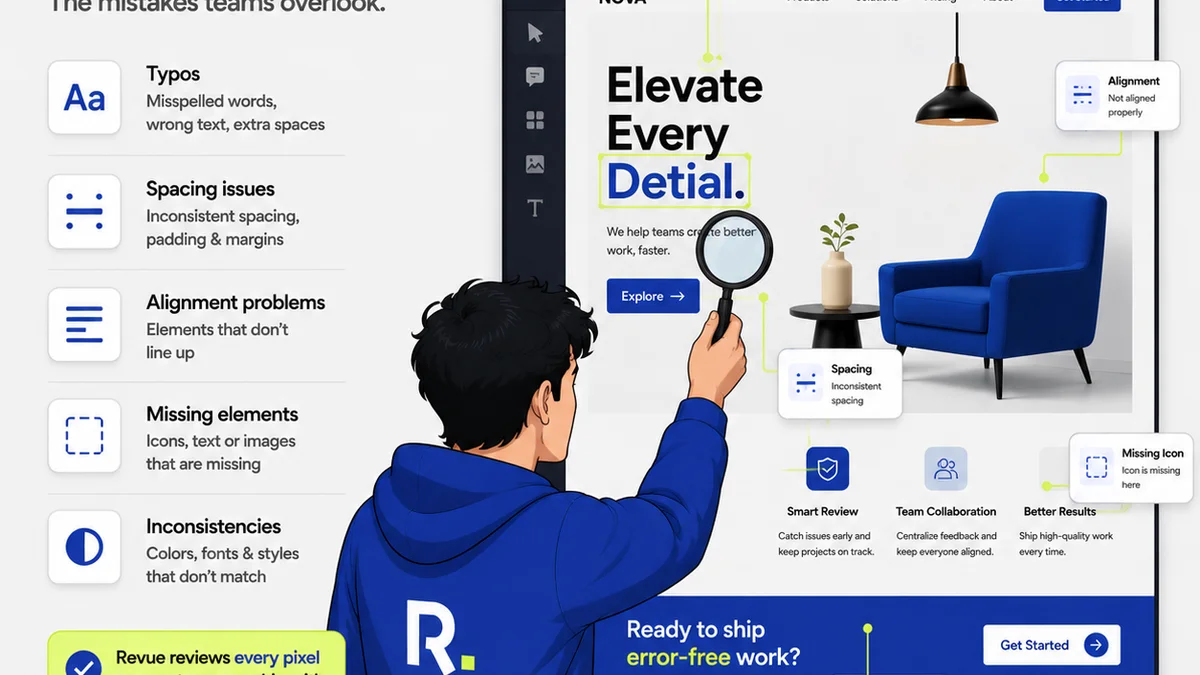
Automated quality assurance checks and standardized approval flows help prevent errors before they reach the client. This streamlines the QA process and reduces the risk of costly post-launch fixes.
By bringing clarity and control to these critical stages, Revue helps agencies avoid the costly mistakes that plague so many projects.
Final Thought
Are you truly managing your projects, or are you just reacting to them? The difference often lies not in client demands, but in the robustness of your internal processes. Investing in workflow clarity isn’t just about efficiency; it’s about protecting your bottom line and building lasting client relationships.
Frequently asked questions
What is 'scope creep' and why is it often blamed for project overruns?
Scope creep refers to uncontrolled changes or continuous growth in a project's scope. It's often blamed because clients frequently request additional features or changes beyond the original agreement. However, it's frequently a symptom of deeper issues like poor initial planning or communication breakdowns, rather than the root cause of budget issues.
How does scattered communication lead to wasted money in an agency?
When feedback is scattered across emails, Slack, and various documents, it creates confusion. Team members may act on outdated information, miss crucial feedback, or spend excessive time trying to consolidate conflicting input. This leads to rework, delays, and increased billable hours, all of which drain project budgets.
What are the financial implications of poor quality assurance (QA) in creative projects?
Poor QA leads to errors, bugs, and inconsistencies in the final deliverable. Fixing these issues after launch is significantly more expensive than catching them during the project. It can also damage the client's brand reputation, lead to user dissatisfaction, and potentially incur legal costs (e.g., for accessibility non-compliance).
How can a clearer project kick-off prevent budget overruns?
A thorough kick-off ensures that project objectives, KPIs, scope, and communication protocols are clearly defined and agreed upon by all stakeholders. This upfront clarity minimizes assumptions and misunderstandings throughout the project, reducing the likelihood of scope creep, rework, and budget disputes.