Everyone talks about creative agency ROI. They point to award wins, happy clients, and impressive portfolio pieces. None of that is wrong. But it’s incomplete.
The hard truth? Those are outcomes, not drivers. True creative agency ROI isn’t about the flashy stuff; it’s about the invisible plumbing that makes the whole operation run smoothly and profitably.
1. Defining Real Agency ROI
Most agencies confuse activity with results. They celebrate a project completion, a successful presentation, or a new client win. These are milestones, sure, but they don't automatically translate to a healthy return on investment.
Real ROI for a creative agency is straightforward: How much profit does each project, client, or service line generate relative to the resources (time, money, talent) invested?
It’s about predictable profit. It’s about sustainable growth. It’s about understanding the levers you can pull to increase that profit margin, consistently.
The Vanity Metrics Trap
Vanity metrics are those feel-good numbers that don't impact the bottom line. Think:
- Number of awards won (great for PR, not profit)
- Social media follower count (brand awareness, not revenue)
- Number of client testimonials (social proof, not direct profit)
- Project completion rate (good, but at what cost?)
These are often byproducts of good work, but they aren't the core drivers of financial health. Focusing on them is like admiring the paint job on a car while ignoring the engine.
The Profitability Core
The core of creative agency ROI lies in understanding:
Revenue - Cost of Goods Sold (COGS) - Operating Expenses = Profit
For an agency, COGS is primarily the cost of labor directly tied to client projects. Operating expenses include rent, software, administrative salaries, marketing, etc.
Improving ROI means either increasing revenue per project, decreasing the labor cost per project, or optimizing operating expenses. Ideally, you do all three.
2. The Hidden Costs of Inefficiency
Inefficiency is the silent killer of agency profitability. It eats away at margins, burns out your team, and frustrates clients.
Where does this inefficiency typically hide?
Unclear Feedback Loops
This is a big one. Vague, contradictory, or delayed feedback is a project killer. It leads to endless revision cycles, wasted hours, and scope creep.
- Client: “I don’t love it.”
- Team: “What specifically don’t you love?”
- Client: “Just… make it pop more.”
This kind of back-and-forth is toxic for both your team's morale and your project budget. Each “make it pop” costs you billable time that can’t be recovered.
Revision Hell
Unlimited revisions are a myth. Every revision costs money. When clients demand more rounds than initially scoped, and you don’t track or charge for it, you’re directly reducing your ROI on that project.
This often stems from a lack of clear approval stages or a fear of pushing back on the client.
Poor Resource Allocation
Are your best designers stuck on low-value tasks? Are junior team members overloaded while senior staff have downtime? Inefficient resource allocation means your most expensive talent isn't being used optimally, directly impacting your labor costs and project timelines.
Lack of Centralized Information
Scattered files, lost emails, multiple versions of assets floating around – this chaos costs time. Digging for information is not a billable activity, but it’s time your team is spending that could be on client work or business development.
Quality Control Gaps
Shipping work with errors—typos, broken links, incorrect specs—leads to costly rework, client dissatisfaction, and damage to your agency’s reputation. These aren't just minor oversights; they are direct hits to your profitability and future business prospects.
3. Quantifying Your Agency's True ROI
You can't improve what you don't measure. And for creative agencies, measuring ROI requires looking beyond topline revenue.
Track Project Profitability
This is non-negotiable. For every project, you need to track:
- Estimated Hours vs. Actual Hours: Where did you go over? Why?
- Scope Creep: How many extra hours were spent on unbilled revisions?
- Labor Cost per Project: What was the actual cost of the team’s time?
- Client Profitability: Which clients consistently yield the highest margins? Which ones are drains?
Tools like timesheets and project management software are essential here. You need real data, not guesswork.
Understand Your Capacity
Know how much billable work your team can realistically handle. Overbooking leads to burnout, rushed work, and missed deadlines. Underbooking means idle time and lost revenue.
Capacity planning helps you price projects accurately and manage your sales pipeline effectively.
Analyze Your Operating Expenses
Regularly review your overhead. Are you paying for software you don’t use? Is your office space optimized? Can any administrative tasks be streamlined or automated?
Reducing unnecessary expenses directly increases your net profit margin.
Calculate Your Blended Hourly Rate
This isn’t just about what you charge clients. It’s about understanding the true cost of your team’s time, including overhead and desired profit margin. This helps in accurate project bidding and identifying underpriced services.
4. Where Revue Fits In
Operational efficiency is the engine of profitable creative work. And that efficiency hinges on clear communication, streamlined workflows, and robust quality control.
This is precisely where Revue excels.
Centralized Client Feedback
No more digging through endless email threads or Slack messages. Revue provides a single source of truth for all client feedback. Stakeholders can comment directly on proofs, designs, or videos.
This means clearer, actionable feedback. Less ambiguity. Faster approvals.
Managed Revisions and Approvals
Revue tracks every version and every approval. You can see exactly who approved what, when. This eliminates disputes about previous sign-offs and provides clear visibility into the revision process.
When clients know the process is structured and transparent, they’re more likely to provide concise feedback and respect the approval stages.
Streamlined Quality Checks
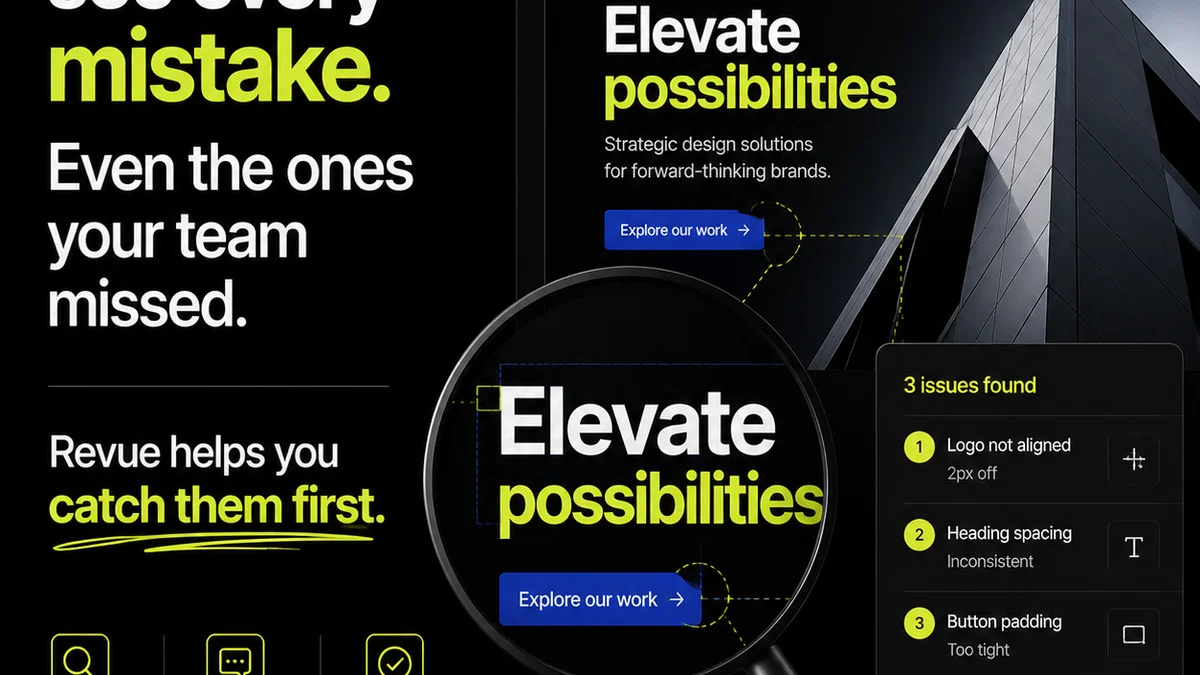
Before anything goes to the client, it needs to be right. Revue helps ensure your internal quality control is rigorous. You can set up checklists, ensure all assets meet specs, and catch errors before they become costly problems.
This proactive approach saves time, reduces rework, and protects your agency’s reputation – all critical components of a healthy ROI.
5. Building a More Profitable Agency
Shifting focus from vanity metrics to operational efficiency and true profitability isn't just good business; it's essential for long-term survival and success.
It requires discipline. It requires the right tools. And it requires a willingness to look critically at how work actually gets done, not just how it looks when it’s finished.
Culture of Profitability
Instill a company-wide understanding that profitability is everyone’s responsibility. When the team understands how their work impacts the bottom line, they become more mindful of time, resources, and scope.
Invest in Workflow Tools
Don't shy away from investing in software that streamlines processes. Project management, time tracking, and client feedback tools are not expenses; they are investments in efficiency and, therefore, ROI.
Regular Financial Review
Make project profitability and financial health a regular topic of discussion. Review key metrics weekly or monthly. Don’t wait for the year-end P&L to discover problems.
Final Thought
Are you building an agency that wins awards, or one that consistently wins at business? The two aren’t mutually exclusive, but one directly fuels the other. By focusing on the operational efficiency that drives predictable profit, you create the stable foundation necessary for truly exceptional creative work to thrive.
Frequently asked questions
What is the most common mistake agencies make when calculating ROI?
The most common mistake is focusing on vanity metrics like awards or social media followers instead of actual project profitability and profit margins. True ROI is about the financial return on invested resources.
How does client feedback impact agency ROI?
Vague, delayed, or contradictory client feedback leads to endless revisions, scope creep, and wasted billable hours. This directly reduces project profitability and erodes ROI. Centralizing and clarifying feedback is crucial.
Can inefficient processes significantly hurt an agency's profit?
Absolutely. Inefficiencies like poor resource allocation, scattered information, and lack of clear approval stages all cost time and money. These hidden costs directly decrease an agency's ROI.
How can tools like Revue improve creative agency ROI?
Revue improves ROI by centralizing client feedback, streamlining revision and approval processes, and enhancing quality control. This reduces wasted time, minimizes errors, speeds up project completion, and ultimately increases profitability.