Everyone’s talking about creative automation for hospitality marketing. It’s the shiny new object promising efficiency, personalization, and scale. You’ve probably heard it’ll slash production costs, speed up campaign launches, and finally deliver that hyper-relevant guest experience everyone craves.
None of that is wrong. But it’s incomplete.
The hard truth? A poorly implemented creative automation strategy doesn’t just waste money; it actively damages your brand. It can lead to generic, off-brand content that alienates the very customers you’re trying to attract. Hospitality is built on unique experiences and genuine connection. Automation that feels robotic or impersonal is a direct threat to that.
1. Over-Reliance on Generic Templates
The biggest lure of creative automation is its ability to scale. But scaling without soul is a death sentence in hospitality. Many brands fall into the trap of using overly generic templates that strip away brand personality.
Think about it: a luxury resort and a budget-friendly motel have vastly different brand voices and visual identities. If both are using the same templated email or social post structure, the message will fall flat for one, or both.
The Problem with Cookie-Cutter Content
- Loss of brand distinction in a crowded market.
- Generic messaging that fails to resonate with specific guest segments.
- Missed opportunities to showcase unique property features or local experiences.
- Perception of laziness or lack of care from the brand.
Your automation needs to be flexible enough to accommodate distinct brand personalities, not force them into a single mold. This means defining clear brand guidelines and ensuring your automation tools can actually support them.
2. Neglecting the Human Touchpoint
Automation is excellent for repetitive tasks. It’s terrible at understanding nuance, empathy, or the subtle art of hospitality. Many hospitality brands automate too much, too soon, and in the wrong places.
Consider the guest journey. There are moments where a human connection is paramount – a personalized welcome note, a thoughtful response to a complaint, or a recommendation based on a genuine conversation. Automating these moments can feel cold and dismissive.
Where Automation Fails the Guest Experience
- Automated responses to service issues that lack empathy.
- Generic “happy birthday” emails that feel impersonal.
- Chatbots that can’t handle complex or emotional queries.
- Over-automation in booking confirmation or pre-arrival communications that remove human warmth.
The goal of automation should be to free up your staff to focus on high-value, human interactions, not to replace them entirely. It’s about augmenting, not annihilating, the human element.
3. Poor Data Integration and Segmentation
Effective creative automation relies on good data. For hospitality, this means understanding your guests: their preferences, past stays, booking history, and even their communication preferences. Many brands automate based on incomplete or siloed data.
If your booking system, CRM, and marketing platforms aren’t talking to each other, your automation will be blind. Sending a promotion for a spa package to someone who exclusively books business stays and never uses the spa is not just ineffective; it’s annoying.
Data Pitfalls to Avoid
- Using outdated or inaccurate guest profiles.
- Lack of integration between different data sources (PMS, CRM, POS, website analytics).
- Insufficient segmentation, leading to mass-emailing rather than targeted messaging.
- Failure to track and act on guest feedback loops.
True personalization requires a unified view of the guest. Without it, your automated campaigns will feel like shots in the dark.
4. Ignoring A/B Testing and Performance Analysis
Launching automated campaigns without rigorous testing is like setting sail without a compass. You’re relying on guesswork rather than data-driven insights.
Many hospitality businesses implement automation and assume it’s working because it’s running. They don’t bother to check if the subject lines are compelling, if the calls-to-action are clear, or if the imagery is performing well with different demographics.
The Cost of Untested Automation
- Wasted marketing spend on underperforming assets.
- Missed opportunities to optimize conversion rates.
- Stagnant engagement metrics.
- Inability to adapt to changing guest preferences or market trends.
Every element of your automated creative needs to be tested. Headlines, imagery, calls-to-action, even the timing of delivery. Continuous analysis is key to refining your strategy and maximizing ROI.
5. Failing to Equip Your Team
Creative automation isn’t just a technology purchase; it’s a workflow change. Many brands implement automation tools without properly training their marketing and creative teams.
This leads to confusion, underutilization of the tools, and ultimately, a failed implementation. Your team needs to understand not just *how* to use the software, but *why* and *when*. They need to grasp the strategic implications of automation.
Team Enablement Essentials
- Comprehensive training on automation platforms.
- Clear documentation of workflows and best practices.
- Cross-functional collaboration between marketing, creative, and operations.
- Empowerment for the team to experiment and provide feedback.
Your team is the bridge between the technology and the guest. If they’re not equipped, the bridge will crumble.
Where Revue Fits In
Implementing creative automation effectively means managing the complexity of assets, feedback, and approvals. This is where a centralized platform becomes crucial.
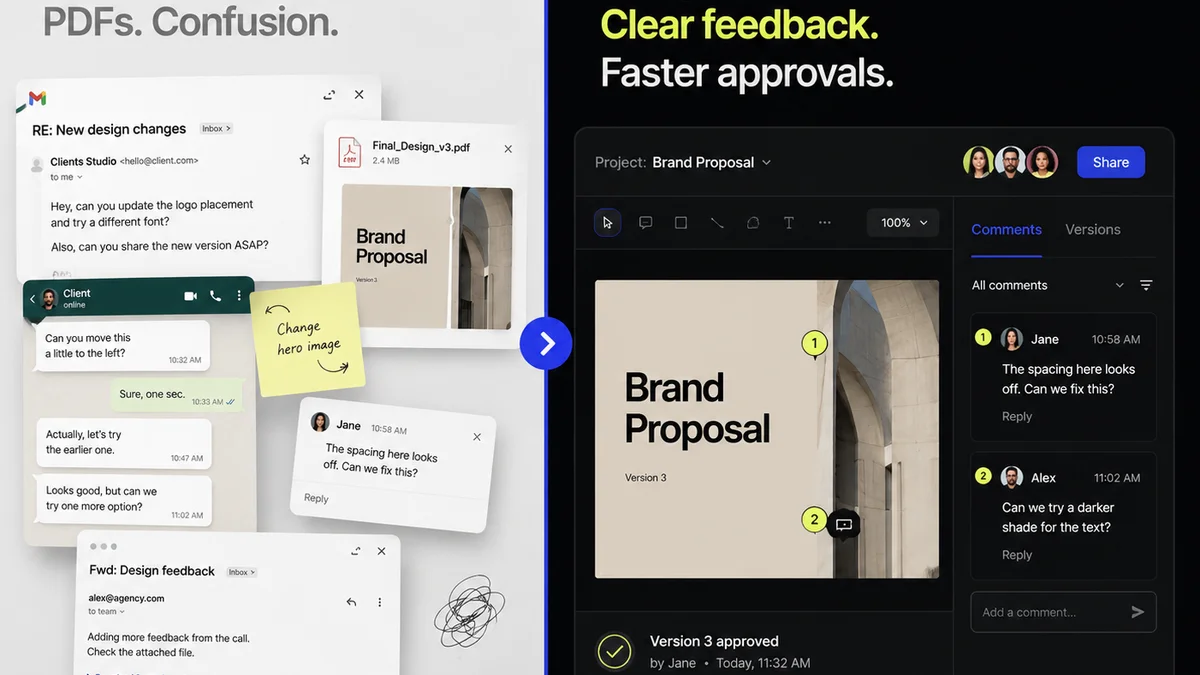
Revue helps hospitality marketing teams streamline their creative workflows. It provides a single source of truth for all creative assets, ensuring brand consistency across automated campaigns. Centralized feedback and clear revision/approval tracking mean that even when content is generated at scale, it maintains quality and stays on-brand.
Imagine launching a new seasonal promotion. Instead of juggling disparate email threads and cloud storage links, your team can manage all visuals, copy, and variations within Revue. Stakeholders can provide clear, contextual feedback, and approvals are tracked transparently. This ensures that the automated output truly reflects the brand's intent and guest expectations.
Final Thought
Creative automation in hospitality isn't about replacing human connection with algorithms. It's about using technology to enhance it, to free up resources, and to deliver more relevant, timely experiences at scale. The brands that succeed won't be the ones that automate the most, but the ones that automate the smartest, always keeping the guest experience at the heart of every decision.
Are you automating for efficiency, or are you accidentally automating your guests away?
Frequently asked questions
What is creative automation for hospitality?
Creative automation for hospitality involves using technology to generate, personalize, and distribute marketing content at scale. This can include emails, social media posts, ad creatives, and website content, often tailored to specific guest segments or preferences.
Why is brand consistency important in hospitality automation?
Hospitality brands rely heavily on their reputation and brand identity. Inconsistent or generic automated content can dilute the brand message, confuse customers, and damage the perceived quality of the guest experience, making it crucial for automated assets to align with established brand guidelines.
How can hospitality brands avoid impersonal automation?
To avoid impersonal automation, hospitality brands should focus on using data for true personalization, ensuring that automated messages feel relevant and thoughtful rather than generic. It's also vital to identify moments in the guest journey where human interaction is essential and reserve automation for tasks that enhance, rather than replace, that connection.
What role does data play in successful hospitality creative automation?
Data is fundamental. Successful creative automation in hospitality relies on integrated data from various sources (PMS, CRM, booking history) to create accurate guest profiles and segments. This allows for highly personalized and relevant automated communications, improving engagement and conversion rates.