Everyone thinks a creative brief is just a document. A necessary evil, maybe. Something to get done so the *real* work can start. That’s a mistake. A big one.
It’s not just a document. It’s a strategic tool. And it’s the single most powerful driver of business growth for your agency.
Used correctly, a solid creative brief aligns teams, prevents scope creep, and ensures client satisfaction. It’s the bedrock of profitable, repeatable creative work. It’s where good ideas meet good business.
But most agencies treat it like a formality. A checklist item. They rush it, skip steps, or let clients dictate terms without real strategic input. Then they wonder why projects go sideways, budgets balloon, and clients become impossible.
That’s not bad luck. That’s bad briefing.
Let’s unpack the hard truth: The quality of your creative brief directly dictates the quality and profitability of your client work, and by extension, your agency’s growth.
1. The Brief as a Contract, Not a Suggestion
Think of your creative brief as the first contract. Before any pixels are designed or copy is written. It’s the handshake agreement on what success looks like.
This isn’t just about deliverables. It’s about defining:
- The core business problem we’re solving.
- The specific, measurable objectives.
- The target audience and their motivations.
- The key message and desired outcome.
- The critical success factors and KPIs.
- The budget and timeline realities.
If any of these are fuzzy, you’re setting yourself up for pain. And lost revenue.
A client might say they want a “viral social campaign.” That’s not a brief. That’s a wish.
Your job is to translate that wish into actionable, measurable goals. What does “viral” mean in terms of reach, engagement, or conversions? What’s the actual business impact we’re aiming for?
The Cost of Ambiguity
Ambiguity in the brief leads to:
- Endless revision cycles that drain resources.
- Deliverables that miss the mark and require costly rework.
- Disappointed clients who question your value.
- Projects that run over budget and under-deliver on ROI.
This isn’t just about wasted time. It’s about directly impacting your agency’s bottom line. Every hour spent on rework is an hour you’re not billing, or an hour that eats into your profit margin.
2. Aligning Stakeholders: The Brief as a Unifier
A truly effective creative brief serves as a single source of truth. It gets everyone, on both the agency and client side, on the same page from day one.
This is crucial because rarely is there just one person at the client who cares about the project. You’ll have marketing managers, brand leads, legal teams, sales reps, and maybe even the CEO’s nephew who has an opinion.
Without a clear brief, each of these stakeholders can pull the project in a different direction. The brief acts as the anchor.
The Internal Alignment Challenge
Internally, the brief is your roadmap. It ensures the account managers, strategists, designers, copywriters, and developers are all working towards the same goals.
When the brief is clear, your creative team can focus on solving the problem, not deciphering mixed signals. Your project managers can track progress against defined milestones. Your account team can manage client expectations effectively.
This internal alignment is key to efficient project execution. It minimizes miscommunication and maximizes creative output.
The Client Alignment Imperative
Externally, the brief forces critical conversations with the client *before* work begins. It’s the space to ask the hard questions and get concrete answers.
A well-defined brief:
- Confirms understanding of the client’s business and goals.
- Establishes clear decision-making processes.
- Sets realistic expectations for deliverables and outcomes.
- Provides a reference point for all future feedback and approvals.
This upfront alignment prevents the dreaded “That’s not what I meant” scenario later down the line. It builds trust and a collaborative partnership.
3. Defining Scope: The Brief as a Scope Protector
Scope creep is the silent killer of agency profitability. It’s when a project grows beyond its original agreed-upon parameters, often without a corresponding increase in budget or timeline.
The creative brief is your primary defense against this.
A detailed brief clearly outlines the:
- Specific deliverables required.
- Key performance indicators (KPIs) that define success.
- Constraints and limitations (budget, channels, brand guidelines).
When new requests come in, you can always refer back to the brief. “That’s a great idea, but it falls outside the scope of what we agreed upon in the brief. Let’s discuss how we can incorporate that as a new phase or a separate project.”
The Feedback Loop Trap
Many agencies get tripped up by the feedback process. Clients provide vague feedback, or feedback that contradicts earlier approvals, and the agency just rolls with it.
This is where the brief needs to be tied to your workflow. If the brief states the objective is X, and feedback suggests a direction that moves away from X, it’s time to pause.
This isn’t about being difficult. It’s about being strategic. It’s about protecting the project’s integrity and your agency’s profitability.
Quantifying Success
A brief that includes measurable objectives is gold. It allows you to demonstrate value and justify your work.
If the brief stated the goal was to increase website conversions by 15%, and your campaign achieved that, you have a clear win. If the client then asks for additional social media posts that weren’t in the original scope, you can easily point to the achieved objective and discuss the new request as a separate initiative.
This data-driven approach makes scope discussions objective, not emotional.
4. The Brief as a Quality Control Mechanism
Think about the last time a project felt “off.” The creative was decent, but it didn’t quite hit the mark. The client was lukewarm. You knew something was missing.
Chances are, the brief was the culprit. A weak brief leads to weak creative, no matter how talented your team is.
A strong brief provides the guardrails for quality.
The Creative Compass
It answers fundamental questions that guide the creative process:
- Who are we talking to?
- What do we want them to feel or do?
- What’s the single most important thing they need to know?
- What’s the tone and personality?
Without these answers, your team is essentially guessing. They’re creating in a vacuum.
The brief ensures that every creative decision, from the color palette to the headline, serves the strategic objective. It keeps the work focused and effective.
Avoiding the “Pretty Picture” Syndrome
Clients sometimes get fixated on aesthetics. They might say, “Make it pop more” or “I don’t like that shade of blue.”
A robust brief helps you steer the conversation back to strategy. “How does making it ‘pop more’ help us achieve the objective of increasing lead generation?” or “Does this shade of blue better resonate with our target audience’s perception of trust, as defined in the brief?”
This grounds the feedback in the project’s goals, preventing subjective preferences from derailing the strategic direction.
5. Where Revue Fits In
Managing the creative process, from brief to final approval, is complex. Especially with multiple stakeholders and evolving feedback.
Revue is designed to bring order to this chaos, directly supporting the principles of a strong creative brief.
Centralized Feedback Hub
Revue acts as the central repository for all project assets and feedback. This means the creative brief itself is easily accessible to everyone involved.
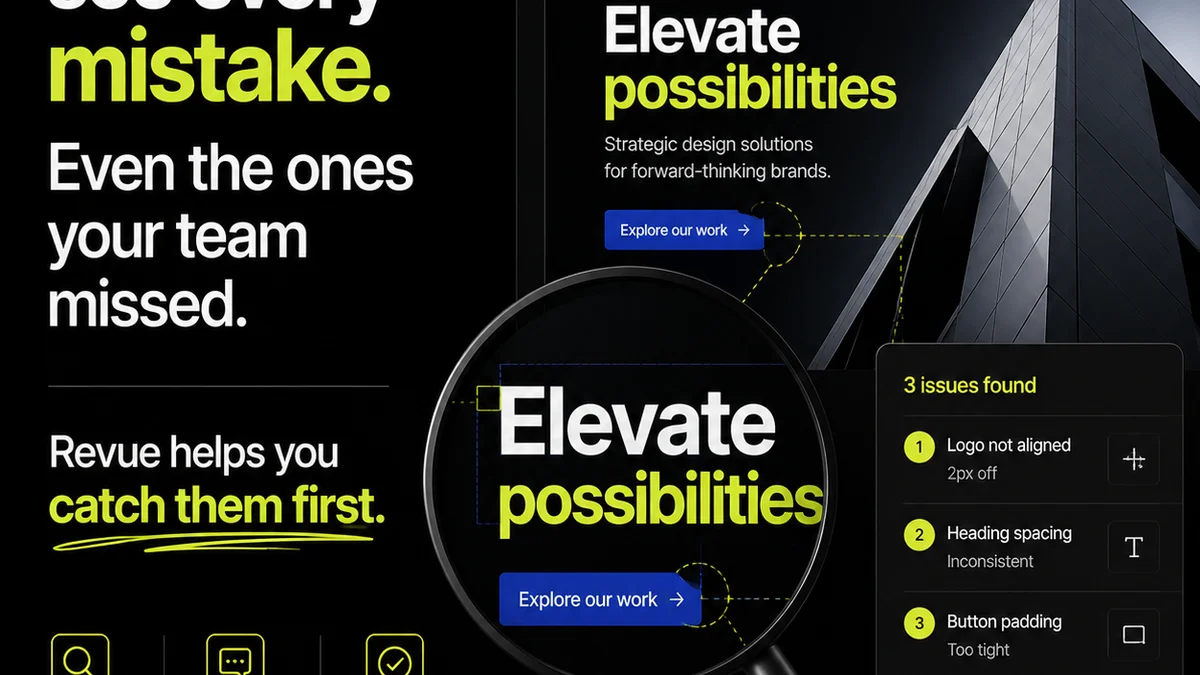
When feedback comes in, it’s captured directly on the asset within Revue. This eliminates scattered email threads and confusing version control issues. All communication is contextualized and tied back to the project’s brief.
Revision and Approval Visibility
The platform provides clear visibility into the revision and approval process. You can see who has reviewed what, what feedback has been given, and what approvals are pending.
This transparency ensures that feedback aligns with the original brief. If a client’s feedback starts to diverge, it’s immediately apparent, allowing you to address it proactively rather than reactively.
It helps enforce the idea that feedback should be constructive and in service of the brief’s objectives.
Quality Assurance Streamlined
By keeping all feedback and revisions in one place, linked to the original brief, Revue helps maintain the integrity of the creative work.
You can easily track how the project has evolved and ensure that the final output still meets the strategic goals outlined in the initial brief. This is critical for delivering work that drives business growth, not just looks good.
Revue helps ensure that the creative output remains strategically sound and focused on the client’s business objectives, as defined from the start.
6. Final Thought
The creative brief isn’t just an administrative task. It’s the architect of successful projects and the engine of agency growth.
Are you treating your creative briefs as strategic assets, or just as paperwork?
Frequently asked questions
What is the primary purpose of a creative brief?
The primary purpose of a creative brief is to clearly define the objectives, scope, target audience, and key message for a creative project. It serves as a foundational document that aligns all stakeholders, guides the creative team, and acts as a reference point for feedback and approvals, ultimately ensuring the project meets business goals.
How can a creative brief prevent scope creep?
A detailed creative brief explicitly outlines the deliverables, success metrics, and constraints of a project. When new requests arise, the brief provides a clear basis for evaluating whether they fall within the original scope. If not, it facilitates a discussion about adjusting the budget or timeline accordingly, rather than allowing the project to expand unchecked.
Why is internal alignment important for a creative brief?
Internal alignment ensures that everyone within the agency—from account managers to creative teams and developers—understands and is working towards the same project goals. A clear brief minimizes miscommunication, streamlines workflows, and maximizes the efficiency and effectiveness of the team's efforts.
How does a creative brief impact client satisfaction?
A well-crafted brief fosters client satisfaction by setting clear expectations from the outset, confirming mutual understanding of objectives, and providing a framework for objective feedback. This upfront alignment reduces misunderstandings and ensures the final deliverables are strategically sound and meet the client's business needs.