Everyone talks about the creative brief. It’s the bedrock of any successful project, the North Star for your team. That’s what they say, anyway. And none of that is wrong. But it’s incomplete.
The real truth? Most creative briefs are garbage. They’re rushed, vague, and treated like a hoop to jump through. Then the real work begins, right? Wrong. The real work *is* the brief.
A great brief isn’t just a document; it’s a collaborative act of clarity. It’s the difference between a project that sings and one that limps across the finish line. Let’s break down how to build one that actually works.
1. The Brief is a Strategy Document, Not a Laundry List
Too many teams see the brief as a place to dump requirements. Client wants a logo. Client wants a website. Client wants social media posts. So, the brief lists: Logo, website, social media. End of story.
This misses the point entirely. A brief isn't about *what* the client wants; it’s about *why* they want it and *what problem* it solves. It’s about the business objectives, the target audience, and the desired outcome. The deliverables are a consequence of the strategy, not the starting point.
Think of it like this:
- Bad Brief: Deliver a 30-second TV spot.
- Good Brief: Increase brand awareness among millennials by 15% in Q3, leveraging emotional storytelling to drive website traffic. The TV spot is one potential tactic.
This strategic foundation is what separates a project that meets expectations from one that exceeds them. It gives your creative team the context to innovate, not just execute.
2. Define the Real Problem, Not Just the Perceived One
Clients often come with solutions, not problems. They *think* they need a new website. But maybe what they really need is a better customer service process, and a website redesign is just the symptom they've identified.
Your job, as the agency or internal team, is to dig deeper. Ask the hard questions. Challenge assumptions.
The Discovery Phase is Non-Negotiable
This isn't just a meeting; it's an investigation. You need to understand:
- What are the client's core business goals?
- Who is their ideal customer? What are their pain points?
- What does success look like, and how will it be measured?
- What has been tried before, and what were the results?
- What are the constraints—budget, timeline, brand guidelines?
This is where the real insights lie. It’s about translating business needs into creative opportunities.
3. Nail the Target Audience: Who Are We Talking To?
“Everyone” is not an audience. “Millennials” is barely an audience. You need specificity.
A vague audience definition leads to generic creative. A sharp, well-defined audience profile allows your team to tailor messaging, tone, and visuals for maximum impact.
Get Granular
Go beyond basic demographics. Consider:
- Psychographics: Values, attitudes, interests, lifestyles.
- Behavioral patterns: How do they interact with brands? Where do they spend their time online and offline?
- Motivations: What drives their purchase decisions? What are their aspirations?
For example, instead of “Small business owners,” try “Solopreneurs in the service industry (coaches, consultants, designers) aged 30-45, earning $75k-$150k annually, who are overwhelmed by administrative tasks and seek tools that save them time and simplify operations.”
This level of detail informs everything from the copy you write to the imagery you choose.
4. Clarify the Single Most Important Objective
What is the ONE thing this project needs to achieve? If you can only pick one metric, what would it be?
Trying to accomplish too much dilutes the message and makes it impossible to measure success. A focused objective provides a clear target for the creative team.
Prioritize Ruthlessly
Is the primary goal to:
- Drive immediate sales?
- Generate qualified leads?
- Increase brand recall?
- Educate the market?
- Improve customer retention?
Be specific. “Increase website traffic” is weak. “Drive 10,000 qualified visitors to the new product page within 30 days of launch” is strong.
5. Define the Core Message and Supporting Points
What is the single, most compelling idea you want the audience to take away? This is the heart of your communication.
Your supporting points should reinforce this core message, providing evidence, context, or emotional resonance.
Think of it as the headline and the sub-headlines. The headline grabs attention; the sub-headlines provide the necessary detail.
The Single-Minded Proposition
This is the essence of your message. It should be:
- Clear and concise.
- Unique and differentiating.
- Relevant to the target audience.
- Actionable.
Without this clarity, the creative can become scattered, trying to say too many things at once.
6. Understand the Tone and Personality
How should the brand *feel*? What personality should the communication convey?
This goes beyond just “friendly” or “professional.” It’s about capturing the unique voice of the brand.
Is it:
- Witty and irreverent?
- Authoritative and trustworthy?
- Empathetic and supportive?
- Innovative and bold?
This guides the language, the visual style, and the overall execution. A mismatch in tone can instantly alienate the target audience.
7. Specify Deliverables and Mandatories
This is where the tactical elements come in. What exactly needs to be produced?
Be precise about formats, sizes, channels, and any non-negotiable elements.
The Non-Negotiables
List everything that *must* be included:
- Specific legal disclaimers.
- Required logos or branding elements.
- Call-to-action buttons or links.
- Technical specifications (file types, resolutions).
- Key messaging points that cannot be altered.
This section prevents scope creep and ensures all essential requirements are met.
8. Establish Clear Approval Processes and Timelines
Confusion here leads to delays and frustration. Who needs to sign off at each stage? What are the review cycles?
Define the workflow clearly. This includes:
- Key stakeholders for feedback and approval.
- Number of revision rounds included.
- Specific deadlines for feedback delivery.
- The final launch or delivery date.
Setting expectations upfront avoids the dreaded “waiting for client feedback” bottleneck.
Where Revue Fits In
A killer creative brief is only the first step. The real challenge is managing the execution and feedback loop effectively. This is where tools like Revue become indispensable.
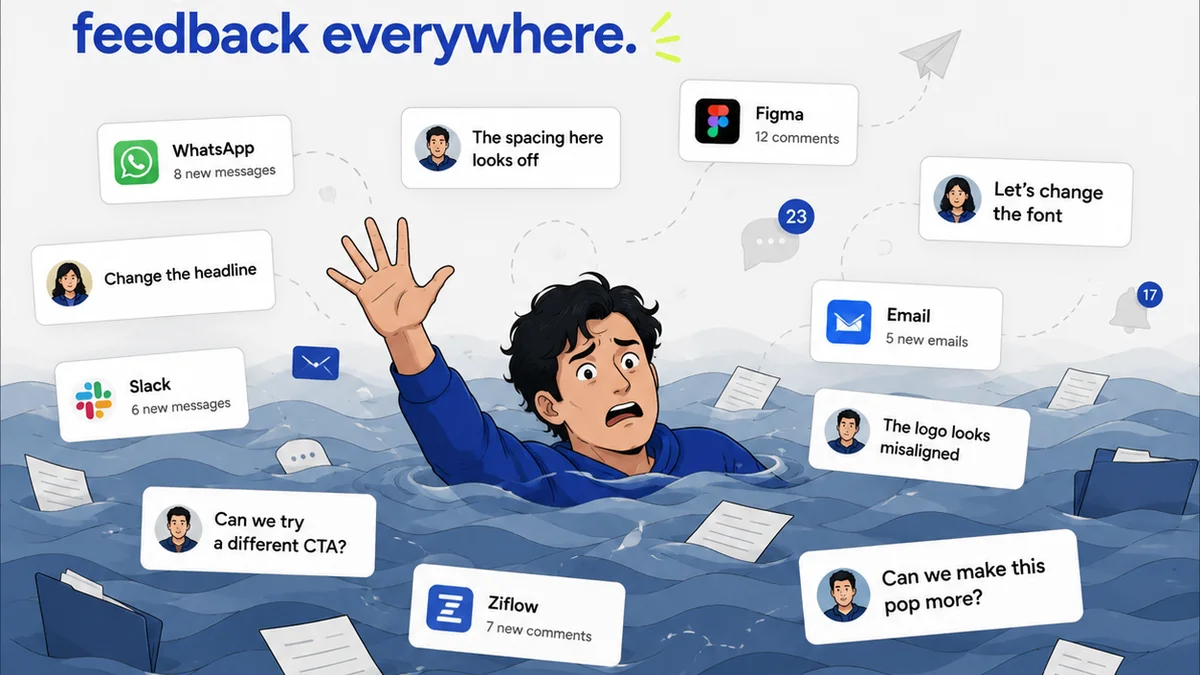
Imagine a world where client feedback isn’t buried in endless email chains. Where revisions are tracked, and approvals are transparent. Where you can easily see the history of decisions made on a project.
Revue centralizes client feedback, making it actionable and easy to manage. It provides a clear audit trail for revisions and approvals, ensuring everyone is on the same page. This visibility reduces miscommunication and speeds up the entire workflow, from brief to final delivery.
It transforms the chaotic post-brief phase into a streamlined, collaborative process, ensuring the creative vision stays on track.
Final Thought
The creative brief is not a passive document; it's an active tool for strategic alignment and creative success. Are you investing enough time and thought into crafting yours? Or is it just another box to tick?
Frequently asked questions
What is the most important part of a creative brief?
While all sections are crucial, defining the core problem the project aims to solve and clarifying the single most important objective are paramount. These elements provide strategic direction and a measurable target for success.
How detailed should the target audience be in a creative brief?
Aim for specificity beyond basic demographics. Include psychographics, behavioral patterns, and motivations. The more granular your audience profile, the more targeted and effective your creative execution will be.
Can a creative brief change during a project?
A great brief serves as a strategic anchor. While minor adjustments might occur based on new insights, significant changes indicate a breakdown in the initial discovery or strategy phase. Major shifts should be handled formally, with clear communication and potential scope adjustments.
What's the difference between a creative brief and a project scope?
A creative brief focuses on the 'why' and 'what' of the project from a strategic and creative perspective—the objectives, audience, and message. A project scope details the 'how' and 'how much'—the specific deliverables, tasks, timelines, and budget.