Everyone agrees creative briefs are crucial. And that bad briefs lead to wasted time, confused teams, and off-target work. So naturally, the market is flooded with “brief software” promising to fix everything. You just fill in the digital form, and *poof* – perfect brief, every time.
None of that is wrong. But it’s incomplete.
The hardest truth? Software can’t fix bad thinking. It can’t force clarity where there’s ambiguity, or strategic direction where there’s none. It can only codify the input you give it. And if that input is flawed, the output will be too. The real problem with creative brief mistakes isn't the medium; it's the message. Or rather, the lack of one.
1. The Illusion of the “Perfect Brief Template”
We love templates. They promise consistency. They promise efficiency. They promise a way to offload the cognitive load of brief creation. Agencies pour hours into building the ultimate creative brief template, often within specialized software.
But a template is only as good as the thinking that fills it. You can have the most sophisticated software, the most elegant form fields, the most robust validation rules. If the person filling it out doesn’t understand the client’s business, the target audience, or the core problem to be solved, the brief will still be useless.
Consider these common template pitfalls:
- Overly prescriptive fields: Asking for a specific CTA when the goal is brand awareness.
- Generic prompts: “What is the objective?” without context on *how* to define it strategically.
- Ignoring the “Why”: Focusing on deliverables without linking them to measurable business outcomes.
- Lack of conversational space: Forcing complex strategy into rigid boxes, stifling nuance.
Software can’t teach strategic thinking. It can’t instill empathy for the client’s challenges. It can only organize the answers you provide.
2. Misunderstanding the Brief’s Purpose
Many teams treat the creative brief as a simple document. A checklist of requirements. A set of instructions for the creative department.
It’s much more than that. A creative brief is a strategic compass. It’s the foundation of the entire project. It aligns stakeholders, defines success, and provides guardrails for creative execution.
When software is introduced, the risk is that it becomes a bureaucratic hurdle rather than a strategic tool. The focus shifts to “filling out the brief” rather than “creating a shared understanding.”
Here’s the operational reality:
- It’s a communication tool: Its primary job is to ensure everyone is on the same page *before* creative work begins.
- It’s a decision-making framework: It provides the criteria against which creative concepts will be evaluated.
- It’s a historical document: It captures the agreed-upon strategy and goals, serving as a reference throughout the project.
If your brief software is just a digital form that gets emailed around, you're missing the point. You're not solving the problem; you're just digitizing the symptom.
3. The “Set It and Forget It” Fallacy
A common mistake, amplified by software, is treating the brief as a static document. Once it’s approved, it’s filed away and rarely revisited.
But projects evolve. Client needs shift. New insights emerge. A truly effective brief is a living document, a reference point that guides decisions as the project progresses.
Software *can* help here, but only if used intentionally. Think about these scenarios:
- Scope creep: Is the new request aligned with the original brief’s objectives and KPIs?
- Mid-project pivots: Does a change in market conditions necessitate a strategic adjustment? How does that impact the creative direction?
- Measuring success: How do the final results compare against the brief’s stated goals?
If your brief software doesn’t facilitate easy referencing and comparison against project outcomes, it’s falling short. It’s becoming a digital artifact, not an active tool.
4. Over-reliance on Automation, Under-reliance on Conversation
We often assume that more structured input fields mean less need for discussion. Software promises to automate the information gathering process, reducing the need for lengthy kickoff meetings or follow-up Q&As.
This is a dangerous assumption. Crucial context often lives in the unsaid. Nuance is best uncovered through dialogue. Strategic alignment is built through shared understanding, not just ticked boxes.
Here’s where the rubber meets the road:
- Ambiguity: Software can’t always capture the subtle hesitations or unspoken assumptions in a client’s request.
- Context: Why is this project important *now*? What are the underlying business pressures? These often require a conversation.
- Creative Collaboration: The best ideas often emerge from collaborative discussions, building on initial strategic thinking.
The goal of brief software shouldn't be to eliminate conversation, but to make it more productive. It should surface the right questions to ask, highlight areas needing clarification, and provide a structured framework for productive dialogue.
5. Ignoring the Human Element: Empathy and Interpretation
At its core, a creative brief is about human communication. It’s about understanding a client’s problem and translating it into a creative solution that resonates with a target audience.
Software, by its nature, is logical and structured. It struggles with the inherent messiness of human emotion, motivation, and cultural context.
A truly effective brief requires:
- Empathy: Understanding the client’s business challenges, their fears, their aspirations.
- Insight: Distilling complex information into a core strategic insight that fuels creative.
- Interpretation: Translating strategic objectives into creative territories that are both relevant and inspiring.
Can software help organize research? Yes. Can it prompt for audience demographics? Absolutely. Can it *feel* the client's urgency or *imagine* the end-user's emotional response? No.
This is where the human element—the strategist, the account manager, the creative director—is irreplaceable. They interpret the data, build rapport, and inject the necessary human understanding.
Where Revue Fits In
This is why tools like Revue are essential for creative teams. While not a “brief software” in the traditional sense, Revue addresses the operational realities that pure brief-generation tools often miss.
Revue acts as the central nervous system for creative projects, particularly in managing client feedback and approvals. The challenges with briefs often extend into the project execution phase:
- Centralized Feedback: Instead of scattered email threads or conflicting annotations, Revue provides a single source of truth for all client feedback on creative assets. This ensures that feedback is contextualized and directly tied to the brief’s objectives.
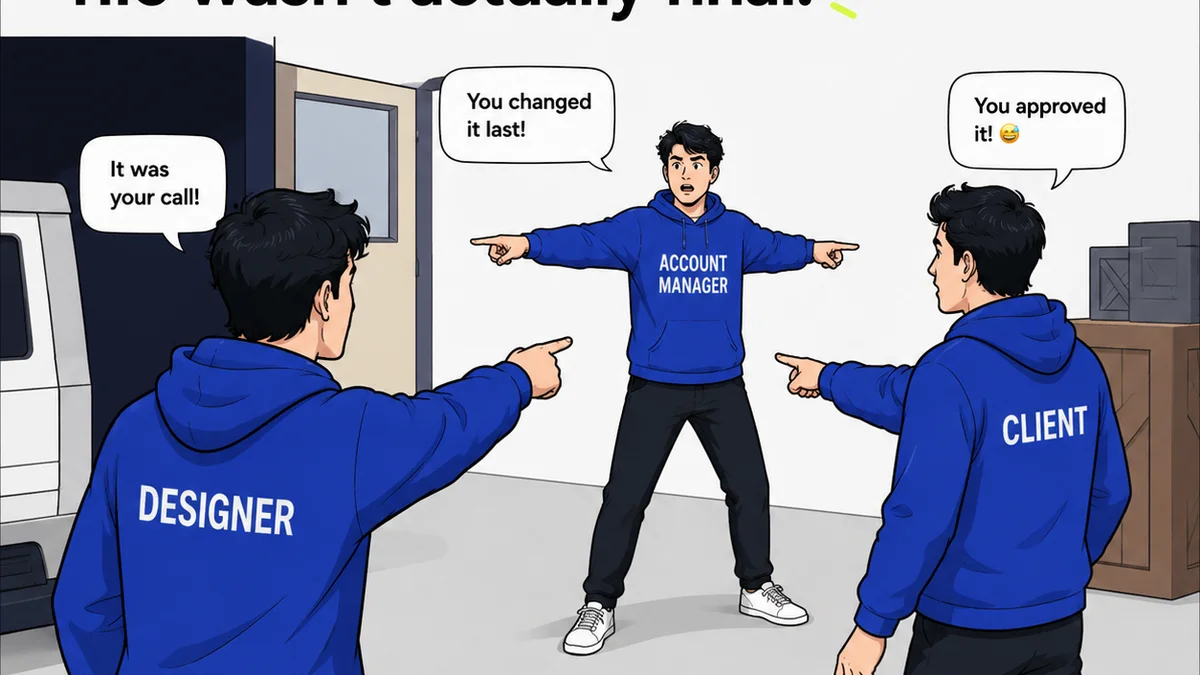
- Revision and Approval Visibility: Understanding the history of revisions, who approved what, and why is critical. Revue offers a clear audit trail, preventing “he said, she said” scenarios and ensuring that changes align with the original strategic intent of the brief.
- Quality Checks: By having all feedback and approvals in one place, teams can more effectively perform quality checks against the initial brief requirements and client expectations. This reduces the risk of delivering work that misses the mark due to miscommunication or lost context.
Revue doesn't replace the strategic thinking required for a great brief. Instead, it ensures that the strategic intent captured in the brief isn't lost in the chaos of execution, iteration, and client communication.
Final Thought
The quest for the perfect creative brief software is understandable. We all want smoother workflows and better outcomes. But the most powerful software in the world can’t compensate for a lack of strategic clarity, a failure to communicate effectively, or an absence of human empathy.
Before you invest in the next shiny object promising to automate brief perfection, ask yourself: Are we focusing on the tool, or are we focusing on the thinking that goes into it?
Frequently asked questions
Can software really eliminate creative brief mistakes?
No, software can't eliminate all creative brief mistakes. While it can help standardize the process and improve organization, it cannot replace strategic thinking, clear communication, or human insight. Mistakes often stem from flawed input or a misunderstanding of the brief's purpose, which software alone cannot fix.
What is the biggest mistake agencies make with brief software?
The biggest mistake is treating brief software as a magic bullet that replaces strategic thinking and conversation. Over-reliance on templates and automated fields without deep understanding or dialogue leads to briefs that are technically complete but strategically hollow.
How can I ensure my creative brief is effective, even with software?
Focus on the 'why' behind every field. Ensure clear, measurable objectives are defined. Use the software as a framework for conversation, not a replacement for it. Always involve strategic thinkers and creatives in the brief creation and review process.
What's the difference between a brief template and a strategic brief?
A brief template is a structure. A strategic brief is the thoughtful, insightful content that fills that structure. A template can be filled out poorly, resulting in a weak brief. A strategic brief is built on a deep understanding of the client's business, audience, and goals, ensuring the creative output is effective.