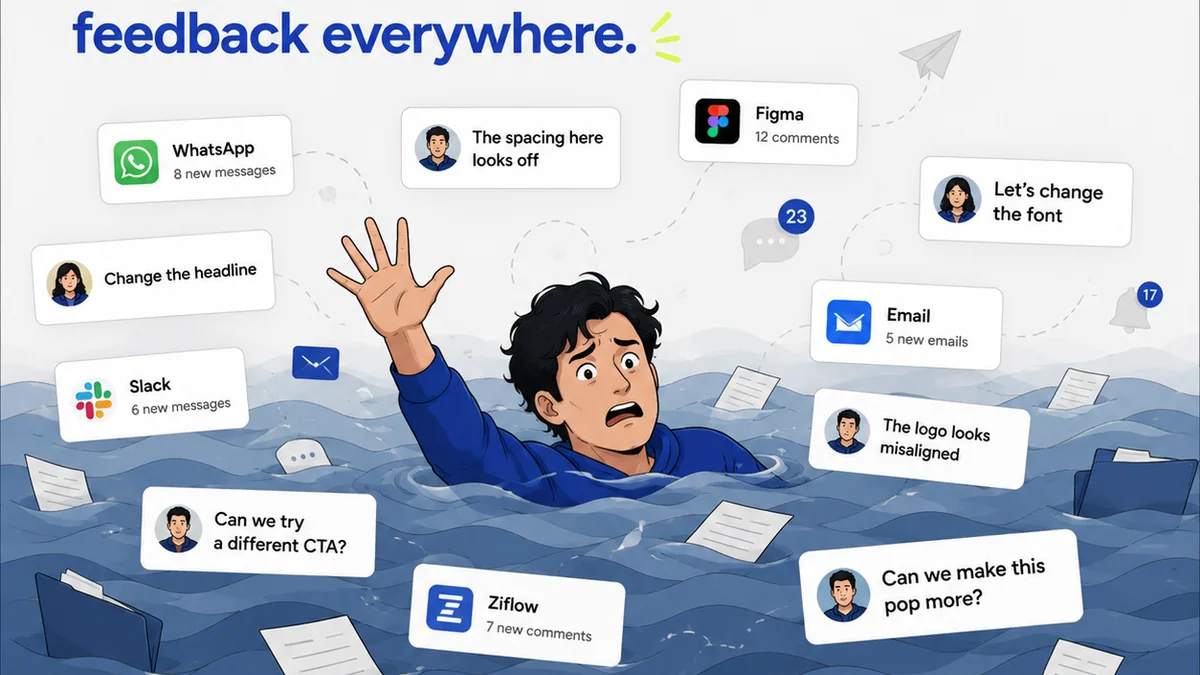
Everyone knows creative teams get slammed. Deadlines loom, scope creeps, and suddenly it feels impossible to deliver quality work. We assume this is just the cost of doing business in a creative agency or in-house team. That chaos is unavoidable.
None of that is wrong. But it’s incomplete.
The hard truth is that unpredictable chaos isn’t a law of nature; it’s a symptom of poor creative capacity planning. And it’s costing you more than just sleepless nights. It’s costing you client trust, team morale, and ultimately, profitability.
You can’t just react to every urgent request and expect to thrive. You need a proactive strategy. That’s where understanding and implementing creative capacity planning becomes critical.
1. The Myth of Infinite Bandwidth
The biggest assumption we make is that our teams have infinite bandwidth. We see an open slot in the schedule and assume we can just slot another project in. This is a dangerous illusion.
Creative work isn't like manufacturing widgets. Each project has unique demands, requires specific skill sets, and involves subjective creative input that’s hard to quantify in advance.
Why the Illusion Persists
- Underestimating Complexity: We often underestimate the time and effort involved in creative tasks, especially those requiring deep thought or iteration.
- Fear of Saying No: Agencies and in-house teams often fear turning down work, leading to overcommitment.
- Lack of Visibility: Without a clear view of current workloads and future demands, it’s easy to overbook.
This myth leads directly to burnout and compromised quality. It’s the fast track to a team that’s always busy but never truly productive.
2. What is Creative Capacity Planning, Really?
At its core, creative capacity planning is the process of understanding how much work your creative team can realistically handle, given their skills, time, and resources, and then aligning that capacity with incoming demand.
It’s not about squeezing more out of your team. It’s about making smarter decisions about what work you take on and how you allocate your resources.
Key Components of Capacity Planning
- Resource Assessment: Knowing exactly who on your team has what skills and what their availability looks like.
- Demand Forecasting: Predicting upcoming project needs, client requests, and internal initiatives.
- Workload Balancing: Distributing tasks evenly to prevent bottlenecks and burnout.
- Scenario Modeling: Understanding the impact of taking on new projects or losing key team members.
Think of it as a strategic map for your creative output. Without it, you're navigating blind.
3. The Tangible Costs of Ignoring Capacity
When capacity planning is an afterthought, the negative impacts ripple through the entire organization and client relationships.
Client-Side Impacts
- Missed Deadlines: The most obvious consequence. This erodes trust and can lead to penalties or lost future business.
- Compromised Quality: Rushed work is rarely the best work. Clients notice when quality dips, leading to dissatisfaction and rework.
- Scope Creep Management Failure: Without understanding your capacity, you're ill-equipped to push back effectively on scope creep, leading to unhappy clients and under-scoped projects.
Internal Impacts
- Team Burnout: Consistently overworked teams lead to high turnover, decreased morale, and a decline in creativity.
- Reduced Profitability: Over-servicing projects, paying for overtime, and losing clients due to poor delivery all hit the bottom line.
- Inefficient Resource Allocation: Key talent might be bogged down on low-priority tasks while critical projects languish.
- Stifled Innovation: When teams are constantly in reactive mode, there’s no time for proactive thinking, skill development, or exploring new creative avenues.
These aren't minor inconveniences. They are fundamental threats to your agency’s or department’s success.
4. Building Your Creative Capacity Plan: The How-To
This isn't about complex software or MBA-level strategy. It's about practical, consistent processes.
Step 1: Audit Your Resources
You need to know who you have and what they can do. This goes beyond just job titles.
- Skills Inventory: Document specific skills (e.g., UI design, motion graphics, copywriting, SEO, video editing, specific software proficiency).
- Availability Tracking: Understand each team member's current workload, upcoming PTO, and potential for overtime (use this sparingly!).
- Role Specialization: Identify team members who are specialists versus generalists.
This forms the bedrock of your plan. You can’t plan capacity without knowing what you’re working with.
Step 2: Understand Your Demand
This requires looking both backward and forward.
- Historical Data: Analyze past project timelines, resource allocation, and common client requests. What took longer than expected? Where were the bottlenecks?
- Pipeline Review: Work with sales/account management to understand upcoming opportunities and committed projects.
- Internal Needs: Factor in time for internal initiatives, training, and R&D.
Be realistic. Don't assume every lead will convert or every project will be approved.
Step 3: Map Capacity to Demand
This is where the planning happens. It’s an ongoing process, not a one-time setup.
- Project Intake & Scoping: Establish a rigorous process for evaluating new project requests. Does it fit our skills? Do we have the bandwidth? What’s the true scope?
- Resource Allocation: Assign projects based on skills, availability, and priority. Use a visual tool if possible (like a Gantt chart or resource management software).
- Identify Gaps and Surpluses: See where you're overbooked or underutilized. This informs hiring decisions, training needs, or the need to decline work.
This phase requires tough conversations. You might need to say no to work, or push back on timelines.
Step 4: Monitor and Adjust
Your plan is a living document.
- Regular Check-ins: Weekly or bi-weekly meetings to review workloads, project progress, and any emerging issues.
- Track Key Metrics: Monitor on-time delivery rates, project profitability, team utilization, and client satisfaction.
- Scenario Planning: What happens if a key designer leaves? What if a major client doubles their request? Run these through your capacity model.
Flexibility is key. The market changes, clients change, and your team changes. Your plan must adapt.
5. Where Revue Fits In
Managing creative capacity isn't just about spreadsheets and calendars. It's about having clear visibility and control over the entire creative workflow.
Revue helps by centralizing client feedback, making it easy to see exactly what revisions are requested and by whom. This clarity prevents misinterpretations and wasted time that drains capacity.
With clear revision and approval tracking, you gain a real-time pulse on project progress. You can see where approvals are pending and which revisions are causing delays, allowing you to proactively manage your team’s workload.
Furthermore, Revue’s structured approach supports quality checks by ensuring all feedback is captured and addressed. This reduces the likelihood of last-minute scrambles or overlooked details that consume valuable creative time.
By streamlining these critical aspects of the creative process, Revue frees up your team’s capacity, allowing them to focus on what they do best: creating great work, on time and on budget.
6. Final Thought
The
Frequently asked questions
What are the main benefits of creative capacity planning?
The main benefits include preventing team burnout, improving on-time delivery rates, enhancing work quality, increasing client satisfaction, boosting profitability, and allowing for more strategic decision-making regarding new business.
How often should I review my creative capacity plan?
Your creative capacity plan should be a living document. While initial setup requires significant effort, regular reviews (weekly or bi-weekly) of ongoing projects and upcoming demand are crucial. Major adjustments might be needed quarterly or when significant changes occur, like losing a key team member or onboarding a large new client.
What if my team's skills are too specialized?
Specialized skills can create bottlenecks. To mitigate this, focus on cross-training where possible, document processes thoroughly for knowledge sharing, and consider outsourcing highly specialized tasks that don't align with your core team's strengths. Accurate capacity planning will highlight these skill gaps, informing strategic hiring or training decisions.
How do I handle unexpected urgent requests with a capacity plan?
A solid capacity plan includes buffer time for the unexpected. When an urgent request arises, evaluate its true priority against current commitments. If it must be accommodated, assess which lower-priority task needs to be deferred or if overtime is absolutely necessary (and budgeted for). The plan helps you make informed trade-offs rather than reactive decisions.