Most agencies think creative capacity planning is about spreadsheets. Fill in the hours, track the utilization, and hope for the best. It’s a nice thought. A comforting myth, even.
But it’s incomplete. And it’s costing you.
The hard truth is that true creative capacity planning isn't about tracking hours; it's about understanding and optimizing the flow of work. It’s about visibility into your entire project lifecycle, from brief to final delivery. It's about knowing what's coming, what's in progress, and what's blocked – before it becomes a crisis.
1. The Myth of Utilization as the Sole Metric
Utilization rates. Everyone loves to talk about them. A high utilization rate feels like efficiency. A low one feels like wasted money.
But what if that high utilization is a symptom of a deeper problem? What if your team is constantly at 95% capacity, but projects are still slipping? That’s not efficiency; that’s burnout waiting to happen. It means there’s no room for the unexpected. No buffer for revisions. No time for strategic thinking.
Your team is running on fumes, and clients are getting a diluted product. This is the dark side of chasing utilization without context.
The Real Cost of Over-Capacity
- Missed deadlines
- Compromised creative quality
- Increased stress and burnout
- Higher employee turnover
- Client dissatisfaction
Focusing solely on utilization is like looking at your car's speedometer without checking the fuel gauge. You might be going fast, but you're about to run out of gas.
2. Understanding Project Velocity, Not Just Hours
Capacity is more than just available hours. It’s about the speed and predictability of your creative output. This means looking at the entire project lifecycle.
Where do projects get stuck? What are the common bottlenecks? Is it client feedback? Internal reviews? Waiting for assets?
These aren't just minor delays; they are critical points that dictate your actual throughput. You can have 1000 hours available, but if every project hits a two-week feedback loop, your effective capacity plummets.
Mapping the Bottlenecks
Start by mapping out your typical project flow. Use your actual project data, not assumptions.
- Briefing: How long does it take to get a solid brief? Is it clear?
- Concepting/Design: Time spent on initial creative work.
- Internal Review: How long does internal feedback take? Is it consolidated?
- Client Feedback: This is often the biggest culprit. How long do clients take? Is feedback clear and actionable?
- Revisions: How many rounds are typical? How long does each round take?
- Final Approval: The final sign-off.
- Delivery: Getting the final files to the client.
Every step in this chain represents potential friction. Your goal is to identify and smooth out these friction points.
3. The Impact of Feedback Loops
Feedback is essential. It drives the creative process. But poorly managed feedback is a capacity killer.
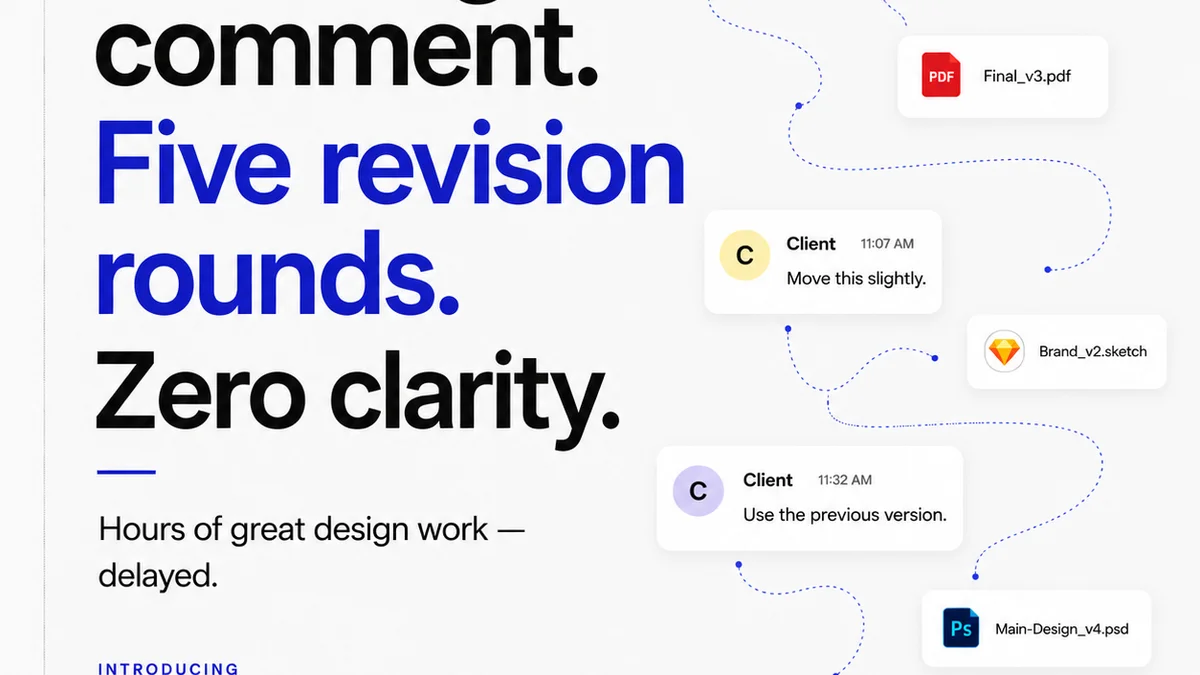
Think about the last time a project went sideways. Chances are, it involved endless email chains, conflicting comments from multiple stakeholders, or vague feedback like “make it pop.”
This isn't just frustrating; it's a massive drain on your team's time and energy. Each unclear comment requires clarification, leading to more back-and-forth. Each conflicting comment requires negotiation and rework.
This is where centralized feedback becomes critical. When feedback is consolidated, contextualized, and trackable, you drastically reduce the time wasted on communication overhead and rework.
Symptoms of Poor Feedback Management
- Projects stuck in revision limbo
Frequently asked questions
What is the difference between utilization and capacity planning?
Utilization measures how much of a team's available time is spent on billable or project work. Capacity planning, on the other hand, is a broader strategy that forecasts the total amount of work a team can realistically complete within a given timeframe, considering all factors like project complexity, dependencies, and potential bottlenecks, not just hours logged.
How can I improve client feedback turnaround time?
Clearly define feedback windows and processes in your project scope. Use a centralized platform for all feedback, making it contextual and easy to track. Schedule dedicated feedback review sessions with clients. For internal teams, ensure feedback is consolidated and actionable before being passed on.
What are the signs that my agency is over capacity?
Common signs include consistently missed deadlines, a decline in creative quality, increased team stress and burnout, high employee turnover, and frequent client complaints about delays or rushed work. Essentially, if projects are always late despite high team hours, you're likely over capacity.
How often should I review my creative capacity plan?
Your capacity plan should be a living document. Review it weekly for short-term adjustments and monthly or quarterly for strategic adjustments. Major shifts in client load, team size, or project types may necessitate immediate reviews.