Everyone talks about creative capacity planning like it’s a simple headcount exercise. Just add more designers when the work piles up, right?
None of that is wrong. But it’s incomplete.
The hard truth is that effective creative capacity planning isn’t about having enough bodies. It’s about understanding the flow of work, the real cost of revisions, and the hidden bottlenecks that drain your team’s energy and your agency’s profit.
1. Ignoring the True Cost of Revisions
Agencies often underestimate the financial and operational drain of endless client revisions. It’s easy to see a project as a fixed scope, but the reality of creative work is iterative. Every round of feedback, every tweak, pulls resources away from new business and other revenue-generating projects.
This isn't just about wasted hours. It's about:
- Delayed project completion.
- Increased stress on creative teams.
- Potential for scope creep that erodes margins.
- Client dissatisfaction when timelines slip.
- Opportunity cost – what else could that team have been working on?
Accurate capacity planning demands a clear view of historical revision cycles. You need to know, on average, how many rounds of feedback a typical project requires for each client or project type.
The Assumption: Clients approve quickly.
The Reality: Clients are busy. They might not have a designer’s eye. They might not understand the implications of their feedback. They might be waiting on their own stakeholders.
This leads to the second major mistake.
2. Underestimating Client Feedback Latency
How long does it *really* take for clients to provide feedback? A day? Three days? A week?
If your capacity plan assumes 24-hour turnaround on feedback, but your clients historically take 72 hours, you have a massive, invisible bottleneck. Your team is ready to move, but they’re stuck waiting.
This latency directly impacts your capacity. A designer waiting 48 hours for feedback on a single asset cannot complete as many assets as one who gets feedback within 8 hours. The math is simple: longer wait times mean less output, even with the same number of people.
You need to build this waiting time into your project timelines and, crucially, into your capacity calculations. If feedback is consistently slow, you need to:
- Set clearer client expectations upfront.
- Implement stricter feedback deadlines in your contracts.
- Build buffer time into every project phase.
- Consider projects with clients known for faster feedback loops.
Ignoring this latency means your capacity is artificially inflated. You *think* you have room for another project, but you don’t, because critical path items are constantly blocked.
3. Treating All Projects (and Clients) the Same
A quick social media graphic takes far less time and mental energy than a full brand identity system. A well-briefed, decisive client is a dream; a hesitant, indecisive one is a capacity killer.
Your capacity planning needs to segment work by complexity, client, and project type. A blanket assumption that everyone on the team can do X amount of work per week is a recipe for disaster.
Consider these factors:
- Project Type: Branding, web design, video production, content writing – each has different resource demands and typical revision cycles.
- Client History: Some clients are consistently fast and clear. Others are consistently slow and vague.
- Team Member Specialization: Is your senior designer best suited for high-level concepting, or are they more efficient at detailed execution?
- Deliverable Complexity: A single banner ad vs. a full website UI kit.
Without this segmentation, your capacity plan is a blunt instrument. You’ll either over-allocate and burn out your best people, or under-allocate and miss opportunities.
4. Failing to Account for Non-Billable Overhead
Here’s a truth that makes many agency owners squirm: not all time is billable.
Your creative team isn't just designing or writing. They're in meetings, attending training, handling internal reviews, onboarding new hires, managing software, and dealing with the inevitable admin tasks that keep an agency running.
This non-billable time eats into available capacity. If you assume 40 billable hours per week per person, you’re dreaming.
A realistic capacity plan must account for:
- Internal status meetings.
- Client calls and presentations (even those not directly billed).
- Team training and professional development.
- Onboarding new team members.
- Software updates and troubleshooting.
- Internal quality assurance and reviews.
- Vacation, sick days, and holidays.
A good rule of thumb is to aim for 70-80% billable utilization for creative teams. Anything higher often leads to burnout and decreased quality. Anything lower might indicate inefficiencies.
5. Not Tracking and Analyzing Actual Output
The biggest mistake? Relying on gut feelings and outdated spreadsheets.
You can’t plan capacity if you don’t know what your team is *actually* producing.
This means moving beyond simple time tracking to **output tracking**. What did that designer *complete* in 8 hours? What assets were *delivered*?
You need systems that capture:
- Project start and end dates.
- Number of revisions per project.
- Time spent per task *and* per deliverable.
- Client feedback turnaround times.
- Actual output vs. estimated output.
This data is gold. It allows you to refine your estimates, identify training needs, understand client behaviors, and, most importantly, build a capacity plan based on reality, not wishful thinking. It’s the difference between flying blind and navigating with a clear map.
6. Over-Reliance on Freelancers (Without a Strategy)
Freelancers are a common solution for capacity issues. But just hiring them isn't a plan.
A sudden influx of freelance work can:
- Strain your internal project managers.
- Introduce quality control issues.
- Require significant onboarding and briefing time, eating into your own team’s capacity.
- Lead to inconsistent brand voice or style.
A strategic approach involves:
- Building a roster of trusted, vetted freelancers *before* you need them.
- Having clear onboarding processes for new freelancers.
- Defining who on your internal team is responsible for managing and briefing them.
- Allocating budget for freelance management time.
Without this, freelancers become another source of chaos, not a solution.
Where Revue Fits In
Managing creative capacity effectively means having crystal-clear visibility into your workflow. You need to know where every project stands, what feedback is pending, and what the next steps are.
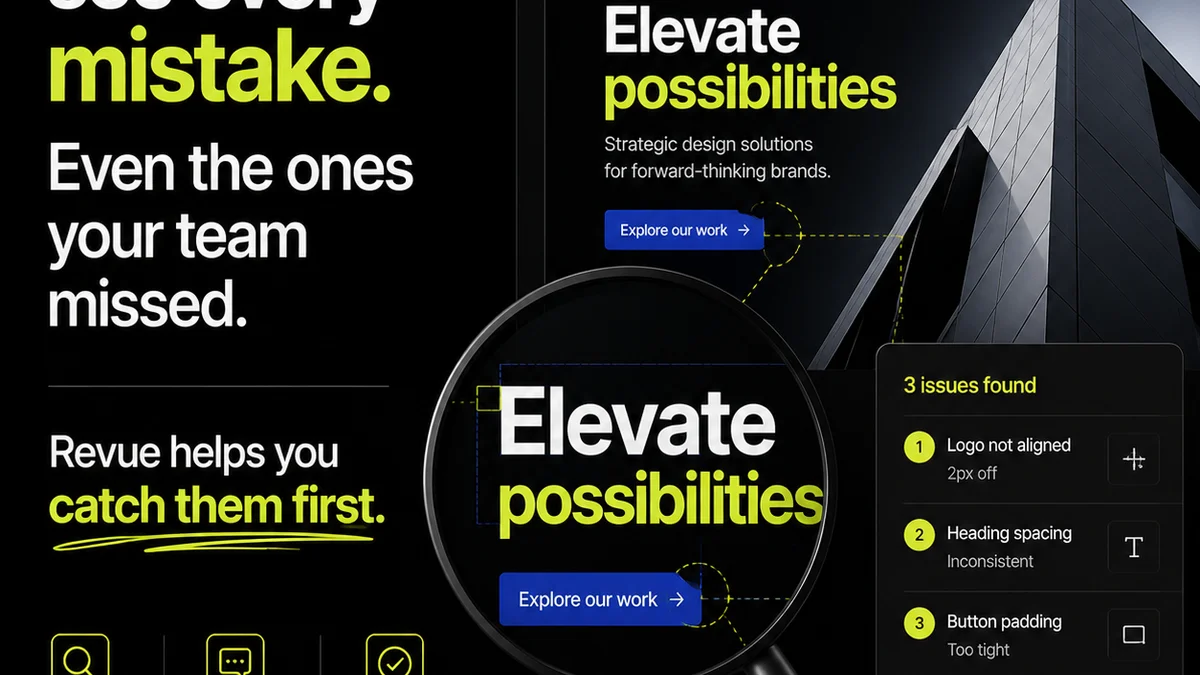
Revue centralizes client feedback, making it easy to track revisions and approvals in one place. This eliminates the guesswork around client response times and reduces the back-and-forth that eats up valuable capacity.
By having a single source of truth for all creative assets and client communication, you gain the real-time data needed to understand your team’s actual output and identify bottlenecks. This allows for more accurate forecasting and smarter resource allocation, preventing over-commitment and burnout.
Final Thought
Capacity planning isn't a static exercise; it's a dynamic process of observation, analysis, and adjustment. Are you building your plans on assumptions, or on the hard data of your agency’s actual workflow?
Frequently asked questions
What is creative capacity planning?
Creative capacity planning is the process of assessing and forecasting the resources (people, time, tools) an agency needs to meet current and future project demands. It involves understanding team availability, skill sets, project timelines, and potential bottlenecks to ensure work can be delivered efficiently and profitably.
Why is underestimating revisions a problem for capacity planning?
Underestimating revisions inflates your perceived capacity. Each revision round consumes time and resources that were likely allocated to other projects or new business. This leads to missed deadlines, increased costs, team burnout, and potential scope creep, all of which negatively impact profitability and client satisfaction.
How can I accurately track creative output?
Accurate output tracking goes beyond simple time logging. It involves recording what was *completed* and *delivered* within a given timeframe. Use project management tools to log specific deliverables, track revision counts, measure client feedback latency, and compare estimated vs. actual completion times for tasks and projects. This data forms the basis for realistic capacity planning.
What's the difference between billable and non-billable time in capacity planning?
Billable time is directly charged to clients for project work. Non-billable time includes internal meetings, training, admin tasks, and onboarding. A realistic capacity plan must account for a significant portion of non-billable time, as it directly reduces the available hours for client work. Aiming for 70-80% billable utilization is a common, sustainable target for creative teams.