Everyone thinks creative change management is about saying "no" more often. Or maybe it’s about having a killer contract that covers every eventuality. None of that is wrong. But it’s incomplete.
The real hard truth? Effective creative change management isn't about blocking changes. It’s about making them predictable, manageable, and profitable.
1. The Assumption: Clients Know What They Want
This is the most persistent myth. Clients hire you because they *don’t* know exactly what they want, or how to articulate it. They have a business problem, a vague idea, and a budget. Your job is to translate that into creative reality. Expecting them to perfectly pre-visualize the outcome is a recipe for scope creep and resentment.
This misunderstanding leads to:
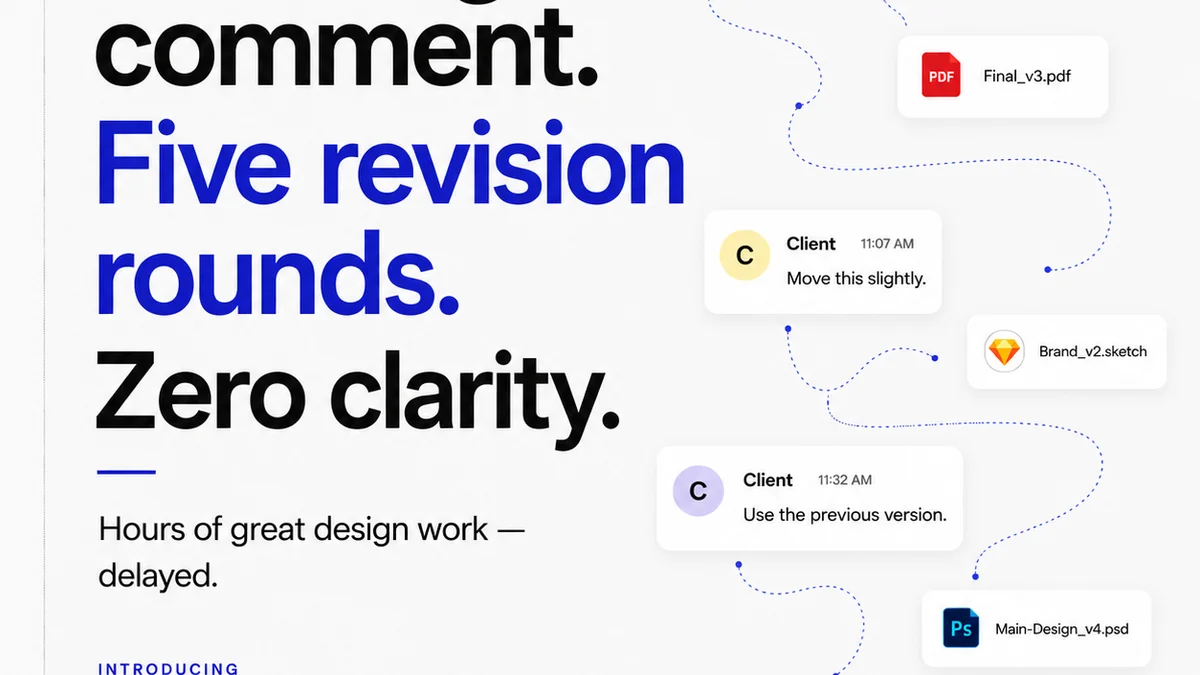
- Endless rounds of revisions that feel like pulling teeth.
- Clients feeling unheard or misunderstood.
- Your team feeling demoralized by seemingly arbitrary direction changes.
- Projects ballooning in time and cost, eating into your margins.
The solution isn't to train clients to be designers. It’s to build a process that guides them through the creative journey, even when their own internal compass is spinning.
The Deeper Truth: Clients Need Guidance, Not Just Execution
Your clients are experts in their business, not necessarily in design, branding, or marketing strategy. They need you to be the expert guide. This means proactively setting expectations, asking probing questions, and providing clear frameworks for feedback and decision-making.
Think of it like building a house. The client might say, “I want a bigger kitchen.” But they don’t know if that means knocking down a wall, extending the house, or just rearranging the existing space. They need you to show them the options, explain the implications of each, and help them make an informed choice.
2. The Assumption: All Changes Are Equal
A minor tweak to a button color is not the same as a complete rebranding strategy shift. Yet, many agencies treat every requested change with the same level of disruption, or worse, no structure at all.
This leads to chaotic workflows where small, easy fixes get lost in the shuffle, and major strategic pivots derail entire projects without proper recalibration.
The Deeper Truth: Categorize, Quantify, and Qualify Every Change
Not all changes are created equal. You need a system to categorize and assess the impact of every request. This allows you to:
- Prioritize effectively: Focus on changes that move the needle for the client.
- Estimate accurately: Understand the true time and resource cost of each modification.
- Communicate clearly: Explain to the client *why* a certain change has a different impact (and cost).
Consider these categories:
- Minor Tweak: Small aesthetic adjustments, copy edits, color shifts within brand guidelines. Minimal impact on timeline or budget.
- Significant Revision: Changes that affect layout, introduce new elements, require new assets, or deviate slightly from the agreed brief. Moderate impact.
- Strategic Pivot: A fundamental shift in direction, target audience, core messaging, or platform strategy. Major impact, often requiring a re-scoping and re-briefing.
For each change, you also need to quantify its impact. How many hours will it take? What additional resources are needed? How will it affect the launch date?
3. The Assumption: A Contract Solves Everything
Contracts are essential. They define the scope, deliverables, and payment terms. But a contract is a legal document, not a communication tool. Relying solely on it for managing changes is like trying to navigate a busy city with only a map and no GPS.
A contract can’t foster collaboration or proactively address misunderstandings before they escalate.
The Deeper Truth: Collaboration and Communication Are Your Best Tools
The most successful agencies build strong, collaborative relationships with their clients. This means:
- Proactive Communication: Regular check-ins, status updates, and transparent reporting.
- Shared Understanding: Ensuring everyone is on the same page about goals, progress, and next steps.
- Clear Feedback Loops: Establishing defined channels and processes for providing and receiving feedback.
This proactive approach prevents many potential change requests from even arising. When clients feel involved and informed, they are less likely to request significant deviations later.
Setting the Stage for Effective Feedback
Before any creative work begins, establish the rules of engagement for feedback:
- Who is authorized to give feedback? (Limit to 1-2 key stakeholders).
- What is the feedback format? (e.g., annotated comments, specific questions).
- What is the turnaround time for feedback? (Crucial for keeping projects on track).
- What constitutes a
Frequently asked questions
What is the most common mistake agencies make with creative change management?
Treating all change requests equally and not having a structured process to categorize, quantify, and qualify their impact. This often leads to scope creep and team burnout.
How can I get clients to provide better feedback?
Set clear expectations upfront regarding who provides feedback, in what format, and within what timeframe. Guide them with specific questions and use tools that allow for contextualized comments.
How do I handle major strategic pivots from clients?
Recognize these as significant scope changes. Pause the current work, initiate a re-briefing process, reassess the project timeline and budget, and obtain formal client approval for the new direction before proceeding.
Can technology help with creative change management?
Absolutely. Centralized platforms for feedback, version control, and approval tracking streamline the process, improve communication, and provide a clear audit trail, significantly reducing misunderstandings and delays.