Everyone talks about managing change. They hand out checklists. They talk about communication plans and stakeholder buy-in. None of that is wrong. But it’s incomplete.
The hard truth is that most creative change management efforts fail because they focus on the *process* of change, not the *people* experiencing it. Creative teams aren't cogs in a machine; they're dynamic, often sensitive, beings whose work depends on trust, psychological safety, and clear direction. A checklist alone won't cut it.
This isn't about avoiding change. It's about navigating it effectively, minimizing disruption, and emerging stronger. This is your practical guide, grounded in the reality of agency and in-house creative life.
1. Audit Your Current State: What's Actually Happening?
Identify the Undercurrents
Before you can manage change, you need to understand the current flow. What are the unspoken rules? Where does information get stuck? Who are the informal leaders and influencers?
Many change initiatives start with a top-down announcement. That's a mistake. You need to understand the ground truth first. This involves:
- Observing team dynamics during regular work.
- Having informal chats with team members (not during a crisis).
- Reviewing past project post-mortems for recurring issues.
- Mapping communication pathways – formal and informal.
Recognize the Signs of Resistance
Resistance isn't always overt. It's often subtle. Look for these signals:
- Increased cynicism or sarcasm.
- Passive-aggressive comments in meetings.
- Sudden drops in productivity or quality.
- Unusual silence or withdrawal from team discussions.
Frequently asked questions
What's the biggest mistake agencies make in managing change?
Focusing solely on the process of change (communication plans, new tools) rather than the human element. Creative teams thrive on trust and psychological safety, which are often overlooked in rigid change management approaches.
How can I identify subtle resistance to change in my creative team?
Look for increased cynicism, passive-aggressive comments, a drop in productivity or quality, or team members becoming unusually quiet or withdrawn. These are often early indicators that something isn't sitting right.
What role does feedback play in managing change for creative projects?
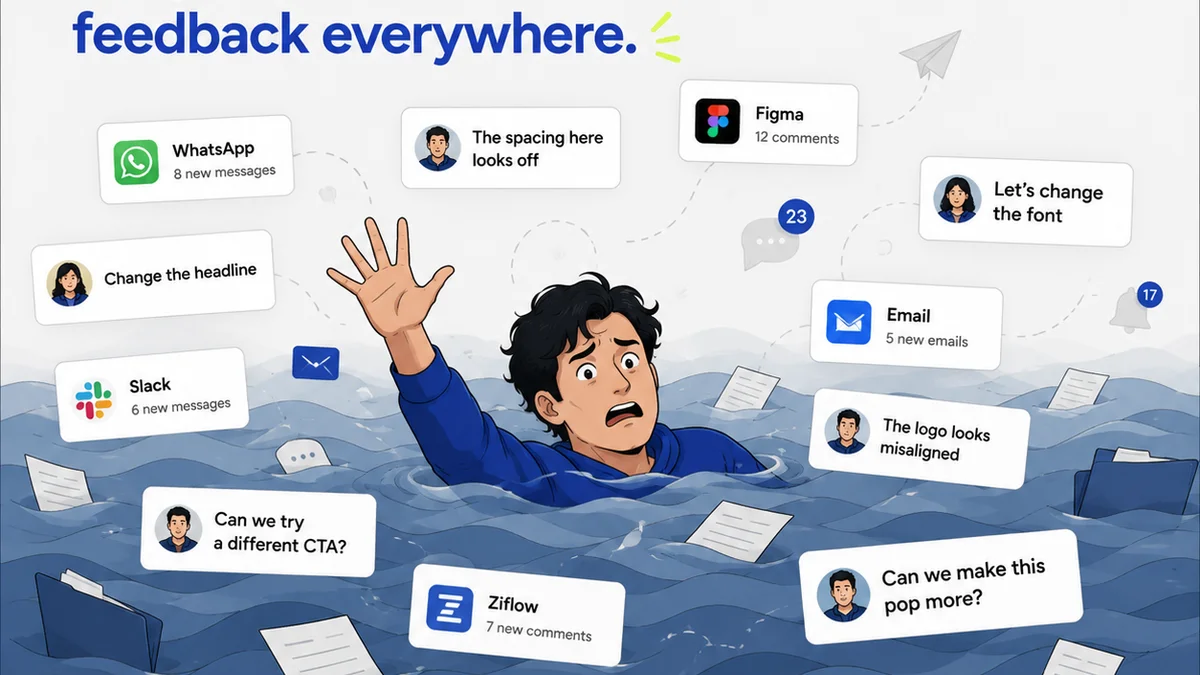
Centralized, clear feedback is crucial. It ensures everyone is working from the same version of truth, reduces confusion, and helps identify roadblocks early. Tools that facilitate this visibility are key to smoother transitions during change.
How can a creative team be more adaptable to change?
By building a culture of psychological safety where experimentation is encouraged, and failure is treated as a learning opportunity. Empowering team members and fostering open communication also makes them more resilient to shifts.