Most creative change management software promises to streamline feedback and track revisions. That’s not wrong. But it’s incomplete.
The real value isn’t just in tracking what changed. It’s about building a predictable, repeatable process that eliminates confusion, speeds up approvals, and protects your creative output from scope creep and unnecessary back-and-forth. This is the hard truth agencies face: your change management tool needs to be more than a digital Rolodex for feedback; it needs to be an operational engine.
1. Centralized Feedback: The Single Source of Truth
Scattered feedback across emails, Slack messages, and random cloud document comments is a project killer. It breeds misinterpretation and lost information.
Your creative change management software must aggregate all feedback in one place, tied directly to the creative asset being reviewed.
The Cost of Dispersed Feedback
- Missed revision requests
- Conflicting instructions
- Wasted hours searching for comments
- Client frustration
- Team burnout
A centralized system means everyone, from the client to the designer, sees the same feedback, the same version, and the same status. This clarity is non-negotiable.
2. Version Control That Actually Works
You’ve seen it: “final_final_v3_really_this_time.psd”. Version control shouldn’t be a guessing game. It needs to be clear, chronological, and easily accessible.
Good creative change management software provides:
- Automatic version numbering
- Clear visual indicators of current vs. previous versions
- The ability to revert to older versions if necessary
- A complete audit trail of all changes made
This prevents confusion about which iteration is the live one. It’s about knowing exactly where you are in the revision cycle.
3. Clear Revision and Approval Workflows
This is where most systems fall short. They track feedback but don’t enforce a structured review process. This leads to endless, unstructured revisions.
Your ideal software should facilitate:
- Defined stages of review (e.g., internal review, client review, final approval)
- Automated notifications to reviewers at each stage
- Clear deadlines for feedback and approvals
- The ability to lock down a version once approved
Think of it as building guardrails for your creative process. Without them, projects drift.
The Feedback Loop Problem
Clients often provide feedback in broad strokes. “Make it pop” or “I don’t like it” are common, unhelpful comments. Effective change management software helps you break these down.
It encourages more specific, actionable feedback by providing context. When feedback is tied to a specific element on a specific version, the response is usually more precise.
4. Streamlined Communication and Collaboration
Creative work is collaborative. Your change management tool shouldn’t isolate feedback; it should enhance communication around it.
Look for features that:
- Allow comments directly on the asset
- Enable @mentions to loop in specific team members
- Provide a clear history of all communication related to a specific revision
- Integrate with existing communication tools (though be cautious of adding *more* noise)
The goal is to keep conversations contextual and efficient, reducing the need for separate email chains or chat threads.
5. Quality Assurance Checks
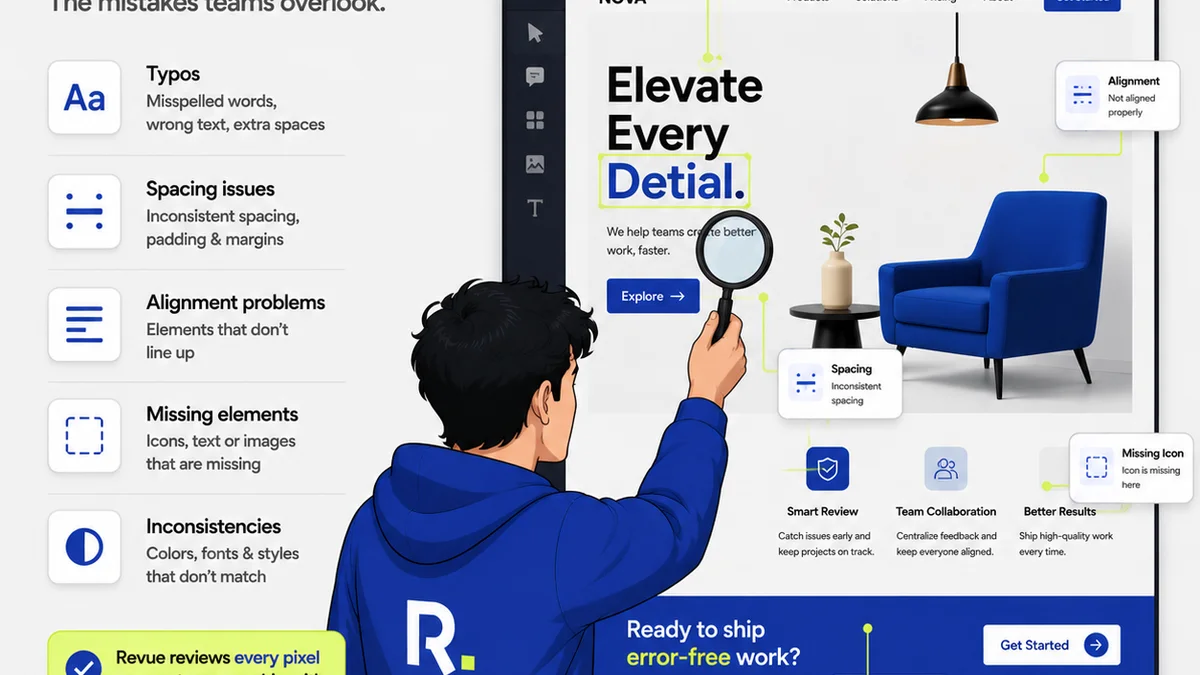
This is often overlooked. Creative change management software should help you maintain quality, not just facilitate changes.
Consider tools that allow for:
- Checklists for common QA issues (e.g., accessibility, brand guidelines, file format correctness)
- Automated checks where possible (e.g., spell check, basic accessibility scans)
- A final sign-off stage specifically for QA before delivery
This ensures that what gets approved is also what gets delivered, without last-minute errors.
6. Reporting and Analytics
How long do revisions *really* take? Where are the bottlenecks? Without data, you’re guessing.
Good software provides insights into:
- Time spent in each review stage
- Number of revisions per project
- Client response times
- Common areas of feedback or rework
This data is invaluable for improving your internal processes, managing client expectations, and even for project scoping and pricing in the future.
Where Revue Fits In
Managing creative feedback and revisions is complex. It requires a system that understands the nuances of creative workflows.
Revue acts as that central nervous system for your creative operations. It’s built to handle the specific challenges agencies face:
- Centralized Feedback: All client comments and internal notes live on the asset itself, eliminating the email chaos.
- Revision Visibility: Track every iteration with clear version history, so you always know what’s current and what’s been approved.
- Approval Management: Define clear approval stages and get explicit sign-offs, reducing ambiguity and preventing scope creep.
- Quality Control: Integrate checklists and ensure all necessary checks are performed before final delivery, protecting your agency’s reputation.
It’s about bringing order to the creative chaos, ensuring that feedback fuels progress, not frustration.
Final Thought
Is your current change management process a source of efficiency or a hidden drag on your agency’s profitability and team morale? The right software isn't just a nice-to-have; it's a strategic imperative. It’s time to look beyond basic tracking and demand a system that actively improves your creative workflow.
Frequently asked questions
What is the main benefit of centralized feedback in creative change management?
Centralized feedback ensures all comments, notes, and instructions are in one place, tied to the specific asset and version. This eliminates confusion, prevents missed requests, reduces conflicting instructions, and saves valuable time previously spent searching through emails or scattered messages.
How does effective version control prevent project issues?
Effective version control provides a clear, chronological history of all asset iterations. It prevents confusion about which version is current, allows for easy reversion if needed, and maintains an audit trail of all changes. This avoids the chaos of ambiguous file names and ensures everyone is working from the same, approved iteration.
Why are defined approval workflows crucial for agencies?
Defined approval workflows establish clear stages for review (internal, client, final). They automate notifications, set deadlines, and allow for explicit sign-offs. This structure prevents endless, unstructured revisions, clarifies expectations, and protects projects from scope creep and unnecessary back-and-forth, ultimately speeding up delivery.
Can creative change management software help with quality assurance?
Yes, good software can incorporate QA checks. This might include customizable checklists for common issues (like accessibility or brand compliance), automated checks for basic errors, and a dedicated QA sign-off stage before final delivery. This helps ensure that approved work meets quality standards before being handed off.