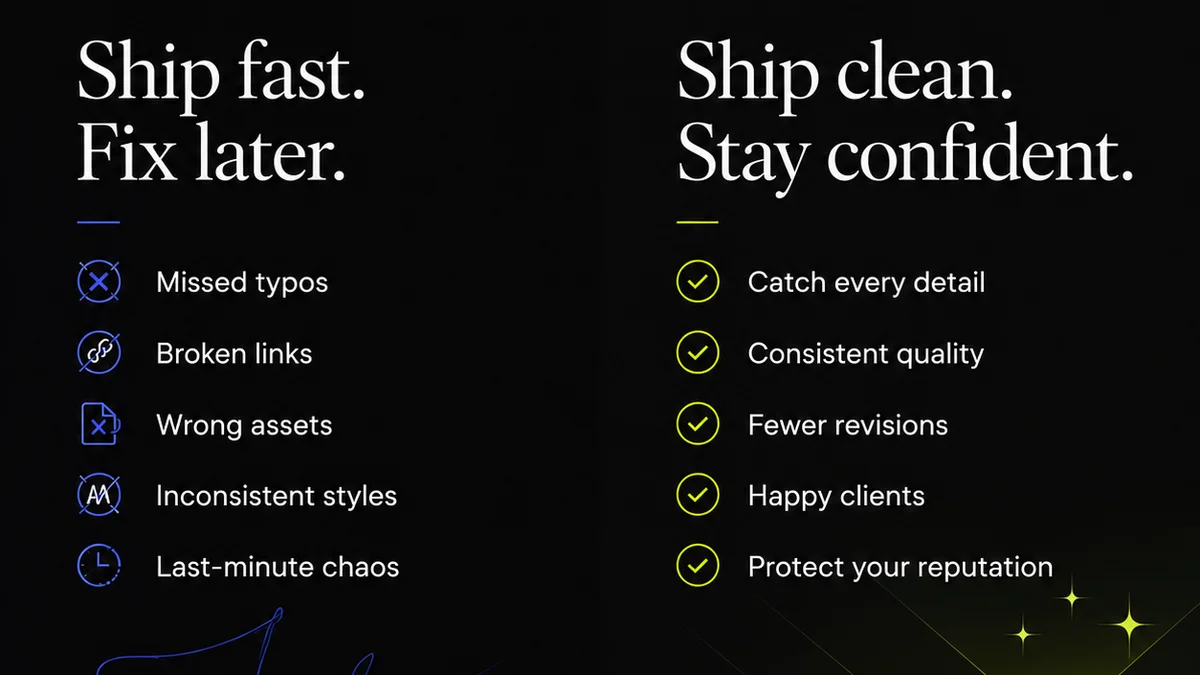
Everyone talks about creative collaboration. They point to shiny new tools, endless integrations, and the promise of seamless teamwork. It sounds easy, right? Just get the right software, and your agency’s creative output will flow like water.
None of that is wrong. But it’s incomplete.
The hard truth is that a robust creative collaboration workflow isn't built on tech alone. It's built on clear processes, defined roles, and shared understanding. Tools are enablers, not solutions. Without the right framework, even the most advanced platform becomes just another place to lose files.
This isn't about ditching your favorite tools. It's about building a better workflow that leverages them effectively. Here's a checklist to get you there.
1. Define Your Creative Brief Clarity Protocol
A muddled brief is the silent killer of efficient creative collaboration. If the starting point is fuzzy, the entire journey becomes a guessing game. Your team wastes time interpreting, correcting, and revisiting foundational decisions.
Before any pixels are pushed or copy is drafted, ensure your briefs are ironclad. This means:
- Establishing a mandatory brief template.
- Assigning a single point person for brief sign-off (client-side).
- Building in a mandatory brief review meeting with key stakeholders.
- Defining clear success metrics for the project upfront.
This isn't just about getting information. It's about establishing alignment and accountability from minute one.
The Single Source of Truth for Project Goals
Every project needs a clearly articulated objective. What does success look like? What problem are we solving?
Without this, your team operates in a vacuum. Assumptions run rampant. The client's vision gets diluted through layers of interpretation.
Your brief template should force these questions and demand answers. It's the bedrock of your entire project.
2. Implement a Structured Feedback Loop
Feedback. It’s the lifeblood of creative work, but it’s also a notorious bottleneck. Unstructured feedback is chaos. It’s subjective, often contradictory, and impossible to track.
Your creative collaboration workflow needs a system. Not just a place to drop comments, but a process for receiving, interpreting, and acting on input.
- Designate specific feedback windows.
- Require consolidated feedback from client stakeholders.
- Establish a clear hierarchy for feedback resolution.
- Define what constitutes
Frequently asked questions
What are the key components of a creative collaboration workflow?
A strong creative collaboration workflow includes clear creative brief protocols, structured feedback loops, defined approval processes, efficient revision management, and integrated quality assurance steps.
How can I ensure client feedback is constructive?
Use a structured feedback process that requires consolidated input from client stakeholders, specifies feedback windows, and defines what constitutes actionable feedback versus subjective preference. Centralizing feedback also helps track its origin and intent.
Why is defining approval processes important for creative teams?
Clear approval processes prevent scope creep, reduce revision cycles, and ensure projects move forward efficiently. Knowing who needs to approve what, and when, saves time and avoids confusion.
Can a single tool manage my entire creative collaboration workflow?
While tools are essential enablers, they are not the entire solution. A successful workflow relies on defined processes and clear communication, supported by the right technology. Tools like Revue help centralize feedback and manage revisions, but the underlying process must be sound.