Everyone assumes creative deadline management is about better scheduling. You need a sharper calendar, a more detailed Gantt chart, or maybe a project manager who’s a time-management wizard.
None of that is wrong. But it’s incomplete.
The hard truth is that deadlines aren't just dates on a calendar. They are the inevitable outcome of your entire creative workflow. If your workflow is broken, your deadlines will always be at risk, no matter how good your scheduling software is.
1. The Myth of the 'Set-It-and-Forget-It' Deadline
The biggest assumption is that once a deadline is set, it's fixed. In reality, creative projects are fluid. Client feedback shifts, scope creeps, and unexpected issues arise. Treating deadlines as immutable laws leads to rushed work, burnout, and missed targets.
You need to build flexibility into your deadline management from the start.
Embrace Iterative Planning
Instead of one giant deadline, break projects into smaller, manageable phases with their own checkpoints. This allows for course correction without derailing the entire project.
- Define clear milestones for concepting, design, review, and final delivery.
- Schedule regular internal check-ins to assess progress against these milestones.
- Build buffer time into each phase, not just at the end.
Anticipate the Unknown
What could go wrong? What if the client is unreachable? What if the key stakeholder is on vacation during a crucial review period? Thinking through potential roadblocks allows you to plan contingencies.
- Identify critical dependencies early.
- Develop backup plans for key personnel or resources.
- Communicate potential risks and their impact on deadlines to the client upfront.
2. Client Feedback: The Deadline's Black Hole
Client feedback is essential, but it's often the biggest culprit behind missed deadlines. Vague comments, delayed responses, and endless revision cycles can cripple even the best-laid plans.
Effective deadline management requires rigorous control over the feedback process.
Establish Clear Communication Channels
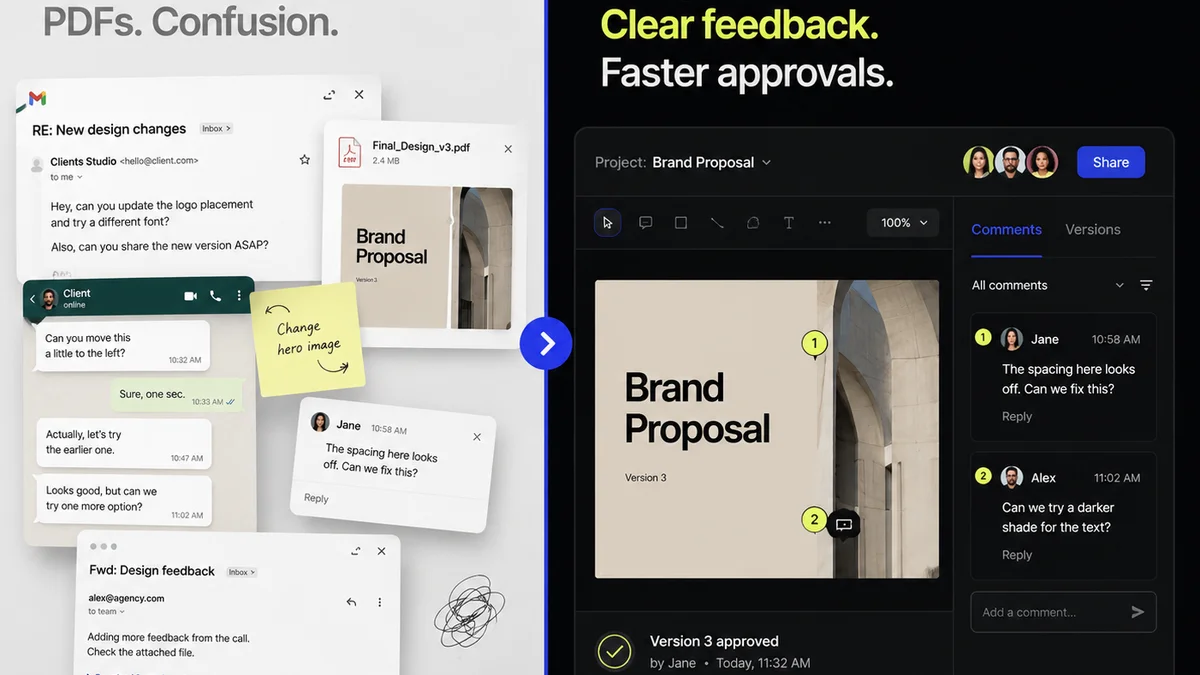
Don't let feedback live in scattered email threads or random Slack messages. Centralize it.
- Designate a single point of contact for client feedback.
- Use a dedicated platform for all project-related communication.
- Set expectations for feedback turnaround times in your contract.
Define 'Good Enough'
What constitutes a 'final' revision? Without clear criteria, clients can keep asking for tweaks indefinitely. You need to define the boundaries of revisions.
- Specify the number of revision rounds included in the project scope.
- Clearly articulate what constitutes a 'major' versus a 'minor' revision.
- Use visual annotation tools to ensure feedback is precise and actionable.
This isn't about being difficult; it's about professional project management.
3. Scope Creep: The Silent Deadline Killer
Scope creep isn't just about adding features; it's about adding work that wasn't accounted for in the original timeline or budget. It's insidious and rarely gets called out.
Proactive scope management is fundamental to hitting deadlines.
Document Everything
Your initial brief and proposal are your foundational documents. Refer back to them constantly.
- Ensure the project brief is signed off by all key stakeholders.
- Clearly outline deliverables, timelines, and revision limits in the contract.
- Maintain a change log for any requested deviations from the original scope.
The 'Change Order' Protocol
When a client requests something outside the original scope, don't just do it. Treat it as a formal change.
- Assess the impact on time, budget, and other deadlines.
- Present a clear change order proposal to the client detailing the new scope, cost, and revised timeline.
- Only proceed once the change order is approved.
This process respects everyone's time and ensures transparency.
4. Internal Workflow: The Engine of Your Deadlines
External factors are important, but your internal processes are the engine that drives your projects. Inefficient workflows, poor handoffs, and lack of clarity on roles lead to delays.
Optimize your internal operations for predictable delivery.
Standardize Your Processes
Repetitive tasks should have standardized workflows. This reduces guesswork and speeds up execution.
- Create templates for common project types.
- Develop checklists for key stages of the creative process.
- Implement clear briefing and debriefing procedures.
Foster Collaboration, Not Chaos
Creative work often involves multiple people and departments. Ensure smooth collaboration.
- Define roles and responsibilities clearly for each project.
- Facilitate easy asset sharing and version control.
- Encourage open communication about potential bottlenecks or challenges.
A well-oiled internal machine is your best defense against missed deadlines.
5. Where Revue Fits In
Managing creative deadlines effectively means bringing order to the inherent chaos of creative production. It requires visibility, clarity, and control over every stage of the project lifecycle.
Revue is built to provide exactly that.
By centralizing all client feedback and project assets, you eliminate the ambiguity that leads to missed revisions and scope creep. Clear version history and annotation tools ensure that feedback is precise and logged. Approval workflows provide definitive sign-offs, preventing endless back-and-forth that eats into valuable time.
When everyone is working from a single source of truth, with clear visibility into progress and approvals, your team can execute more efficiently. This inherent efficiency directly translates into better deadline management. You spend less time chasing feedback or clarifying requests, and more time creating great work.
Final Thought
Are your deadlines a source of stress or a measure of your operational excellence? The difference lies not in your calendar, but in the robustness of your workflow. It’s time to look beyond the dates and focus on the engine driving them.
Frequently asked questions
What is the most common mistake in creative deadline management?
The most common mistake is treating deadlines as fixed points rather than the outcome of a dynamic workflow. This often leads to neglecting the importance of flexible planning, clear communication, and robust internal processes.
How can I prevent scope creep from impacting deadlines?
Prevent scope creep by establishing a clear, documented project scope from the outset, using a formal change order process for any new requests, and ensuring all stakeholders sign off on the initial brief and any subsequent changes.
What role does client feedback play in meeting deadlines?
Client feedback is critical. Unclear, delayed, or excessive feedback can significantly derail timelines. Effective management involves setting clear expectations for feedback turnaround, defining revision limits, and centralizing all communication for clarity and accountability.
How can standardizing internal processes help with deadlines?
Standardizing internal processes reduces guesswork and streamlines repetitive tasks. This leads to more predictable execution, fewer errors, and faster turnaround times, all of which contribute directly to meeting deadlines more consistently.