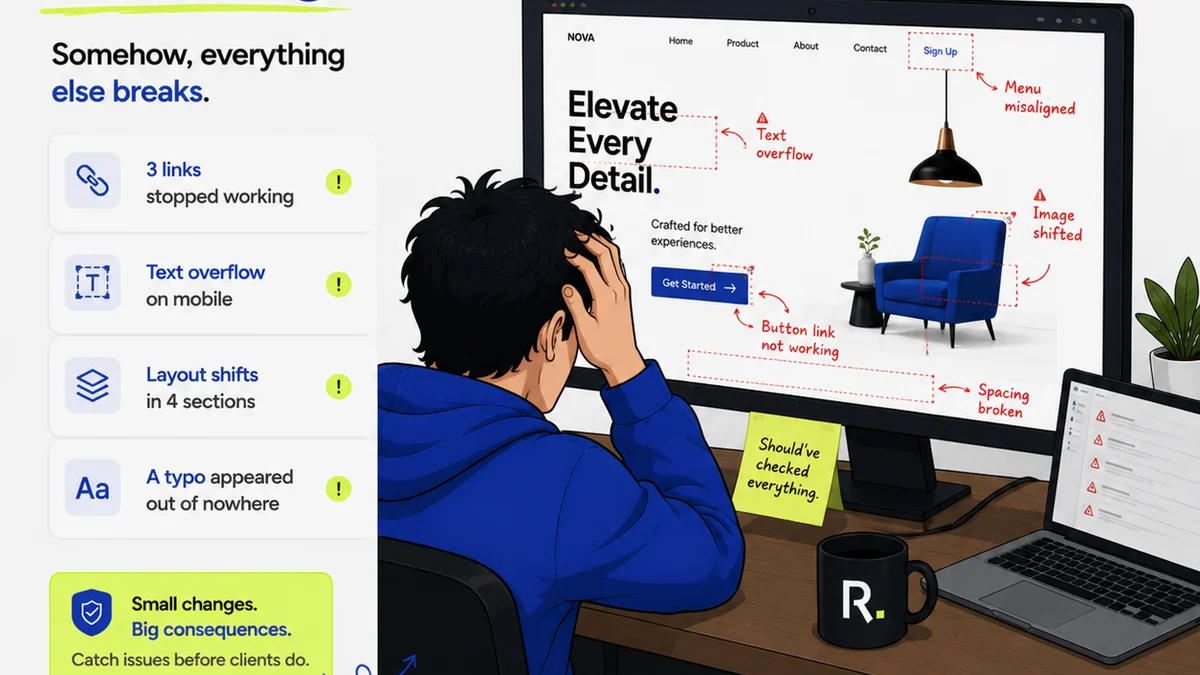
Everyone talks about creative feedback. They drone on about being constructive, specific, and timely. None of that is wrong. But it’s incomplete.
The real problem isn't *how* feedback is given. It's that most agencies and teams have no system for it. They treat it like an art form, not an operational necessity. This leads to endless revisions, missed deadlines, and clients who think you're incompetent.
The hard truth? Your creative feedback process is likely broken, and it's costing you more than you think.
1. The Assumption: Feedback is About Taste
The most common mistake is treating feedback as a subjective art critique. “I don’t like the blue.” “It just doesn’t feel right.” This is useless.
Feedback should be rooted in objective criteria: project goals, brand guidelines, user needs, technical constraints, or business objectives. If it's not tied to something measurable, it's just noise.
Why This Matters
- Subjective feedback creates endless loops.
- It devalues the creative's expertise.
- It rarely solves the actual problem.
Good feedback moves the project forward. Bad feedback stalls it.
2. The Assumption: One Person Gives Feedback
Agencies often rely on a single point person—the account manager, the creative director—to collate and deliver feedback. This creates a bottleneck and introduces a layer of interpretation.
The information gets filtered, sometimes distorted. The creative team might not get the full context. The client might feel their nuanced concerns were lost.
The best feedback comes from a clear, defined group of stakeholders, each with a specific role and understanding of the project's goals.
Stakeholder Roles in Feedback
- The Strategist: Ensures the work aligns with the brief and business objectives.
- The Creative Lead: Assesses the execution quality and conceptual strength.
- The Brand Guardian: Verifies adherence to brand guidelines.
- The End User (or proxy): Confirms usability and clarity from the audience's perspective.
This isn't about overwhelming the creative team. It's about ensuring all critical perspectives are heard efficiently.
3. The Assumption: Feedback is a Conversation
Email chains, Slack messages, impromptu desk visits—these are chaotic. Feedback gets buried, miscommunicated, or lost entirely.
A structured feedback process treats each piece of feedback as a data point. It needs to be recorded, assigned, and tracked.
Think of it like code reviews or bug tracking. Each piece of feedback needs a clear owner, a description of the issue, and a status.
Symptoms of a Chaotic Process
- Multiple versions of the same file being annotated differently.
- Confusion over which feedback is the most recent or authoritative.
- Creative teams wasting time chasing down feedback details.
- Clients complaining about revisions that miss the mark.
This isn't about being rigid; it's about being organized.
4. The Assumption: Feedback Happens at the End
Waiting until a design is 'finished' to provide feedback is a recipe for disaster. It's expensive to make significant changes late in the game.
Feedback needs to be integrated throughout the creative process. Early, frequent check-ins are crucial.
This doesn't mean showing half-baked concepts. It means showing work at key milestones for specific, targeted input.
Milestones for Effective Feedback
- Concept/Direction Approval: Ensure the core idea is sound before investing heavily in execution.
- Mid-Stage Review: Check progress on layout, tone, and key elements.
- Near-Final Review: Focus on details, copy, and technical readiness.
This iterative approach minimizes risk and ensures alignment at every stage.
5. The Assumption: All Feedback is Equal
Not all feedback is created equal. Some input is critical, some is helpful, and some is just… noise.
The challenge is distinguishing between them. This requires clear project goals and a defined feedback hierarchy.
Who has the final say on what? What are the non-negotiables?
Prioritizing Feedback
- Must-Haves: Essential changes tied directly to project goals or critical issues (e.g., legal compliance, core functionality).
- Should-Haves: Important improvements that enhance the solution but aren't deal-breakers.
- Could-Haves: Nice-to-haves or aesthetic tweaks that can be considered if time and budget allow.
- Won't-Haves: Feedback that contradicts the brief, brand, or strategy.
This framework helps creatives focus their efforts and manage client expectations.
Where Revue Fits In
Managing creative feedback effectively is a workflow problem. It requires a centralized system, clear communication, and visible progress.
Revue is built for this. It provides a single source of truth for all client feedback, making it easy to:
- Capture feedback directly on creative assets. No more hunting through emails or Slack.
- Organize and categorize feedback by stakeholder, priority, or status.
- Track revisions and approvals, creating an auditable trail.
- Ensure all necessary stakeholders have a clear view of comments and decisions.
- Facilitate quality checks against project requirements before final delivery.
By centralizing feedback, you eliminate ambiguity and speed up the revision cycle. You give your team the clarity they need to deliver great work, faster.
Final Thought
Are you managing creative feedback, or is it managing you? The difference lies in treating it as a core operational process, not an afterthought. This isn't about stifling creativity; it's about creating the conditions for it to thrive, efficiently and effectively.
Frequently asked questions
What's the biggest mistake agencies make with creative feedback?
Treating feedback as purely subjective taste rather than tying it to objective project goals, brand guidelines, or user needs. This leads to endless, unproductive revisions.
How can I ensure feedback is constructive?
Ground feedback in specific criteria. Instead of 'I don't like it,' say 'This headline doesn't clearly communicate the core benefit,' or 'The call-to-action isn't prominent enough against the background color.'
When is the best time to give feedback on creative work?
Feedback should be iterative. Provide input at key milestones like concept approval, mid-stage reviews, and near-final checks, rather than waiting until the very end.
How do I handle conflicting feedback from different stakeholders?
Establish a clear feedback hierarchy and defined roles for stakeholders. Determine who has the final say on specific aspects and clearly communicate project goals so everyone is aligned.
Can a tool really help with creative feedback?
Yes. A centralized platform like Revue helps organize, track, and manage feedback, eliminating confusion from scattered communication channels (like email or Slack) and ensuring clarity for the creative team.