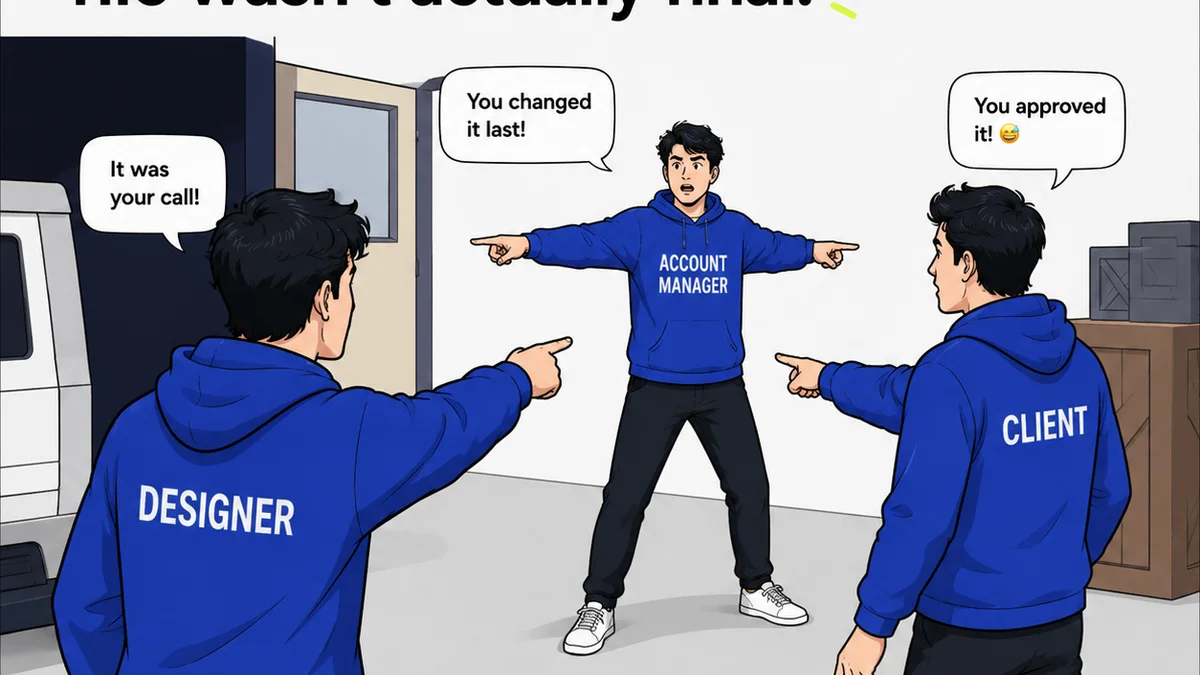
Everyone knows good client feedback is crucial. You've probably heard all the advice: Be clear. Be specific. Be timely. Don't make it personal.
None of that is wrong. But it’s incomplete.
The hard truth is, most creative feedback problems aren't about *what* the client says. They're about *how* that feedback is captured, processed, and actioned within your agency. It’s an operational issue, not just a communication one.
We're talking about the messy middle: the gap between the client saying "I don't love it" and your team knowing *exactly* what to change, why, and by when.
If your agency struggles with endless revisions, scope creep disguised as feedback, or the dreaded "can we just try this one other thing?" then it’s time to look past surface-level communication tips and dig into the core of your creative feedback best practices.
1. Define the Feedback Loop: Who, What, When, Why
Before any creative work even begins, you need a crystal-clear understanding of the feedback process. This isn't just about sending an email. It's about setting expectations and establishing a framework.
Establish Clear Roles and Responsibilities
Who is authorized to give feedback from the client side? Is it one point person, or a committee? If it's a committee, who has final sign-off? Misaligned stakeholders are a primary source of conflicting feedback.
Internally, who receives the feedback? Who interprets it? Who assigns the revisions? Who approves the final output? Every touchpoint needs ownership.
Standardize Feedback Collection Methods
Email chains? Slack messages? Phone calls? A shared document? Each method has flaws. Email gets buried. Slack is ephemeral. Phone calls are hard to track. Documents can become unwieldy.
You need a single source of truth for all feedback. This ensures nothing gets lost and everyone is working from the same set of comments and decisions.
Set Realistic Timelines for Feedback
Clients are busy. But so are you. Unclear timelines for feedback lead to bottlenecks. When will the client receive the work for review? When are they expected to respond? What happens if they miss the deadline?
Be explicit about turnaround times for both sending work and receiving feedback. This prevents projects from languishing.
Clarify the 'Why' Behind the Feedback
This is where most agencies fall short. Clients often provide feedback based on gut feelings or aesthetic preferences without articulating the underlying business goal or user need. Your job is to uncover that.
Instead of just noting "make the logo bigger," ask:
- What is the goal of this element?
- Who are we trying to reach with this specific change?
- What problem are we trying to solve by making this adjustment?
Understanding the 'why' transforms subjective feedback into objective direction. It helps your team make better-informed decisions and push back constructively when feedback conflicts with project goals.
2. Structure for Actionability: From Vague to Vital
Vague feedback is the enemy of efficient creative work. "I'm not feeling it" is not actionable. "The call-to-action button isn't prominent enough, and I'm concerned users won't see it before scrolling" is.
Categorize Feedback Types
Not all feedback is created equal. Differentiate between:
- Strategic Feedback: Aligns with or challenges project goals, target audience, or overall direction.
- Tactical Feedback: Specific suggestions for UI, copy, layout, color, etc.
- Technical Feedback: Issues related to functionality, performance, or platform compatibility.
- Preference Feedback: Subjective likes/dislikes without clear rationale.
This categorization helps prioritize and frame responses.
Quantify and Qualify Feedback Points
Where possible, add context. If a client wants a change, ask for their reasoning. If they're concerned about a specific element, ask them to elaborate.
Example: Instead of just "more blue," try: "The client wants to increase the use of blue, specifically a darker shade, to evoke a sense of trust and professionalism, which aligns with the brand's core values of reliability."
Visualize Feedback When Possible
For visual feedback, screenshots with annotations are invaluable. Tools that allow for direct markup on the creative asset are even better. This removes ambiguity about *what* element is being discussed.
This is especially critical for web design and app development, where precise placement and interaction matter.
Translate Feedback into Tasks
The ultimate goal is to turn feedback into clear, assignable tasks for your team. Each piece of feedback should translate into a specific action item in your project management system.
- Original Feedback: "Make the header more engaging."
- Translated Task: "Update homepage header copy to include a more compelling value proposition and add a subtle animation to the hero image. Assign to [Designer Name]. Due EOD Friday."
3. The Art of the Response: Steering the Ship
Receiving feedback is only half the battle. How you respond is equally critical to maintaining project momentum and client relationships.
Acknowledge and Validate
Always acknowledge receipt of feedback promptly. Even if you need time to process it, let the client know you've received it. A simple "Thanks, we've got your feedback and will review it thoroughly" goes a long way.
Validate their perspective before diving into your analysis. "I understand your concern about the button's visibility. It's a valid point we need to address."
Analyze and Synthesize
This is where your team's expertise shines. Analyze the feedback against the project brief, strategic goals, and best practices. Synthesize conflicting feedback into a coherent path forward.
Sometimes, feedback from different stakeholders might contradict each other. Your role is to identify these conflicts and propose a unified solution.
Propose Solutions, Don't Just Accept
Rarely should you just blindly implement feedback. Your agency was hired for its expertise. Offer solutions that address the client's underlying need while maintaining design integrity and strategic alignment.
If a client requests a change that you believe is detrimental, explain *why* clearly and professionally, and offer an alternative. "We understand you'd like to add a testimonial slider here. While that can be effective, for this particular page's flow and to maintain focus on the core product benefits, we recommend a static, prominent testimonial block integrated below the feature list. This ensures immediate impact without disrupting the user journey."
Document Decisions Clearly
Every decision, whether it's accepting, rejecting, or modifying feedback, needs to be documented. This creates an audit trail and prevents
Frequently asked questions
What's the biggest mistake agencies make with client feedback?
Treating feedback as purely a communication issue, rather than an operational one. Not having a defined process for capturing, interpreting, and actioning feedback leads to endless revisions, scope creep, and team frustration.
How can I make client feedback more actionable?
Categorize feedback (strategic, tactical, technical, preference), quantify and qualify it by asking 'why,' visualize it with annotations, and translate it into specific, assignable tasks for your team.
What's the best way to handle conflicting feedback from different stakeholders?
Acknowledge all feedback, then analyze it against the project brief and strategic goals. Synthesize conflicting points and propose a unified solution, clearly explaining the rationale behind your recommendation.
How often should feedback be reviewed?
Feedback should be reviewed as soon as it's received, especially if there's a defined feedback window. Urgent or conflicting feedback may require immediate attention and a quick sync with the client.