Everyone knows you need a creative feedback checklist. It’s the sensible thing to do. You jot down points, make sure you’ve covered the basics, and send it off. Simple, right?
None of that is wrong. But it’s incomplete.
The hard truth is, a checklist alone doesn't guarantee better feedback. It’s a tool, and like any tool, its effectiveness depends on how you wield it. The real win isn't just *having* a checklist; it's building a system around feedback management that leverages that checklist strategically.
1. The Illusion of Comprehensive Feedback
Many creative feedback checklists focus on the obvious: Did we hit the brief? Is the logo correct? Are the colors right?
These are hygiene factors. Necessary, but not sufficient.
They assume feedback is a simple transaction: client asks, agency delivers. But creative work is rarely that linear. Feedback is often layered, subjective, and influenced by factors outside the immediate project scope.
The Real Problem: Unpacking Subjectivity
Your checklist might ask, “Does the client like the design?” But what does “like” mean?
- Is it an emotional response?
- A gut reaction to a specific element?
- A misunderstanding of the strategic goal?
- A comparison to a competitor’s work they saw yesterday?
A superficial checklist doesn't prompt the deeper questions needed to untangle these nuances. It allows vague responses to slide through, which then cause endless revisions.
2. Beyond the Brief: Strategic Alignment
Your checklist needs to go beyond just confirming the brief was met. It needs to interrogate the *impact* of the creative against the brief’s strategic objectives.
This means asking questions that force a connection between the creative output and the business goals.
Key Areas for Strategic Scrutiny
- Objective Alignment: Does this creative directly serve the primary business objective stated in the brief? (e.g., Drive sign-ups, Increase brand awareness, Announce new product).
- Target Audience Resonance: Is this design/copy likely to connect with and persuade the intended target audience? Why or why not?
- Call to Action Clarity: Is the desired next step for the user clear, compelling, and easy to execute?
- Brand Consistency: Does this piece reinforce the established brand identity, voice, and values?
These aren't just questions for the client; they are prompts for internal discussion *before* feedback is even solicited.
3. The Anatomy of Actionable Feedback
What makes feedback truly useful? It’s specific, objective, and tied to a desired outcome.
Most feedback is the opposite: vague, subjective, and open-ended.
Your checklist should guide the client (and your internal team) toward providing feedback that can actually be acted upon.
Transforming Vague Input
Consider the difference:
- Vague: “I don’t like it.”
- Actionable: “The hero image feels too busy and distracts from the headline. Could we try a more minimalist approach or a different photo that evokes a sense of calm?”
- Vague: “Make it pop more.”
- Actionable: “The call-to-action button isn't prominent enough. Let's increase its contrast against the background and use a stronger verb in the button text, perhaps ‘Get Started Now’ instead of ‘Learn More’.”
Your checklist should explicitly ask for this level of detail. It trains the client to think critically about their input and gives your team clear direction.
4. Operationalizing the Checklist
A checklist is just a document until it's integrated into your workflow.
This is where most agencies fall short. They create a PDF, maybe send it via email, and hope for the best.
Effective feedback management requires a system.
Integrating Feedback into the Process
- Pre-Feedback Briefing: Before sending for review, briefly reiterate the project goals and what kind of feedback is most helpful.
- Structured Review: Use the checklist as a framework for both internal reviews and client feedback sessions.
- Consolidated Feedback: Gather all feedback in one place. Don't let comments get lost in email threads or Slack DMs.
- Action Plan: Translate checklist items and feedback notes into clear tasks for the creative team.
This structured approach prevents misinterpretations and ensures that feedback drives progress, not just endless iterations.
5. Where Revue Fits In
Managing creative feedback effectively is a core challenge for agencies. You’re juggling multiple clients, numerous projects, and constant revision cycles.
A robust feedback process needs more than just a checklist. It needs a central hub.
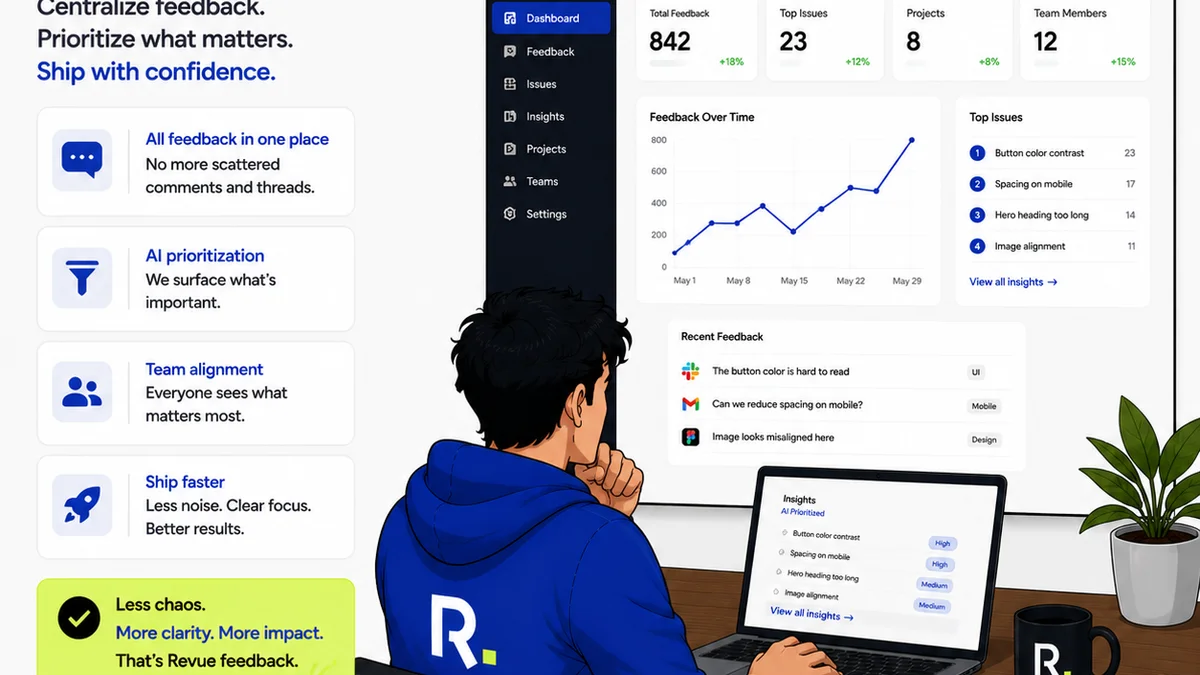
Revue is built to provide that hub. It streamlines the entire feedback and approval lifecycle.
- Centralized Feedback Collection: Instead of scattered emails and messages, all client comments, annotations, and approvals live in one place, linked directly to the creative asset.
- Version Control & Revision History: Easily track all changes and revisions, providing clear context for each iteration. No more “which version are we on?” confusion.
- Streamlined Approvals: Formalize the sign-off process. Clients can approve specific versions, giving you clear project milestones and reducing ambiguity.
- Quality Assurance Checks: Use Revue to build in your own internal checkpoints, ensuring work meets your agency’s standards before it ever reaches the client.
By integrating your creative feedback checklist into a platform like Revue, you move from simply collecting notes to actively managing the quality and efficiency of your creative output.
6. The Future of Feedback: Proactive, Not Reactive
The ultimate goal isn’t just to get feedback; it’s to minimize the *need* for extensive, corrective feedback.
This comes from building trust, demonstrating strategic thinking, and ensuring alignment from the outset.
Your checklist is a tool to help achieve this, but it’s part of a larger commitment to process and communication.
Shifting the Mindset
- Educate Clients: Help them understand the creative process and the value of strategic feedback.
- Invest in Briefing: The better the initial brief, the less guesswork later.
- Build Internal Expertise: Ensure your team is equipped to interpret feedback and push back constructively when necessary.
A truly effective feedback strategy is proactive. It anticipates potential issues and guides the conversation toward clear, objective, and actionable outcomes.
Final Thought
Is your creative feedback checklist a shield against chaos, or just another piece of paper?
The difference lies in whether you’re just collecting input, or actively orchestrating the entire feedback and approval process.
Frequently asked questions
What is the main goal of a creative feedback checklist?
The primary goal is to ensure that all necessary aspects of a creative project are reviewed and that feedback provided is specific, objective, and actionable, leading to higher quality output and fewer revisions.
How can a checklist help manage subjective feedback?
A well-designed checklist prompts users to explain the 'why' behind their subjective opinions, pushing them to articulate the underlying reasons or desired outcomes rather than just stating a preference.
What are the key components of an actionable feedback item?
Actionable feedback is specific (e.g., 'increase contrast on CTA button'), objective (based on project goals, not just personal taste), and clearly linked to a desired outcome or problem to solve.
How does a platform like Revue enhance a feedback checklist?
Revue centralizes feedback directly on creative assets, provides version control, streamlines approvals, and helps enforce the checklist's structure, turning a static document into a dynamic part of the workflow.
Should a creative feedback checklist be shared with the client?
Yes, sharing and even co-developing the checklist with the client can set expectations, guide their review process, and foster a more collaborative and productive feedback environment.