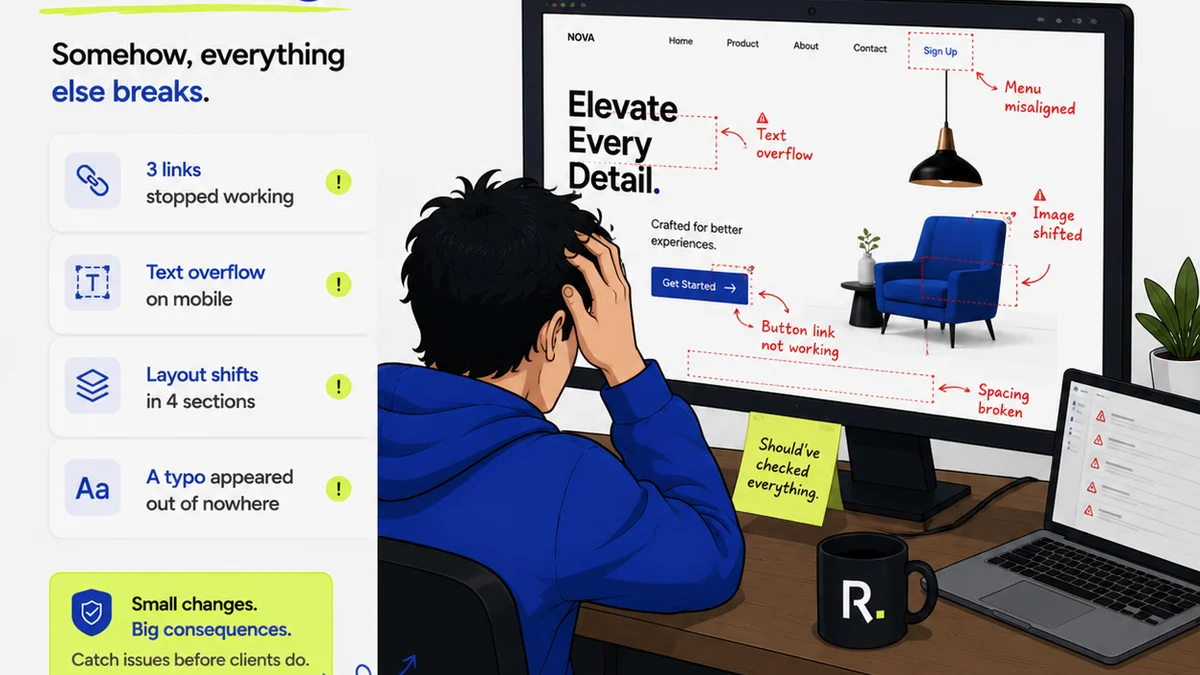
Everyone agrees that getting clear, actionable feedback is crucial for creative teams. The assumption is that if clients just gave us better input, our revision cycles would be smooth and efficient. None of that is wrong. But it’s incomplete.
The hard truth? The real bottleneck isn't the quality of feedback itself, but the chaotic, manual processes agencies use to manage it. We're drowning not because the water is dirty, but because we’re trying to bail out a sinking ship with a teacup.
1. The Illusion of 'Good Enough' Feedback
We blame clients for vague comments, endless revisions, and changing their minds. We tell ourselves it’s just part of the job. We develop coping mechanisms: longer timelines, extra billable hours, and a lot of internal grumbling.
But what if the problem isn't the client at all? What if it’s our own broken workflow?
The Vague Comment Trap
A client says, “Make it pop more.” Or, “I’m not feeling this.” What does that even mean?
This isn't a client failing; it’s a communication breakdown amplified by a lack of structure. Without a clear framework for providing and receiving feedback, these vague statements become the norm. Every team has experienced this.
The Endless Revision Cycle
We often assume clients *want* to micromanage. They don't. They want a great outcome with minimal fuss. They provide feedback in chunks because that’s how they process creative work. They iterate because they’re unsure of the impact of each change.
Our failure is in not having a system to absorb these iterative inputs without derailing the entire project. We treat each round of feedback as a new, disruptive event, rather than a predictable part of the process.
The Cost of Chaos
These inefficiencies aren't just annoying; they’re expensive. They eat into profit margins, burn out creative talent, and damage client relationships. That 'quick' revision often costs hours of designer time, account manager wrangling, and stakeholder meetings.
2. Why Your Current Feedback System is Failing
Most agencies operate on a patchwork of communication tools. Email chains, Slack messages, Zoom calls, annotated PDFs, and scribbled notes on printouts. Each has its place, but together, they create a fragmented mess.
This fragmented approach is the enemy of clarity and efficiency in creative feedback.
The Email Avalanche
Feedback gets buried in long threads. Important decisions are missed. Different versions of the same asset get discussed simultaneously. You spend more time searching for comments than acting on them.
The Screenshot Scramble
“Just screenshot it and draw on it.” This is a common workaround, but it’s inefficient. Screenshots lack context. Annotations can be ambiguous. Tracking who said what, and when, becomes a nightmare.
The 'Single Source of Truth' Myth
Many teams *think* they have a single source of truth. Usually, it’s the latest version of a file stored on a shared drive or cloud service. But the *feedback* itself is scattered everywhere else.
This disconnect between the asset and its feedback guarantees confusion. Which comment applies to which version? Was that change approved or just suggested?
Lack of Revision Visibility
Clients often don't see the full scope of revisions. They might request a change on Monday, forget about it by Wednesday, and then be surprised when it's done on Friday. They also don't see how their requests impact the overall project timeline or budget.
This lack of transparency fuels frustration on both sides.
3. Building a Feedback Workflow That Works
The solution isn't to magically get 'better' clients or 'perfect' feedback. It's to build a robust, centralized system for managing the feedback you *will* receive.
This means moving from reactive chaos to proactive control.
Centralize Everything
All feedback, for all versions of a creative asset, needs to live in one place. This eliminates searching through emails and Slack. It ensures everyone is looking at the same information.
This is the foundation of efficient creative collaboration.
Context is King
Feedback must be tied directly to the specific element it refers to. If a client comments on a button, the system should show that comment precisely on that button in the design. This removes ambiguity.
Consider the principles of clear communication outlined by resources like the Nielsen Norman Group.
Version Control That Matters
Every revision needs to be tracked. What changed? Who requested it? When was it approved? This creates an audit trail and prevents 'which version is this?' debates.
It also allows for easy comparison between versions, highlighting the impact of changes.
Streamline Approvals
Formal sign-off should be a clear, documented step. Not another email or Slack message. A system that allows for explicit approval, or rejection with clear reasons, saves immense time and prevents disputes.
This clarity is essential for moving projects forward confidently.
Integrate with Your Tools
The best feedback systems don’t force you into a completely new ecosystem. They integrate with the tools your team already uses, like design software or project management platforms.
This minimizes disruption and maximizes adoption.
Where Revue Fits In
Managing creative feedback is a core challenge for agencies. The common approach—email, Slack, spreadsheets—is a recipe for inefficiency and client frustration. It’s a constant battle against disorganization.
Revue is built to solve this. It provides a centralized hub for all client feedback and approvals, directly on your creative assets.
- Centralized Feedback: Comments are placed directly on the relevant part of the design, image, or video. No more hunting through emails or Slack messages.
- Revision Visibility: Track every version, see who requested what, and understand the history of changes. This transparency builds trust and clarifies scope.
- Streamlined Approvals: Formalize the sign-off process. Get clear, documented approvals or rejections, eliminating ambiguity and speeding up project progression.
- Quality Assurance: Use Revue to run through checklists and ensure all feedback has been addressed correctly before final delivery.
By bringing order to feedback chaos, Revue helps creative teams deliver better work, faster, and with happier clients.
Final Thought
The next time you’re wading through a mountain of revision requests, ask yourself: Is the problem the feedback, or is it the process?
Are you truly equipped to handle the inevitable ebb and flow of creative iteration, or are you just hoping for the best?
The difference between a smoothly running agency and one perpetually behind schedule often comes down to this one, critical operational element: how you manage feedback.
Frequently asked questions
What is the biggest misconception about creative feedback?
The biggest misconception is that the problem lies solely with the client providing 'bad' feedback. In reality, the primary challenge for most agencies is their outdated, fragmented workflow for *managing* the feedback they receive, regardless of its quality.
How can agencies handle vague client feedback?
Vague feedback like 'make it pop' is often a symptom of a lack of structured communication. Agencies can mitigate this by using tools that allow for precise, contextual feedback directly on assets, prompting clients to be more specific and providing clear visual references.
What are the key components of an effective feedback system?
An effective system centralizes all feedback in one place, ensures feedback is contextual (tied to specific elements), provides clear version control, streamlines the approval process, and ideally integrates with existing creative tools.
How does managing revisions impact agency profitability?
Inefficient revision management leads to wasted hours, scope creep, burnout, and delayed project completion. This directly eats into profit margins, increases costs, and can damage client relationships, all of which harm profitability.