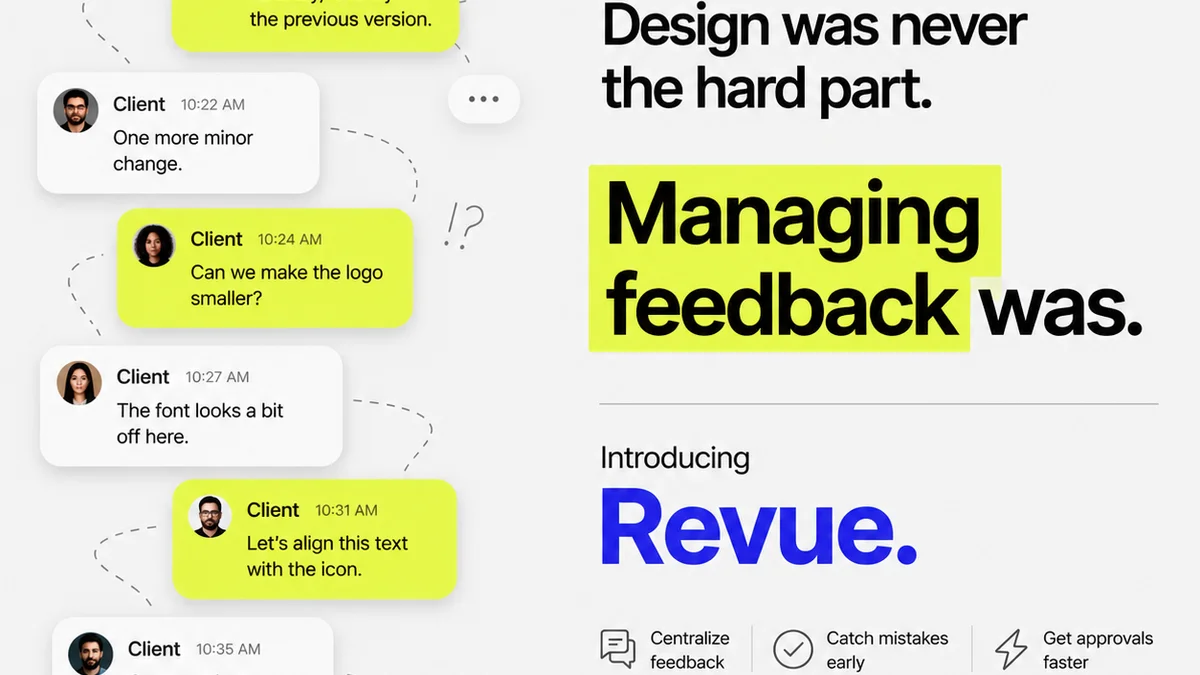
Everyone talks about getting better creative feedback. They say you need clear briefs, defined stakeholders, and open communication. None of that is wrong. But it’s incomplete.
The hard truth is that your feedback process itself is the bottleneck. If it’s chaotic, slow, or confusing, even the best creative team will struggle. You end up with endless revisions, frustrated clients, and work that misses the mark. That’s not a creative problem; it’s an operational one.
Let's fix your creative feedback workflow.
1. Define the Feedback Loop
Before any creative work begins, establish how feedback will flow. This isn't about adding more meetings. It's about clarity.
Who gives feedback? When? How? What happens after feedback is given?
Identify Your Feedback Stakeholders
Not everyone on the client side needs to weigh in on every iteration. Assign specific roles:
- Primary Approver: The single point person responsible for final sign-off.
- Subject Matter Experts: Those with specific knowledge (legal, brand compliance, technical). Their feedback is crucial but often focused.
- Stakeholders: Wider group who might offer directional input but don't have final say.
This prevents conflicting opinions from paralyzing the process. The primary approver owns the final decision, synthesizing input from others.
Set Clear Timelines for Feedback
Delays in feedback kill momentum. Build it into your project plan.
For example:
- Initial concepts: 2-3 business days for feedback.
- Mid-stage revisions: 1-2 business days.
- Final review: 1 business day.
Communicate these expectations upfront. Make them part of the contract.
2. Standardize Your Feedback Format
Ambiguous feedback is worse than no feedback. Vague comments lead to guesswork and wasted effort.
“I don’t like it.”
“Make it pop more.”
“This feels off.”
These phrases are useless. You need actionable, specific input.
Use Structured Feedback Prompts
Guide your clients and internal teams. Ask them to consider specific criteria:
- Does this meet the objective outlined in the brief?
- Is the core message clear?
- Does this align with the brand guidelines?
- Are there any technical or functional issues?
- What specifically needs to change to move this forward?
Provide a template or a simple checklist. This forces clarity and ensures you get the information you need.
Centralize All Feedback
Scattered feedback across emails, Slack messages, and random documents is a recipe for disaster. You'll miss crucial comments, misinterpret instructions, and waste time hunting for information.
Every piece of feedback needs to live in one place.
3. Implement a Revision and Approval Process
Feedback is just one part. What happens next is critical for moving projects forward efficiently.
Distinguish Revisions from Approvals
These are not the same. Feedback often suggests changes (revisions). Approval signifies acceptance.
Ensure you have clear stages:
- Feedback Round: Client provides specific, actionable comments.
- Revision Round: Creative team makes the requested changes.
- Approval Round: Client confirms the work meets requirements and signs off.
Don't let feedback requests bleed into approval stages. Once a round is approved, it’s done, barring a clear scope change.
Manage Scope Creep Actively
Uncontrolled scope creep, often fueled by poorly managed feedback, is a project killer. Every change request outside the original scope needs a process.
This usually involves:
- Assessing the impact on timeline and budget.
- Communicating this impact clearly to the client.
- Getting explicit approval for the additional scope and cost.
Without this, you’re working for free and burning out your team.
4. Establish Quality Assurance Gates
Before creative work ever reaches a client for final approval, it should pass internal quality checks.
This is where you catch errors and ensure the work meets the brief and your agency’s standards.
Internal Review Checklist
Develop a standard QA checklist tailored to the type of work.
For web design, this might include:
- Cross-browser and cross-device testing.
- Usability checks against usability heuristics.
- Accessibility review against WCAG standards.
- Proofreading all copy.
- Functionality testing of all interactive elements.
For branding, it might involve checking logo usage, color consistency, and application across mockups.
Define
Frequently asked questions
What is the most important aspect of a creative feedback workflow?
Clarity. Ensuring everyone understands who provides feedback, when, how, and what constitutes actionable input is paramount. Ambiguity is the enemy of efficient creative workflows.
How can I prevent scope creep in creative projects?
By clearly defining feedback and approval stages, distinguishing between revisions and final sign-off, and implementing a process for evaluating and approving any changes that fall outside the original project scope.
Why is a centralized feedback system important?
A centralized system prevents feedback from getting lost across emails, chats, or documents. It ensures all comments are captured, tracked, and easily accessible, reducing miscommunication and saving time.
What's the difference between feedback and approval?
Feedback is input suggesting changes or improvements. Approval is the formal sign-off that the work meets the agreed-upon requirements and is ready to move forward or be considered complete.