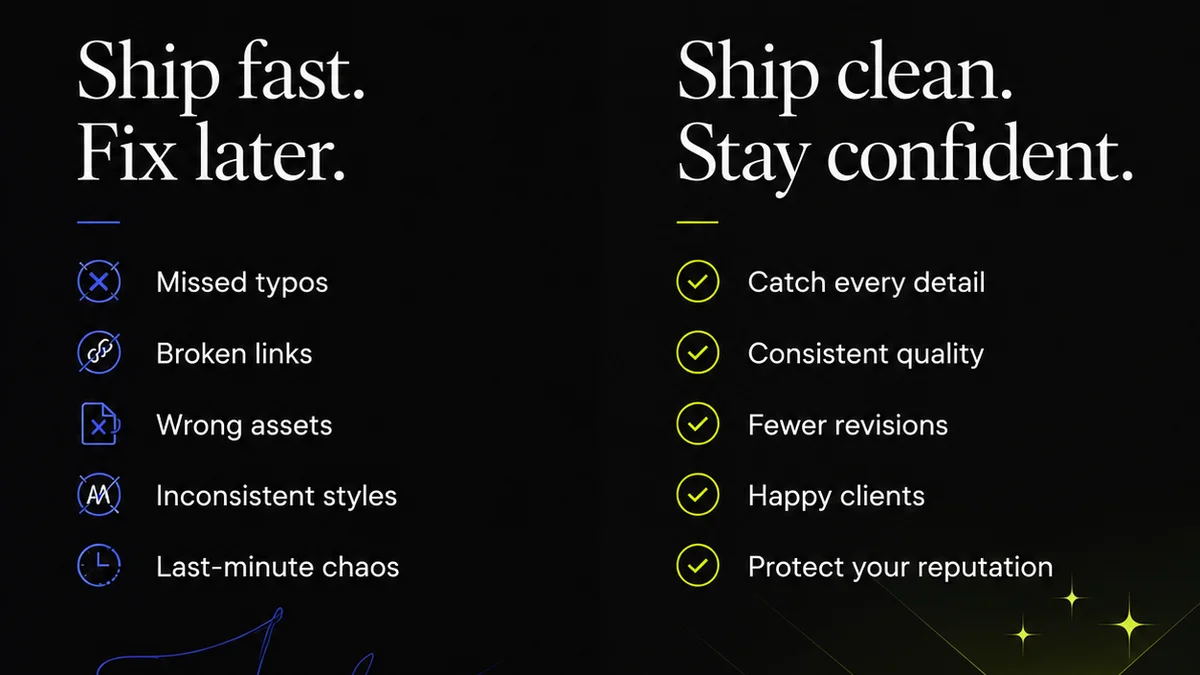
Most agencies and in-house teams think creative governance is about process. They believe a clear set of steps for feedback, revisions, and final sign-off is the key to controlling creative output. And that’s not entirely wrong. A process is absolutely necessary.
But it’s incomplete.
The hard truth is that effective creative governance isn’t just about the steps; it’s about the underlying systems and the clarity they provide across the entire creative lifecycle. It’s about setting expectations, managing risk, and ensuring quality without stifling creativity. It’s operational discipline, not just a checklist.
1. Defining Your Governance Framework
Before you can govern anything, you need to define what you’re governing and why. This isn’t just about legal or brand compliance, though those are critical components. It’s about the entire ecosystem of creative production.
What Are You Governing?
Think broadly. This includes:
- Brand consistency (visual identity, tone of voice)
- Legal and regulatory compliance (disclaimers, industry standards, accessibility)
- Client requirements and project scope
- Internal quality standards and best practices
- Technical specifications (file formats, resolution, platform requirements)
- Ethical considerations and responsible design
Why Are You Governing?
The purpose of governance is to mitigate risk and ensure predictable, high-quality outcomes. Consider these drivers:
- Risk Mitigation: Avoiding legal issues, brand damage, or costly rework.
- Quality Assurance: Maintaining a high standard of creative output.
- Efficiency: Streamlining the feedback and approval process to reduce bottlenecks.
- Scalability: Ensuring consistent quality as the team or client base grows.
- Client Satisfaction: Delivering work that meets or exceeds expectations reliably.
Without a clear understanding of what you’re governing and why, your governance framework will be reactive and ineffective.
2. The Core Pillars of Creative Governance
Effective governance rests on a few fundamental pillars. Neglect any one, and your system will eventually crumble.
Clarity of Roles and Responsibilities
Who has the final say? Who provides feedback? Who checks for compliance? Ambiguity here is a breeding ground for conflict and delays.
- Clear Ownership: Designate a single point person for final approval on each project or asset type.
- Defined Feedback Loops: Specify who is authorized to provide feedback at each stage. Not everyone needs a voice.
- Accountability: Ensure individuals understand their responsibilities within the governance process.
This isn't about bureaucracy; it's about efficiency. It ensures the right people are involved at the right time.
Standardized Processes and Documentation
Ad hoc governance is no governance at all. You need repeatable, documented processes.
- Feedback Protocols: How should feedback be submitted? What constitutes actionable feedback versus subjective opinion?
- Revision Tracking: How are changes logged and communicated? What’s the limit on revision rounds?
- Approval Workflows: What are the defined stages and who signs off at each?
- Asset Management: Where are approved assets stored? How is version control managed?
Documentation makes the process transparent and auditable.
Communication and Collaboration Tools
The best governance framework falls apart if communication is fragmented. You need tools that facilitate clear, contextual communication.
- Centralized Platform: A single source of truth for feedback, revisions, and approvals.
- Contextual Annotations: The ability to leave feedback directly on the creative asset.
- Version History: Easy access to previous versions and the rationale for changes.
- Notifications and Alerts: Keeping stakeholders informed of progress and required actions.
Fragmented communication leads to misunderstandings and missed details, undermining governance.
Quality Assurance and Compliance Checks
This is where many systems falter, treating it as a last-minute check rather than an integrated part of the process.
- Pre-flight Checks: Automate or standardize checks for technical specs, brand guidelines, and accessibility standards before final delivery.
- Content Accuracy: Ensure all copy, data, and claims are verified.
- Brand Alignment: Regularly audit creative assets against brand guidelines.
- Accessibility Standards: Integrate checks for WCAG compliance where applicable.
These checks should be built into the workflow, not bolted on at the end.
3. Implementing Your Creative Governance Checklist
A checklist is only as good as its implementation. Here’s how to make yours stick.
1. Map Your Current Workflow
Before you can improve it, understand how work actually flows. Identify pain points, bottlenecks, and areas of ambiguity. This is where most teams skip a beat, assuming they know their process.
2. Identify Key Governance Touchpoints
Where in your workflow do critical decisions need to be made? Where is risk highest? Where is quality most likely to be compromised?
- Concept approval
- Wireframe/layout review
- Content sign-off
- Visual design mock-up approval
- Pre-production checks
- Final asset approval
- Post-launch review
3. Document Your Governance Rules
Translate your framework and pillars into clear, actionable rules. This is your actual checklist.
- Who provides feedback at each touchpoint?
- What are the criteria for approval at each stage?
- What is the maximum number of revision rounds allowed?
- What are the required file formats and naming conventions for final delivery?
- What are the specific brand or technical compliance checks required?
Keep it concise and accessible.
4. Integrate Tools and Technology
Leverage technology to automate, streamline, and enforce your governance rules. This is where a centralized platform becomes invaluable.
- Use project management tools to assign roles and track progress.
- Employ creative collaboration platforms for contextual feedback and version control.
- Integrate with DAM systems for asset management.
- Consider automation for compliance checks where possible.
Technology should support your process, not define it.
5. Train Your Team and Stakeholders
A governance checklist is useless if people don’t understand it or adhere to it. Conduct training sessions, create accessible documentation, and reinforce the importance of the process.
6. Review and Iterate
Governance is not a set-it-and-forget-it exercise. Regularly review your checklist and processes. Are they still effective? Are they creating bottlenecks? Adapt as your team, clients, and projects evolve.
4. Common Pitfalls to Avoid
Even with a well-defined checklist, teams often stumble. Watch out for these common traps.
Over-Governance
Too many rules, too many approvers, or too much red tape can stifle creativity and slow down production to a crawl. Governance should enable, not disable.
Under-Governance
The opposite extreme. Assuming everyone knows best or letting things slide leads to inconsistency, errors, and brand dilution. This is often a symptom of unclear roles or lack of enforcement.
Lack of Buy-In
If stakeholders don’t understand the 'why' behind the governance rules, they’ll resist or ignore them. Communication and demonstrating value are key.
Tool Fixation
Believing a new tool will magically solve all governance problems. Tools are enablers, but the process and people are paramount.
Subjectivity Creep
Allowing subjective opinions to override objective criteria, especially during feedback rounds. This undermines the entire purpose of a structured process.
Ignoring Accessibility
Treating accessibility as an afterthought. It needs to be a core part of your governance, integrated from the start. This includes considering guidelines like WCAG 2.1.
Where Revue Fits In
Managing creative governance effectively requires visibility and control over the feedback and revision process. This is precisely where a platform like Revue excels.
Instead of fragmented email threads, scattered feedback documents, or unclear revision histories, Revue provides a centralized hub.
- Centralized Feedback: All client and stakeholder feedback lives in one place, directly linked to the creative asset. No more hunting for that one email.
- Revision Visibility: Track every iteration, understand the changes made, and see who approved what, and when. This creates an auditable trail and clarifies responsibilities.
- Streamlined Approvals: Set up clear approval workflows, ensuring the right people sign off at the right stages, reducing bottlenecks and confusion.
- Quality Control: By having a clear record of feedback and revisions, you can more easily ensure that final assets meet all specified requirements and brand guidelines before delivery.
Revue helps operationalize your creative governance checklist, turning abstract rules into a tangible, manageable workflow.
Final Thought
Creative governance isn't about building walls around your creative process; it's about building guardrails. It's about creating the conditions for brilliant work to emerge consistently, reliably, and without unnecessary risk.
Is your current governance framework truly enabling your team, or is it just adding another layer of friction?
Frequently asked questions
What is the primary goal of creative governance?
The primary goal of creative governance is to ensure consistent quality, mitigate risks (legal, brand, technical), and streamline the creative production process. It aims to deliver predictable, high-quality outcomes without stifling creativity.
How does creative governance differ from project management?
Project management focuses on the 'how' and 'when' of delivering a project (scope, timeline, budget). Creative governance focuses on the 'what' and 'why' of the creative output itself, ensuring it meets specific standards, brand guidelines, and compliance requirements throughout the process.
What are the common pitfalls in implementing a creative governance checklist?
Common pitfalls include over-governance (too much red tape), under-governance (lack of clear rules or enforcement), lack of stakeholder buy-in, relying too heavily on tools without a solid process, allowing subjective feedback to dominate, and neglecting critical aspects like accessibility.
How can a platform like Revue help with creative governance?
Revue centralizes feedback, tracks revisions and approvals transparently, and provides a clear audit trail. This visibility and control help operationalize governance rules, ensuring consistency and quality by making the process manageable and auditable.