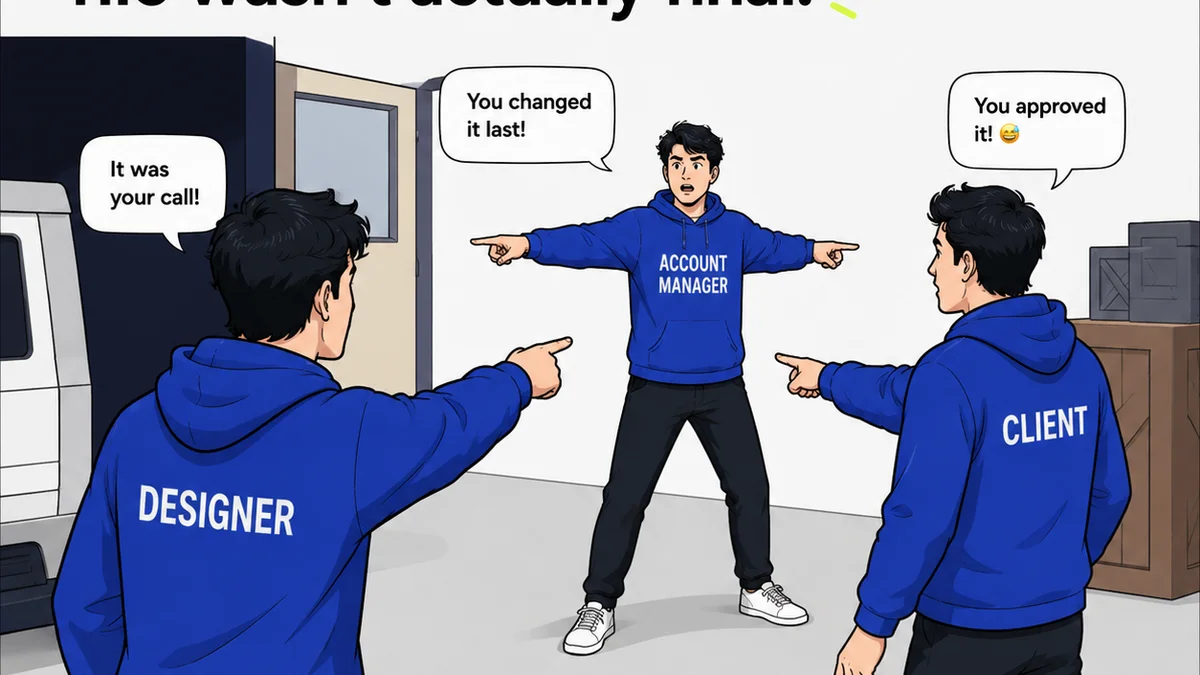
Most agencies think creative governance is just about getting client sign-off. That’s the easy part. It’s a checkbox, a moment in time. But it’s not the whole story.
The hard truth? True creative governance is an ongoing process, woven into the fabric of your agency’s operations. It’s about maintaining quality, consistency, and strategic alignment from the first brief to the final delivery.
1. Defining Creative Governance
What is creative governance, really? It’s the system of rules, practices, and processes that ensure creative output aligns with business objectives, brand standards, and client expectations.
It's not a bureaucratic hurdle. It’s a strategic advantage.
Why It Matters for Agencies
- Brand Consistency: Ensures every piece of work speaks with a unified voice.
- Quality Control: Upholds high standards, reducing errors and rework.
- Client Satisfaction: Delivers work that meets and exceeds expectations.
- Team Efficiency: Streamlines workflows and clarifies roles.
- Risk Mitigation: Avoids legal or brand missteps.
2. The Core Components of a Governance Framework
A robust framework isn't built overnight. It requires deliberate planning and clear documentation.
Brand Guidelines and Standards
These are your creative bedrock. They define the visual and verbal identity of the brands you work with.
- Logos: Usage, clear space, color variations.
- Typography: Primary, secondary, and web fonts.
- Color Palettes: Primary, secondary, and accent colors.
- Imagery: Style, tone, and subject matter.
- Tone of Voice: Language, messaging, and personality.
These guidelines must be accessible and understood by everyone involved in the creative process.
Workflow and Process Mapping
How does work get done? Documenting your workflows is crucial for identifying bottlenecks and ensuring consistency.
- Briefing process: How briefs are received, clarified, and approved.
- Creative brief template: Standardized fields for essential information.
- Internal reviews: Stages, stakeholders, and feedback mechanisms.
- Client feedback loops: How feedback is collected, interpreted, and actioned.
- Revision and approval stages: Clear definition of each step.
- Quality assurance (QA): Pre-launch checks for errors and compliance.
This isn't about stifling creativity; it's about providing guardrails.
Roles and Responsibilities
Who does what? Clarity here prevents confusion and dropped balls.
- Creative Director: Overall creative vision and final sign-off.
- Project Manager: Workflow management and client communication.
- Account Manager: Client relationship and strategic alignment.
- Designers/Copywriters: Execution of creative assets.
- QA Team: Final check for errors and adherence to brief/guidelines.
Ensure everyone knows their part in the governance process.
Technology and Tools
The right tools streamline governance. Don't let technology be an afterthought.
- Project Management Software: For tracking tasks and deadlines.
- Digital Asset Management (DAM): For organizing and accessing brand assets.
- Feedback and Approval Platforms: For centralized communication and version control.
- Communication Tools: For clear and efficient team collaboration.
Your tech stack should support, not hinder, your governance.
3. Implementing Your Creative Governance Checklist
A checklist is only useful if it's used. Implementation requires buy-in and consistent application.
Onboarding and Training
New hires need to understand your governance. Existing teams need refreshers.
- Mandatory training sessions on brand guidelines and workflows.
- Onboarding materials that clearly outline governance protocols.
- Regular team meetings to discuss governance updates and challenges.
Make governance part of your agency culture.
Regular Audits and Updates
Governance isn't static. It needs to evolve.
- Conduct periodic audits of creative output against brand standards.
- Review and update brand guidelines as brands evolve.
- Analyze workflow performance and identify areas for improvement.
- Gather feedback from teams and clients on the governance process.
Stay agile. Stay relevant.
Feedback Integration
Feedback is gold, but it needs structure.
- Establish a clear process for collecting and consolidating client feedback.
- Train teams on how to interpret and action feedback effectively.
- Use a centralized platform to avoid scattered, conflicting comments.
This prevents feedback from becoming a chaotic mess.
4. Common Pitfalls and How to Avoid Them
Even with the best intentions, governance can falter.
- Over-bureaucratization: Too many layers of approval slow things down. Streamline where possible.
- Lack of Clarity: Vague guidelines lead to inconsistent execution. Be specific.
- Tool Overload: Too many disconnected tools create confusion. Integrate where you can.
- Resistance to Change: Teams may resist new processes. Emphasize the benefits.
- Ignoring Brand Evolution: Outdated guidelines become irrelevant. Keep them current.
Proactive problem-solving is key.
Where Revue Fits In
Managing creative governance across multiple clients and projects can feel like juggling chainsaws. This is where a centralized platform becomes indispensable.
Revue helps agencies by providing a single source of truth for client feedback. Instead of sifting through endless email threads or Slack messages, all comments are organized, contextualized, and actionable within the platform.
This visibility into revisions and approvals is critical. You can track the history of changes, understand the rationale behind them, and ensure that final versions align with the original brief and approved iterations.
Furthermore, Revue facilitates structured quality checks. Before work goes live or is delivered, teams can use the platform to conduct final reviews, ensuring that all feedback has been addressed and that the creative meets the agreed-upon standards and brand guidelines.
It’s about bringing order to the creative chaos, ensuring that governance isn’t just a checklist, but a seamlessly integrated part of your workflow.
5. Building Your Creative Governance Checklist
Let's translate these principles into a practical checklist.
Pre-Production
- Is the creative brief clear, complete, and signed off?
- Are brand guidelines accessible and understood by the team?
- Are all necessary assets (logos, fonts, imagery) available and compliant?
- Are roles and responsibilities clearly defined for this project?
Production
- Is feedback being collected centrally and systematically?
- Are internal reviews conducted at key milestones?
- Are revisions tracked, and is version control maintained?
- Does the work adhere to brand voice and tone?
- Are visual elements consistent with brand guidelines?
Post-Production/Pre-Delivery
- Has client feedback been addressed and approved?
- Has a final QA check been completed for errors (typos, broken links, incorrect formatting)?
- Does the final deliverable meet all project objectives and client requirements?
- Are all necessary files and documentation in order?
This checklist is a starting point. Adapt it to your agency’s specific needs and client types.
Final Thought
Creative governance is often seen as a constraint. But when done right, it’s the framework that enables truly exceptional, impactful creative work. It protects your clients’ brands and your agency’s reputation.
Are you governing your creative output, or just approving it?
Frequently asked questions
What are the key benefits of establishing creative governance?
Key benefits include ensuring brand consistency across all outputs, maintaining high quality standards, improving team efficiency by clarifying processes and roles, mitigating risks of brand or legal missteps, and ultimately enhancing client satisfaction by delivering work that meets strategic objectives.
How can I make sure my team actually uses the creative governance checklist?
Implementation requires buy-in. Ensure clear training on why governance is important and how the checklist benefits their work. Integrate the checklist directly into your project management workflow, making it a mandatory step. Regular audits and team discussions about adherence can also reinforce its importance.
What's the difference between creative governance and just getting client approval?
Client approval is a single point in the process, often the final sign-off. Creative governance, however, is a comprehensive system of rules, processes, and practices that guide creative work from start to finish. It ensures alignment with strategy, brand standards, and quality benchmarks *before* and *during* the approval stages, not just as a final hurdle.
How often should brand guidelines and governance processes be updated?
Brand guidelines should be updated whenever a brand evolves or strategic shifts occur. Governance processes should be reviewed at least annually, or whenever significant workflow bottlenecks or inefficiencies are identified. Regular audits of creative output against standards can also highlight areas needing updates.