You think creative governance is about brand guidelines, right? About ensuring every logo, font, and color is used perfectly across every touchpoint in your hospitality brand. None of that is wrong. But it’s incomplete.
The hard truth is that true creative governance for hospitality isn't just about compliance. It's about building a system that consistently delivers exceptional guest experiences through aligned, efficient creative execution. It’s about making sure the brilliant ideas born in your marketing department actually translate into memorable moments for your guests, without getting lost or watered down along the way.
1. Beyond the Brand Book: The Operational Core
Most hospitality brands have a brand book. It's usually a PDF, maybe a fancy microsite. It lists the rules. What it rarely does is explain *why* the rules exist or *how* to apply them in the messy reality of hotel marketing, restaurant promotions, or event branding.
This is where the first layer of governance needs to go deeper. It needs to be operational.
The 'Why' Behind the 'What'
Every guideline should be tied back to a strategic objective or a guest experience principle. Why a specific shade of blue? Because it evokes trust and calm, aligning with our brand's promise of relaxation. Why this font? Because it's highly legible on digital menus and in-room directories, ensuring ease of use for our guests.
The 'How' in Practice
Show, don't just tell. Instead of saying 'use this tone of voice,' provide examples of successful campaigns or social media posts that embody it. For physical touchpoints, show mockups of signage, menus, or staff uniforms that demonstrate correct application. This practical guidance is crucial for field teams, franchisees, or external agencies who might not have deep brand immersion.
2. Centralizing Feedback: The Single Source of Truth
Hospitality is a complex ecosystem. You have brand teams, marketing departments, individual hotel GMs, restaurant managers, event planners, PR agencies, advertising agencies, web developers, interior designers – the list goes on. Each has a role in shaping the guest experience, and each generates creative assets or touches existing ones.
Without a central hub for feedback, chaos reigns. Feedback gets siloed in emails, Slack channels, or even verbal conversations. Revisions get lost. Approvals are missed. The brand consistency you crave becomes a distant dream.
This is why centralized feedback is non-negotiable for effective creative governance.
The Problem with Dispersed Feedback
- Inconsistency: Different stakeholders give conflicting feedback, leading to a muddled final product.
- Delays: Tracking down the right person for approval or clarification eats up valuable time.
- Misinterpretation: Notes from one person get relayed through another, introducing errors.
- Lack of Accountability: It's hard to track who said what and when, making it difficult to learn from mistakes.
Building a Feedback Loop
A robust governance system needs a mechanism for collecting, organizing, and acting on feedback. This means defining:
- Who provides feedback: Clearly identify key stakeholders for different types of creative.
- When feedback is due: Set clear deadlines for review cycles.
- How feedback is given: Standardize the format and channel for feedback.
- How feedback is actioned: Ensure there's a process for reviewing and incorporating feedback, with clear sign-off.
This isn't about adding bureaucracy; it's about adding clarity and efficiency. It ensures that feedback is constructive, actionable, and contributes to a stronger, more cohesive brand experience.
3. Managing Revisions and Approvals: Clarity in Workflow
Once feedback is gathered, the real work begins: implementing revisions and securing approvals. In hospitality, these cycles can be lengthy and involve numerous stakeholders across different departments and even geographies.
A common assumption is that email chains and shared drives are sufficient. They are not. They are breeding grounds for version control nightmares and missed deadlines.
The Version Control Abyss
How many times have you seen 'Final_v3_really_final_USE_THIS_ONE.pdf'? It’s a classic sign of a broken revision process. Each iteration of a creative asset needs to be tracked, with clear history and the ability to revert if necessary.
Approvals are equally problematic. A PDF might get a 'looks good' comment, but was that from the legal team, the marketing director, or the property owner? Without a clear audit trail, you're operating on assumptions.
Streamlining the Process
Effective governance requires a structured approach to revisions and approvals:
- Clear Workflow: Map out each step of the revision and approval process for different asset types.
- Designated Approvers: Assign specific roles for final sign-off.
- Centralized History: Maintain a clear record of all changes, feedback, and approvals.
- Automated Notifications: Use tools to alert stakeholders when action is required.
This level of control ensures that creative work progresses efficiently and that every stakeholder is aligned before a final asset goes live, impacting guests.
4. Quality Control: The Guest Experience Checkpoint
This is the final, critical step in creative governance for hospitality. It’s about looking at the finished asset, or the implemented experience, through the eyes of the guest.
Many brands stop at internal approvals. The asset is signed off by marketing, production is initiated, and it’s out the door. But does it actually serve the guest? Does it align with the property’s unique identity? Does it meet accessibility standards?
The Guest's Perspective Matters
Creative governance must extend to the point of guest interaction. This means:
- Brand Alignment Check: Does this menu design reflect the restaurant's ambiance? Does this social media post feel authentic to the hotel's location?
- Usability & Accessibility: Is the signage clear and easy to read for all guests? Are digital interfaces intuitive? Are there any barriers to access? (See WCAG guidelines for best practices).
- Operational Feasibility: Can this proposed promotional material actually be produced and distributed within budget and timeframe by the on-site team?
- Cross-Channel Consistency: Does this new campaign element feel connected to the overall brand narrative across all touchpoints?
This final quality check is the ultimate test of your creative governance. It ensures that your brand's promise isn't just communicated, but is consistently delivered in a way that enhances the guest experience.
Where Revue Fits In
Building a robust creative governance system for hospitality doesn't require reinventing the wheel. It requires the right tools to manage the complexity.
Revue acts as the central nervous system for your creative workflow. It’s where your brand guidelines meet real-time project execution.
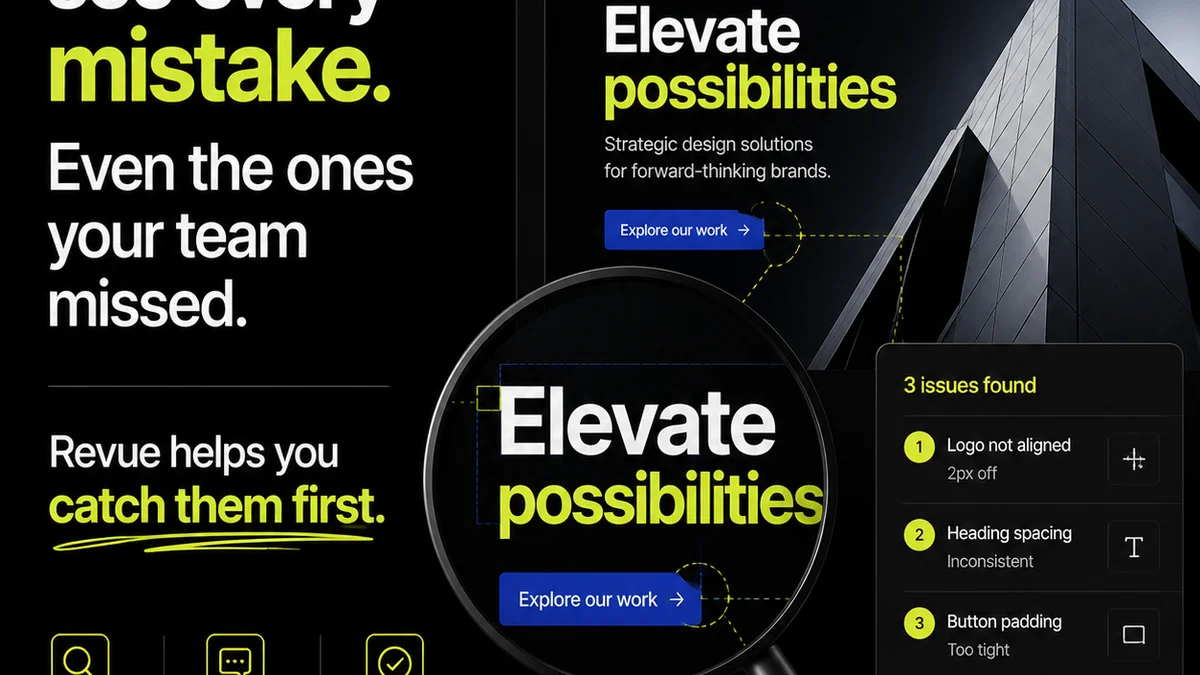
- Centralized Feedback: All stakeholders can review creative assets directly within Revue, leaving contextual comments and annotations. No more hunting through email chains.
- Revision & Approval Visibility: Track every version of an asset, see who has provided feedback, and manage approvals with clear status updates. This creates an undeniable audit trail.
- Quality Checks: Ensure that all feedback and revisions align with strategic goals and brand standards before final sign-off. The platform facilitates a structured review process, making the final quality control step more effective.
By bringing all creative communication and approvals into one place, Revue helps hospitality brands maintain brand integrity, improve efficiency, and ultimately deliver more consistent, high-quality guest experiences.
Final Thought
Creative governance in hospitality is less about rigid rules and more about creating a responsive, adaptable system. It's about empowering your teams to execute brilliantly while ensuring every guest touchpoint reinforces your brand promise.
Are you governing your creative output, or is it governing you?
Frequently asked questions
What is creative governance in the hospitality industry?
Creative governance in hospitality is a system of processes, guidelines, and tools designed to ensure that all creative output consistently aligns with the brand's strategy, enhances the guest experience, and is executed efficiently across all touchpoints.
Why is a brand book not enough for hospitality creative governance?
A brand book typically outlines rules but lacks the operational 'how-to' and 'why.' Effective governance requires practical guidance, a clear feedback loop, streamlined revision/approval processes, and a focus on the guest experience, which a static brand book alone cannot provide.
How does centralized feedback improve hospitality creative projects?
Centralized feedback prevents conflicting input, reduces delays, minimizes misinterpretation, and establishes accountability. It ensures all stakeholders contribute to a cohesive final product, leading to a more consistent brand experience for guests.
What role do revisions and approvals play in creative governance?
Managing revisions and approvals effectively ensures version control, maintains an audit trail of changes and sign-offs, and keeps projects moving efficiently. This clarity prevents errors and ensures alignment before creative assets are finalized, impacting guest interactions.
How can a platform like Revue help with hospitality creative governance?
Revue centralizes feedback, manages revisions and approvals with visibility, and facilitates structured quality checks. This streamlines the entire creative workflow, ensuring brand consistency and a better guest experience without adding unnecessary complexity.