Most hospitality brands think creative governance is about brand guidelines. That's it. A PDF, maybe a Figma library. None of that is wrong. But it’s incomplete.
The hard truth? Creative governance is the operational engine that ensures your brand's promise translates into every guest touchpoint, consistently and profitably. It’s not just about looking good; it’s about working smart.
1. The Myth of the 'Creative' Department
The common assumption is that a 'creative' department or a talented agency partner handles all visual and experiential output. They’re the magic makers.
But this view isolates creativity, treating it as a separate, often unpredictable, function. It overlooks the critical need for strategic alignment and operational rigor that underpins every successful creative output.
The Real Bottleneck: Unstructured Feedback
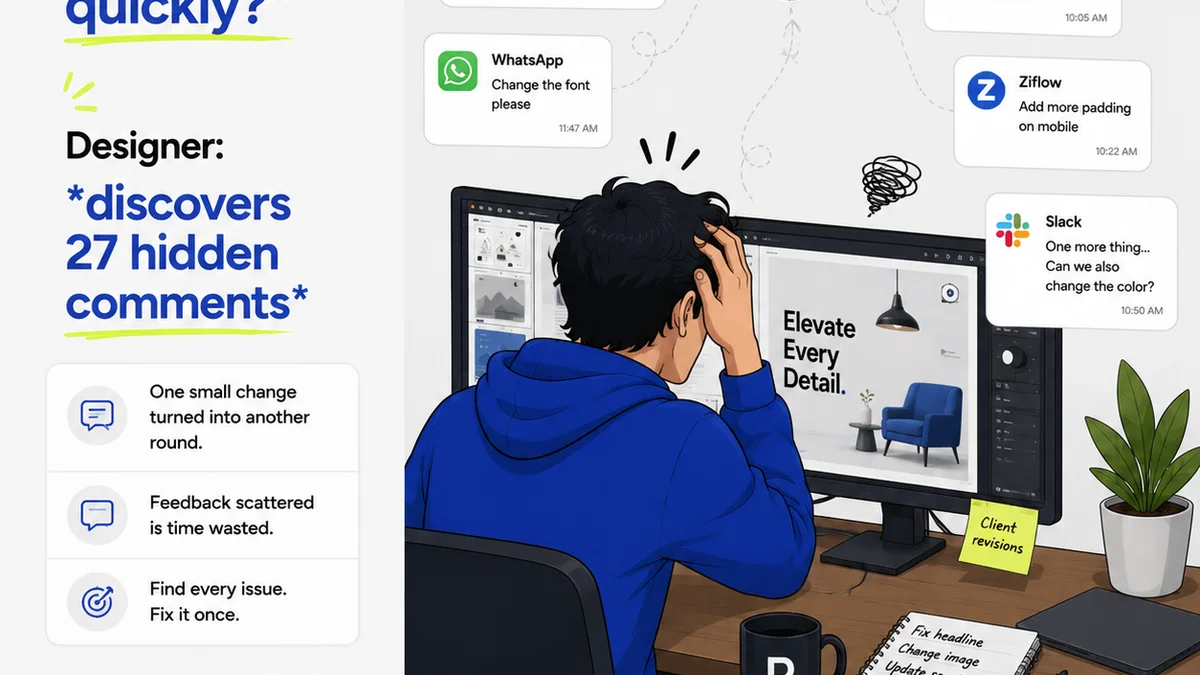
Think about the last time a hotel chain rolled out a new amenity or a restaurant group updated its menu design. How many emails, Slack messages, and impromptu hallway chats happened? How many versions were circulated before the final one landed?
This chaos isn’t a sign of creative passion; it’s a symptom of weak governance. It means feedback is scattered, decisions are opaque, and revisions spiral.
The Cost of 'Creative Freedom'
Unbridled creative freedom without a framework leads to:
- Inconsistent brand experiences across locations or digital platforms.
- Wasted time and resources on endless revisions.
- Missed deadlines for crucial marketing campaigns or operational launches.
- Brand dilution, as individual interpretations override the core brand strategy.
- Difficulty in scaling creative efforts efficiently.
This isn't about stifling innovation. It's about channeling it effectively.
2. Defining Creative Governance in Hospitality
Creative governance is the system of rules, processes, and accountability that guides the creation, approval, and deployment of all brand assets and experiences.
For hospitality, this means everything from the lobby signage and room service menus to social media campaigns and website user interfaces.
Beyond Visuals: The Experiential Layer
In hospitality, the brand isn't just seen; it's felt. Creative governance must extend to:
- Guest Journey Mapping: Ensuring every interaction, from booking to check-out, aligns with brand standards.
- Service Protocols: How staff embody the brand in their interactions.
- Physical Environment: Design consistency in architecture, interiors, and amenities.
- Digital Presence: Website, app, social media, and online travel agency (OTA) listings.
- Marketing & Communications: Advertising, PR, and promotional materials.
Each of these elements is a creative output. Each needs a governing process.
The Pillars of Effective Governance
Strong creative governance rests on three pillars:
- Clarity: Clearly defined brand strategy, target audience, and messaging.
- Process: Standardized workflows for briefing, creation, feedback, revision, and approval.
- Accountability: Designated roles and responsibilities for each stage of the process.
Without these, you have a beautiful brand book that nobody follows, or worse, uses as a suggestion box.
3. Operationalizing Creative Consistency
Consistency is the bedrock of trust in hospitality. Guests expect a certain experience, and they expect it every time, everywhere.
Creative governance is the operational mechanism that delivers this promise.
The Feedback Loop Nightmare
Consider a new menu design for a hotel restaurant. The chef has feedback on dish descriptions, the marketing team on pricing, and the GM on overall aesthetic. The designer receives comments via email, then Slack, then a quick call.
Which feedback is prioritized? Who makes the final call when there are conflicting inputs? This is where governance breaks down.
Streamlining Revisions and Approvals
A structured approach means:
- All feedback is consolidated in one place, linked to specific design elements.
- Decision-makers are clearly identified and their roles defined.
- Revision history is tracked, providing context for changes.
- Approvals are documented, creating an audit trail.
This reduces ambiguity and speeds up the cycle. It’s the difference between a creative project that drags on for months and one that hits its deadline.
4. Measuring the ROI of Governance
Many see governance as bureaucratic overhead. The reality is that effective governance is a powerful driver of ROI.
Reduced Costs, Increased Efficiency
How much time do your teams spend chasing feedback, deciphering conflicting notes, or redoing work because the brief wasn't clear?
Streamlined workflows directly translate to:
- Lower production costs due to fewer revisions.
- Faster time-to-market for campaigns and new initiatives.
- Optimized resource allocation – designers and marketers focus on creating, not managing chaos.
Enhanced Brand Equity and Loyalty
Consistent brand experiences build trust. Trust builds loyalty. Loyalty drives repeat business and positive word-of-mouth.
A strong governance framework ensures that every guest touchpoint reinforces the brand's core values and promises. This isn't just good design; it's good business.
Mitigating Risk
Inconsistent messaging or visual representation can lead to brand confusion, legal issues (e.g., trademark infringement), or damage to reputation.
Clear governance protocols act as guardrails, ensuring compliance and protecting the brand.
5. Where Revue Fits In
Managing creative feedback and approvals across multiple stakeholders, locations, and projects can quickly become unmanageable without a dedicated system.
Revue is built to bring order to this creative chaos. It provides a centralized platform where:
- Client/Stakeholder Feedback is Consolidated: All comments, annotations, and discussions live directly on the creative asset. No more digging through email chains or Slack threads.
- Revisions and Approvals are Visible: Track every version, see who approved what, and understand the decision-making process. This transparency is crucial for complex hospitality operations.
- Quality Checks are Streamlined: Ensure brand guidelines are met and all necessary elements are present before final deployment, reducing errors and last-minute panics.
By centralizing these critical functions, Revue empowers hospitality brands to maintain creative integrity while accelerating their workflows.
Final Thought
Is your brand's creative output a tightly controlled engine of growth, or a series of disconnected, high-effort initiatives? The difference lies not in the talent of your creatives, but in the robustness of your creative governance.
How are you operationalizing creativity to build a stronger, more consistent hospitality brand?
Frequently asked questions
What is creative governance in the context of hospitality?
Creative governance in hospitality refers to the established processes, standards, and accountability structures that guide the creation, approval, and consistent application of all brand-related creative assets and guest experiences, from digital platforms to physical spaces and staff interactions.
How does creative governance improve a hospitality brand's ROI?
By streamlining feedback and approval processes, reducing costly revisions, ensuring faster time-to-market for campaigns, and enhancing brand consistency which drives customer loyalty and repeat business, creative governance directly impacts profitability and brand equity.
Is creative governance just about brand guidelines?
No, while brand guidelines are a component, creative governance is a much broader operational framework. It encompasses the entire lifecycle of creative assets and experiences, including strategic alignment, workflow management, stakeholder communication, and accountability, ensuring the brand promise is consistently delivered across all touchpoints.
How can a hospitality brand implement better creative governance?
Implementation involves defining clear brand strategies, establishing standardized workflows for briefing and approvals, assigning clear roles and responsibilities, and leveraging technology platforms to centralize feedback and track revisions. Regular training and communication are also key.