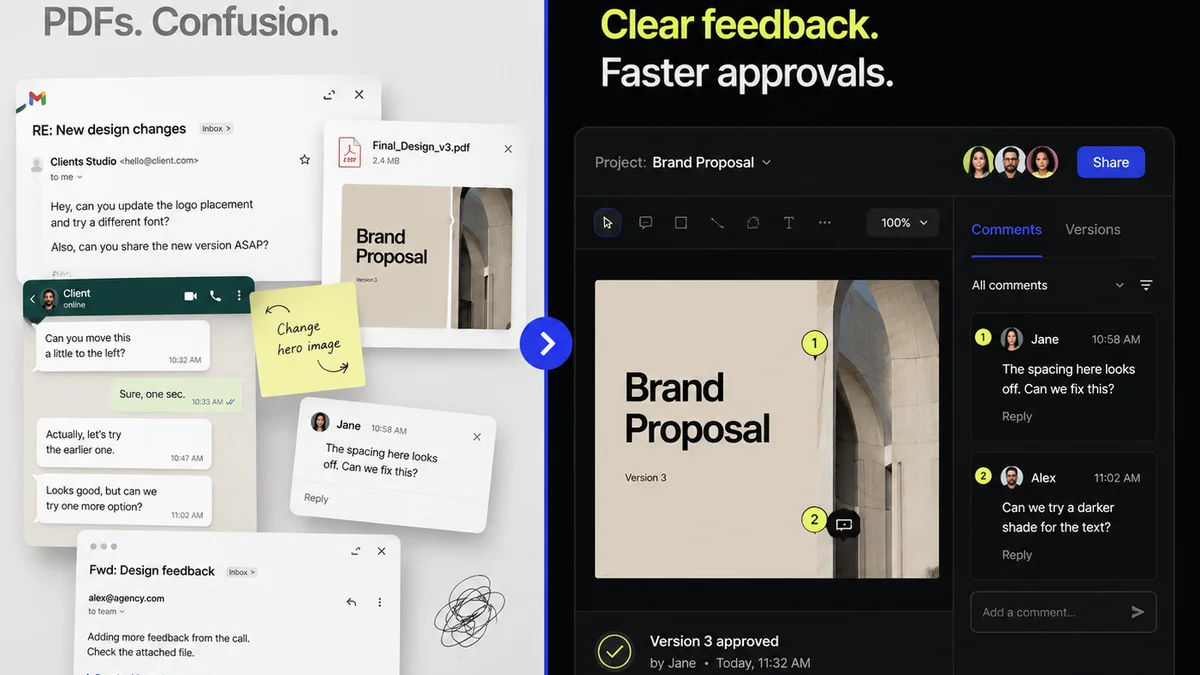
Everyone talks about the creative process: brainstorming, design, revisions, delivery. They focus on the flashy stuff. But the engine that drives all of it? The creative intake process. Many teams treat this like a checkbox. A quick form to fill. A brief meeting to get the ball rolling.
None of that is wrong. But it’s incomplete.
The hard truth is that a weak intake process doesn’t just lead to a bad first draft. It’s the root cause of endless scope creep, missed deadlines, client frustration, and team burnout. It’s the silent killer of profitability and creative morale.
Getting intake right isn’t just about gathering information. It’s about setting expectations, defining success, and building a shared understanding before a single pixel is designed.
1. The Myth of the 'Good Enough' Brief
The assumption: A creative brief is just a document that lists what the client wants. As long as it’s mostly accurate, you can figure out the rest.
This is where most projects start to go sideways. A brief isn't a shopping list; it's a strategic blueprint. It needs to go beyond surface-level requests.
Beyond Deliverables: The 'Why' Matters Most
A great intake process digs into the fundamental 'why' behind the project. What business problem are we trying to solve? What does success *look* like, not just in terms of a delivered asset, but in terms of business impact?
Ask these questions:
- What is the ultimate goal of this project? (e.g., increase sign-ups by 10%, improve brand perception, drive traffic to a new product page)
- Who is the *exact* target audience? (Demographics, psychographics, pain points, aspirations)
- What is the single most important message we need to convey?
- What actions do we want the audience to take after seeing this creative?
- What are the key performance indicators (KPIs) for this project?
Without answers to these, you’re flying blind. You’re designing in a vacuum.
Defining 'Done' and 'Success'
A common point of failure is the lack of a clear definition of success. What does a *win* look like for this project? How will we measure it?
This needs to be agreed upon upfront. It prevents subjective arguments later about whether the creative
Frequently asked questions
What are the key components of a strong creative brief?
A strong creative brief includes the project background, objectives, target audience, key message, desired action, tone of voice, mandatory elements, budget, timeline, and success metrics. It goes beyond just listing deliverables to define the 'why' behind the project.
How can I ensure clients provide all necessary information during intake?
Use a structured intake form or questionnaire that guides clients through essential questions. Schedule a dedicated intake meeting to discuss the brief and ask clarifying questions. Empower your team to push back respectfully if information is missing or unclear.
What's the difference between a creative brief and a project brief?
A creative brief focuses on the 'what' and 'why' of the creative output – the strategy, audience, message, and goals. A project brief is broader, encompassing timelines, budgets, resources, and overall project management aspects. Often, they are combined or the creative brief is a key component of the project brief.
How does a good intake process prevent scope creep?
By clearly defining project scope, objectives, deliverables, and success metrics upfront, a strong intake process establishes boundaries. This shared understanding makes it easier to identify and manage requests that fall outside the original agreement, preventing scope creep.