Everyone agrees creative intake software is essential. It’s the first step in getting a project off the ground. Get it right, and everything flows. Get it wrong, and you’re fighting fires before you even start designing.
But most of what you read about intake software focuses on the *form*. Fillable fields, dropdown menus, file uploads. None of that is wrong. But it’s incomplete.
The hard truth? The *real* value of creative intake software isn’t in the data collection itself. It’s in how that data becomes actionable intelligence for your entire team, driving clarity and eliminating ambiguity from day one. It’s about shifting intake from a bureaucratic hurdle to a strategic advantage.
Let’s break down what truly matters.
1. Beyond the Brief: Understanding Context
A brief is a document. Intake is a process. Your software should support the process, not just digitize the document.
Most intake forms are static. They ask the same questions for every project, regardless of type. This leads to:
- Irrelevant questions that waste client time.
- Crucial details being buried in generic fields.
- A missed opportunity to guide the client toward providing useful information.
The best intake software goes deeper. It understands that a social media campaign needs different context than a website redesign. It should:
a. Adapt to Project Type
Use conditional logic. If the project is a logo design, ask about brand guidelines. If it’s a video, ask about target audience and distribution channels. The software should dynamically adjust the questions based on the project scope.
b. Uncover Implicit Needs
Good intake isn’t just about what the client *says* they need, but what they *actually* need to achieve their business goals. The software can prompt for this.
Ask about:
- Business objectives driving the request.
- Key Performance Indicators (KPIs) for success.
- Target audience demographics and psychographics.
- Existing brand assets and their usage rights.
This forces clarity upfront, for both the client and your team.
c. Integrate with Existing Knowledge
Does your agency have a standard project kickoff questionnaire? A brand style guide template? The intake software should be able to pull from, or link to, these resources. Avoid duplicating information.
Think of it as building a project profile, not just a brief.
2. Actionability: From Data to Decisions
Collecting information is easy. Making that information useful is the challenge. Your intake software needs to bridge that gap.
A common pitfall is treating intake as a one-off event. The brief gets filled out, filed away, and often forgotten until a problem arises. This is operational failure.
Actionable intake means the data collected immediately informs the next steps.
a. Automated Brief Summaries
Once a brief is submitted, the software should be able to generate a concise summary. Highlight key objectives, deliverables, and deadlines. This can be automatically shared with the relevant internal team members.
This isn't just for project managers. Designers, copywriters, and strategists can quickly grasp the core requirements.
b. Smart Task Generation
Based on the project type and details provided, the software should suggest or even auto-generate initial tasks. For a website project, this might include:
- Create sitemap
- Develop wireframes
- Write core copy
- Set up staging environment
This gets the ball rolling instantly, reducing the manual effort of project setup.
c. Risk Identification
Are there red flags in the brief? Unrealistic timelines? Vague objectives? Missing critical information? The software can be configured to flag these issues.
This allows for proactive conversations with the client, rather than reactive firefighting later.
3. Collaboration: The Team's Single Source of Truth
Creative projects are team sports. Intake is the first play. If the team isn’t on the same page about the playbook, you’re doomed.
Many agencies still rely on email chains and shared docs for intake. This creates silos and confusion.
Your intake software must be a collaborative hub, accessible to all relevant stakeholders.
a. Centralized Access
All project information, from the initial brief to subsequent approvals, should live in one place. No more digging through inboxes or scattered cloud storage folders.
This is crucial for remote and hybrid teams.
b. Role-Based Permissions
Not everyone needs to see everything. Grant access based on roles (e.g., client, project manager, designer, finance). Ensure sensitive information is protected while essential details are readily available.
c. Version Control and History
What changed in the brief? Who requested it? When? The software should maintain a clear audit trail. This prevents disputes and ensures accountability.
Knowing the history of decisions is as important as the decisions themselves.
4. Client Experience: Frictionless Onboarding
The intake process is often a client’s first direct interaction with your agency’s operational side. Make it seamless.
A clunky, confusing intake process can sour a client relationship before it truly begins. They came to you for creative expertise, not a data entry marathon.
Consider the client's perspective:
- Is the form intuitive?
- Are the questions clear and concise?
- Is it easy to upload files?
- Can they save their progress and come back later?
A positive intake experience sets a professional tone and builds confidence.
a. Branded Portals
Allow clients to submit information through a portal that reflects your agency’s branding. This reinforces professionalism and trust.
b. Clear Communication
The software should facilitate clear communication about the intake process. Set expectations on what happens next and who they can contact with questions.
c. Mobile Responsiveness
Clients might be filling out forms on the go. Ensure the intake process is fully responsive and works flawlessly on any device.
Where Revue Fits In
Creative intake software is just the start. The real magic happens when that initial clarity fuels the entire project lifecycle. This is where Revue excels.
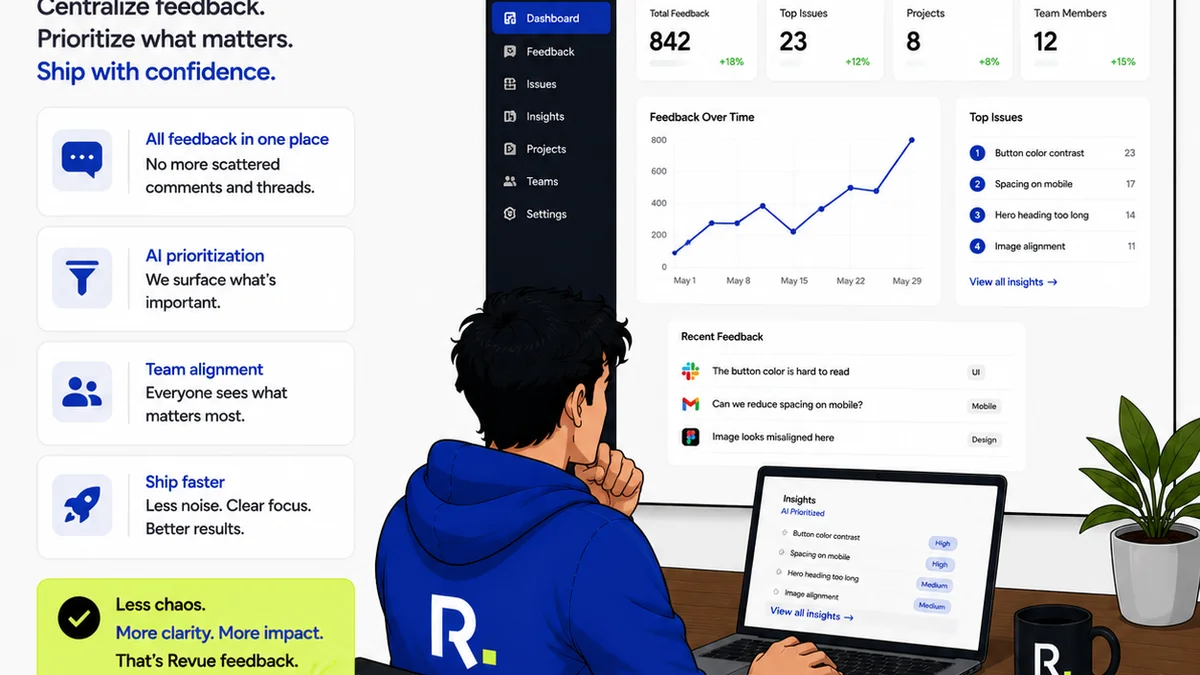
Revue acts as the central nervous system for client feedback and approvals. Once your intake is solid, the project moves into Revue:
- Centralized Feedback: All client comments and revisions are consolidated in one place, linked directly to the creative asset. No more scattered email threads or Slack messages.
- Revision and Approval Visibility: Track the status of every revision and approval. Understand who has signed off and what changes are pending. This transparency prevents bottlenecks and misunderstandings.
- Quality Assurance: Use Revue’s structured review process to ensure all feedback is addressed, all requirements from the intake brief are met, and the final output is polished before delivery.
By integrating intake with a robust feedback and approval system, you create a continuous loop of clarity and efficiency, ensuring the project stays true to its initial objectives.
Final Thought
The most effective creative intake software doesn’t just collect data; it cultivates understanding. It transforms a transactional step into a relational one, setting the stage for successful collaboration and exceptional creative outcomes. Is your current intake process truly fostering that understanding, or just filling a database?
Frequently asked questions
What is the primary goal of creative intake software?
The primary goal is to gather all necessary information and context about a creative project from a client or stakeholder in a structured and efficient way. This ensures clarity, sets expectations, and provides a foundation for successful project execution.
How can intake software improve client experience?
By providing a clear, branded, and easy-to-use process for submitting project details, mobile-responsive forms, and clear communication, intake software can make a client's initial interaction with your agency seamless and professional.
What's the difference between a brief and intake software?
A brief is a document outlining project requirements. Intake software is a system designed to facilitate the process of gathering information for that brief (and often much more context), making it actionable and collaborative throughout the project lifecycle.
Can intake software help identify project risks?
Yes, advanced intake software can be configured to flag potential risks such as unrealistic timelines, vague objectives, or missing critical information, allowing teams to address these issues proactively before they impact the project.