Everyone talks about automation in creative operations. They say it saves time, reduces errors, and speeds up delivery. None of that is wrong. But it’s incomplete.
The hard truth is that true creative operations automation isn't just about ticking boxes faster. It’s about fundamentally changing how your agency scales, how your teams collaborate, and how you deliver client value. It’s the difference between a busy agency and a growing one.
1. The Myth of “Just Doing More”
Many agencies think scaling means hiring more people. More designers, more account managers, more producers. This is a linear path. It works, until it doesn’t.
Eventually, the overhead, the communication breakdowns, and the sheer complexity of managing more people and projects outweigh the benefits. You hit a ceiling.
This is where the conversation around automation usually starts: “We need to do things faster.”
But faster isn't always better. Faster without control leads to chaos. Faster without strategy leads to burnout.
The Real Bottleneck
The real bottleneck isn't your team's capacity. It's your processes. Or, more accurately, the lack of consistent, automated processes.
Think about the daily grind:
- Chasing down feedback from clients.
- Manually tracking project status across spreadsheets and emails.
- Endless revision rounds because feedback wasn't clear the first time.
- Onboarding new team members and getting them up to speed on project specifics.
- Ensuring brand consistency across dozens of deliverables.
These aren't just time sinks. They are friction points that prevent your best creative talent from doing their best work. They are the invisible drag on your agency’s growth.
2. Beyond Task Automation: Strategic Workflow Orchestration
Automation in creative operations isn't just about individual tasks. It’s about orchestrating entire workflows.
Consider a typical design project lifecycle:
- Briefing and kickoff
- Concept development
- Internal reviews
- Client feedback rounds
- Revisions
- Final approvals
- Asset delivery
Each step has potential for automation. But the real magic happens when these steps are connected, with data flowing seamlessly between them.
Automating the “In-Between”
The most impactful automation opportunities lie in the spaces *between* tasks:
- Automated Briefing: Standardized templates and intake forms that ensure all necessary information is captured upfront, reducing back-and-forth.
- Intelligent Routing: Workflows that automatically assign tasks based on team capacity, skill set, or project type.
- Proactive Notifications: Automated alerts for upcoming deadlines, overdue tasks, or new feedback, keeping everyone informed without manual pings.
- Revision Tracking: A clear, visual audit trail of all feedback and changes, eliminating confusion about what’s been done and why.
- Template Generation: Pre-built project structures, reports, or even initial design comps based on project type.
This isn't about replacing the creative director's judgment or the designer's skill. It’s about removing the administrative burden that distracts from it.
The Power of Centralization
A core component of effective automation is centralization. Information scattered across email threads, Slack channels, and cloud storage is a recipe for disaster. It’s impossible to automate what you can’t see or access consistently.
Centralizing your project assets, communications, and feedback is the foundation upon which you build automated workflows.
3. The Human Element: Empowering, Not Replacing
A common fear is that automation will make creative roles redundant. This is a misunderstanding of what automation truly achieves.
Automation excels at:
- Repetitive tasks.
- Data entry and tracking.
- Standardized communication.
- Rule-based decision making.
It does *not* excel at:
- Strategic thinking.
- Creative problem-solving.
- Client relationship building.
- Nuanced artistic judgment.
- Empathy and understanding.
When you automate the mundane, you free up your team to focus on the high-value, uniquely human aspects of their roles. Designers spend less time on file management and more time on design. Account managers spend less time chasing status updates and more time strategizing with clients.
Upskilling and Role Evolution
This shift requires a mindset change. Your team needs to be equipped to leverage these new, more efficient processes. This means investing in training and encouraging new ways of working.
Instead of asking, “How can we automate this job?” ask, “How can automation help this person do their job better and focus on more impactful work?”
The goal is a more engaged, more productive, and ultimately more fulfilled team. This is how you build a sustainable, scalable agency.
4. Measurable Impact: What Good Automation Looks Like
How do you know if your automation efforts are actually working? Look for tangible improvements:
- Reduced Project Timelines: Projects are completed faster, not by rushing, but by eliminating delays.
- Improved Profitability: Less time spent on non-billable administrative tasks means higher margins.
- Increased Client Satisfaction: Clearer communication, faster turnaround, and fewer errors lead to happier clients.
- Lower Team Burnout: Reduced stress from constant firefighting and administrative overload.
- Better Quality Control: Standardized processes and automated checks catch errors before they reach the client.
These aren't abstract goals. They are direct outcomes of well-implemented creative operations automation.
The Cost of Inaction
Conversely, clinging to manual processes means:
- Missed deadlines.
- Budget overruns.
- Client churn.
- Team attrition.
- Stagnant growth.
The cost of *not* automating becomes far greater than the investment required to start.
Where Revue Fits In
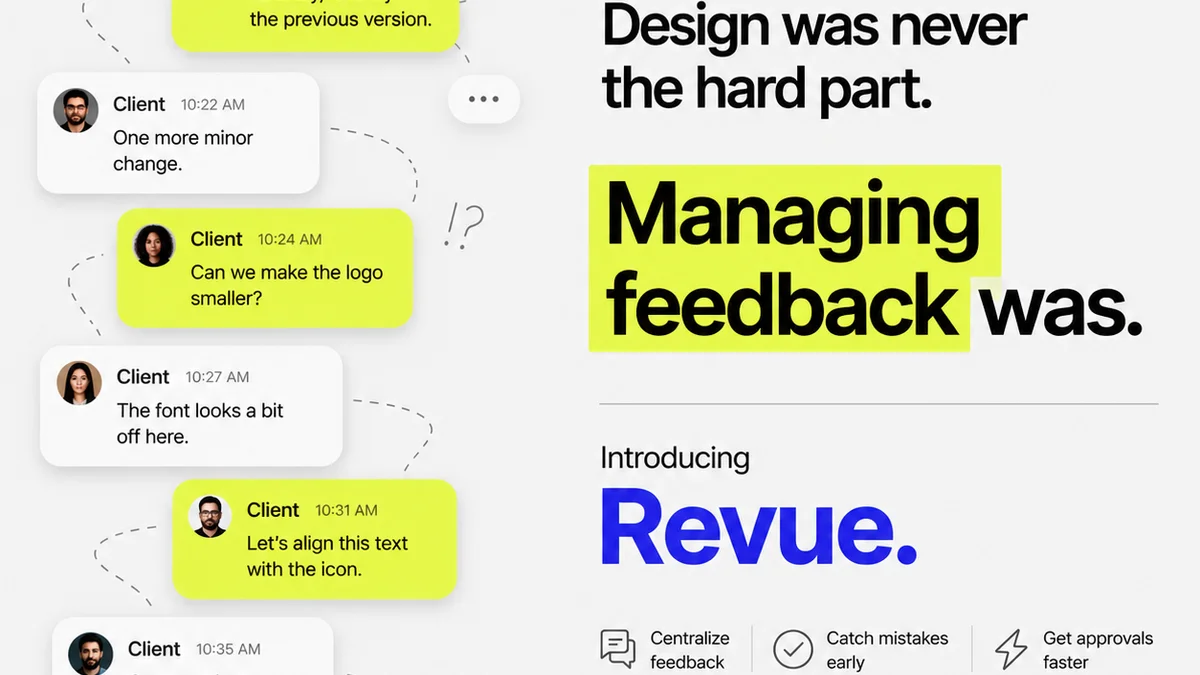
Implementing automation doesn't require a complete overhaul overnight. It’s often about integrating tools that streamline specific, high-friction areas of your workflow. Centralizing client feedback and managing revisions is a prime example.
Tools like Revue help by:
- Centralizing Feedback: All client comments, annotations, and approvals live in one place, linked directly to the creative asset. No more hunting through emails or Slack.
- Visibility into Revisions: A clear, chronological record of every change request and its resolution. This transparency prevents misunderstandings and saves countless hours in clarification.
- Streamlining Approvals: Formalizing the approval process ensures that work is signed off by the right stakeholders, reducing ambiguity and preventing scope creep.
- Quality Checks: By having a single source of truth for feedback and approvals, you can conduct more effective quality checks before final delivery, catching discrepancies early.
This isn't just about making feedback easier. It's about building a more robust, auditable, and efficient process around client collaboration – a cornerstone of effective creative operations automation.
Final Thought
Creative operations automation is not a buzzword. It’s a strategic imperative for agencies looking to move beyond just surviving to truly thriving. It’s about building a system that supports your team, delights your clients, and fuels sustainable growth.
Are you automating tasks, or are you automating your agency’s future?
Frequently asked questions
What is creative operations automation?
Creative operations automation involves using technology to streamline and manage repetitive tasks within the creative process, such as feedback collection, revision tracking, asset management, and project routing. The goal is to improve efficiency, reduce errors, and free up creative teams to focus on high-value work.
How does automation help agencies scale?
Automation helps agencies scale by removing bottlenecks in processes, reducing reliance on linear hiring for increased output, improving project profitability through efficiency gains, and enhancing client satisfaction with faster, more consistent delivery. It allows an agency to handle more work without a proportional increase in overhead.
Will automation replace creative jobs?
No, creative operations automation is designed to empower, not replace, creative professionals. It handles mundane, repetitive tasks, allowing designers, art directors, and project managers to focus on strategic thinking, creative problem-solving, client relationships, and high-level artistic judgment.
What are the key benefits of automating creative workflows?
Key benefits include reduced project timelines, improved profitability, increased client satisfaction, lower team burnout, better quality control, and enhanced collaboration. By automating the 'in-between' tasks, agencies can operate more smoothly and deliver better results.
Where should an agency start with creative operations automation?
A good starting point is to identify the most time-consuming, repetitive, and error-prone tasks in your current workflow. Often, centralizing client feedback and managing revisions is a high-impact area where tools like Revue can provide immediate value and lay the groundwork for further automation.