Everyone talks about creative operations best practices. They’ll tell you it’s all about process, checklists, and project management software. None of that is wrong. But it’s incomplete.
The hard truth for enterprise creative teams? True operational excellence isn’t about more tools or stricter rules. It’s about visibility. It’s about control. It’s about eliminating the fog that hides bottlenecks, client confusion, and wasted effort.
1. The Illusion of Control: Why Your Current System Isn't Working
Enterprise creative teams are drowning in complexity. Multiple departments, global offices, countless projects, and a constant stream of feedback from stakeholders who may or may not know what they want. You’ve probably tried to impose order.
You’ve implemented PM tools. You’ve got intake forms. You’ve got status meetings. And yet, things still fall through the cracks. Why?
The Feedback Black Hole
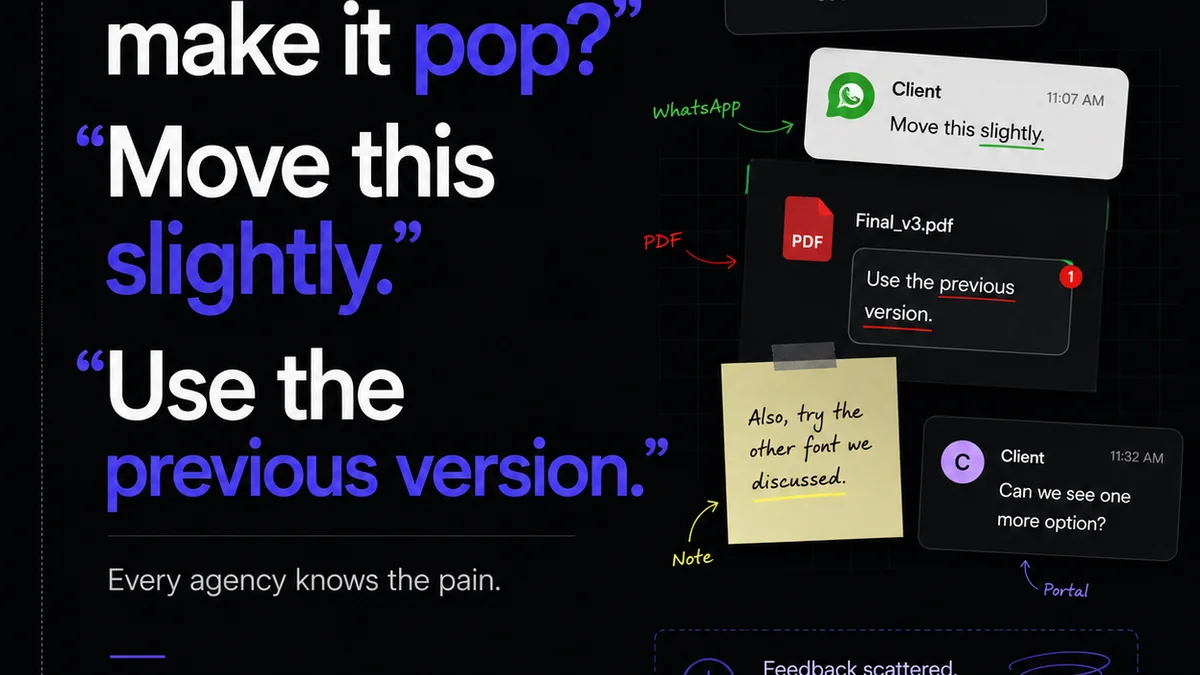
Client feedback is the lifeblood of creative work. But in large organizations, it’s often a chaotic mess. Emails get lost. Slack messages are missed. Different teams use different tools. The result? Misinterpretations, endless revision cycles, and projects that drag on far longer than they should.
The Revision Rollercoaster
You think you’ve got a handle on revisions. But how many times has a project gone back to the drawing board because a key stakeholder wasn't looped in? Or because a previous revision was forgotten in the shuffle?
This isn't just frustrating; it's incredibly costly. Time is money, and wasted revision rounds are a direct drain on resources.
The Quality Check Mirage
“We have quality checks.” You say this with confidence. But are they truly effective? Are they consistent across all projects and teams? Or are they last-minute scrambles to catch errors that should have been prevented earlier?
Without a centralized system, quality control becomes reactive rather than proactive. It’s about fixing mistakes, not preventing them.
2. Visibility is King: Unmasking Your Workflow
The first step to fixing any broken process is understanding it. And for enterprise creative operations, that means achieving unparalleled visibility into every stage of the project lifecycle.
Centralize Everything
Forget scattered documents and siloed communication. Your feedback, assets, and approvals need a single source of truth. This isn’t just about convenience; it’s about accuracy and accountability.
When everyone is working from the same, up-to-date information, misinterpretations and lost context become a thing of the past.
Map Your Bottlenecks
Where do projects get stuck? Is it during the initial brief? After the first round of feedback? During the final approval stage? Without clear visibility, these bottlenecks are invisible.
By tracking project progress and feedback loops, you can identify exactly where delays are occurring and why. This data is gold for optimizing your workflow.
Track Revision History
Every change, every comment, every approval. This history is crucial. It provides an audit trail and prevents the dreaded
Frequently asked questions
What is the biggest challenge for enterprise creative operations?
The biggest challenge is typically the lack of centralized visibility and control across numerous projects, teams, and stakeholders. This leads to miscommunication, missed feedback, endless revisions, and inefficient workflows.
How can enterprise teams improve their creative workflow?
Improvement comes from centralizing feedback, standardizing intake processes, establishing clear approval chains, and utilizing tools that provide a single source of truth for all project-related information.
Why is feedback management critical for enterprise creative teams?
Effective feedback management ensures that all stakeholders provide clear, actionable input in one place. This prevents misinterpretations, reduces the number of revision cycles, and accelerates project delivery.
What role does technology play in creative operations?
Technology plays a crucial role by providing platforms for centralized communication, asset management, feedback collection, and approval tracking. The right tools can automate tasks, improve collaboration, and offer critical workflow insights.