Everyone talks about the importance of creative operations. They say it’s about efficiency. It’s about process. It’s about delivering great work on time.
None of that is wrong. But it’s incomplete.
The real hard truth about creative operations for in-house teams? It’s not just about *doing* things faster. It’s about making sure you’re doing the *right* things, for the *right* reasons, with the *least* amount of friction. It’s about building a system that supports creativity, not stifles it.
1. Define Your Creative Workflow (and Stick to It)
Your team’s workflow is the backbone of your operations. If it’s shaky, everything else collapses. Too many teams operate on a vague, unspoken understanding of how work gets done. This leads to chaos. It leads to missed deadlines. It leads to duplicated effort.
You need a clearly defined, documented workflow.
This isn’t about rigid bureaucracy. It’s about clarity. Clarity for every team member. Clarity for stakeholders. Clarity for clients.
Map the Stages
Break down your entire creative process into distinct stages. What are the key phases from brief to final delivery?
- Briefing & Discovery
- Concepting & Ideation
- Design & Production
- Review & Feedback
- Revisions & Approvals
- Final Delivery & Archiving
Each stage should have clear entry and exit criteria. What needs to happen before you can move from Concepting to Design? What sign-off is required before finalizing?
Identify Bottlenecks
Once mapped, analyze your workflow for choke points. Where does work get stuck? Is it waiting for feedback? Is it stuck in legal review? Is it a specific person who always holds things up?
Use this mapping exercise to identify those specific pain points. Don’t guess. Look at where the delays actually happen.
Document and Communicate
Write it down. Make it accessible. Train your team on it. When everyone knows the steps, the handoffs, and the expectations, things move much smoother.
2. Master Feedback and Approvals
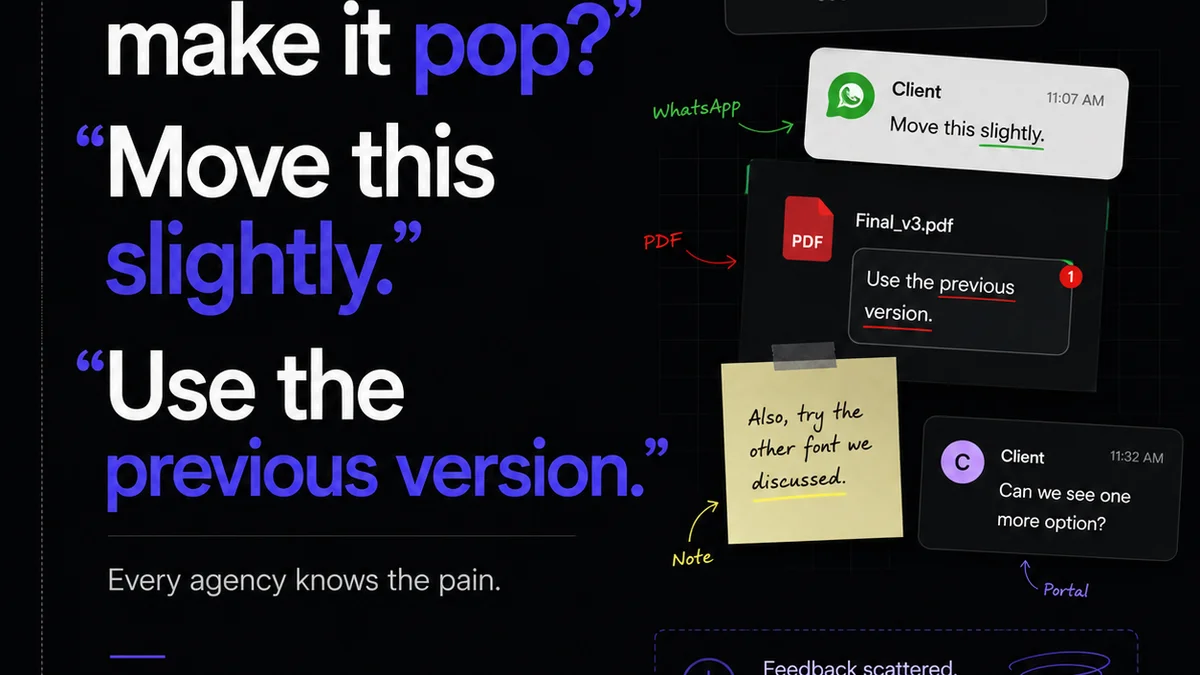
This is where most in-house creative teams bleed efficiency. Feedback is often vague, contradictory, or delivered too late. Approvals are an afterthought, leading to endless revision cycles.
You need a structured approach to feedback and approvals. Not just for speed, but for quality.
Standardize Briefs
Garbage in, garbage out. If the initial brief is weak, the output will be too. Ensure every project starts with a comprehensive brief that includes:
- Project objectives
- Target audience
- Key messages
- Deliverables and specs
- Budget and timeline
- Mandatories and constraints
- Examples of what success looks like
A good brief sets expectations from the start. It minimizes assumptions.
Centralize Feedback
Scattered feedback across email threads, Slack messages, and random documents is a recipe for disaster. You need a single source of truth for all comments and revisions.
This ensures all feedback is captured, visible, and actionable. No more
Frequently asked questions
What are the core components of creative operations?
Core components include workflow management, project intake and scoping, resource allocation, feedback and approval processes, asset management, and performance tracking. Essentially, it's the system that enables creative work to be produced efficiently and effectively.
How can in-house teams improve their creative workflow?
Start by mapping your current workflow to identify bottlenecks. Standardize briefs and feedback processes. Implement clear roles and responsibilities. Utilize project management tools to track progress and centralize communication. Regularly review and optimize the workflow based on performance data.
Why is centralized feedback crucial for in-house creative teams?
Centralized feedback ensures all comments are in one place, reducing the risk of missed instructions or conflicting advice. It provides a clear audit trail, improves version control, and makes it easier for creatives to understand and implement revisions, ultimately speeding up the approval process and improving work quality.
How does asset management fit into creative operations?
Effective asset management is key to creative operations. It involves organizing, storing, and retrieving creative assets (like logos, images, templates) efficiently. This prevents duplication of effort, ensures brand consistency, and makes it easier for team members to access the files they need, when they need them.