Everyone talks about creative operations. They talk about efficiency, streamlining, and automation. It sounds like a magic bullet for agency chaos.
None of that is wrong. But it’s incomplete.
The hard truth? True creative operations aren't about doing things faster. They're about doing the *right* things, consistently, without sacrificing quality or sanity. It’s about building a resilient system that can handle the inevitable storms of client work.
1. Defining Your Creative Workflow North Star
Before you can optimize anything, you need to know what 'good' looks like for *your* agency. What’s the ultimate goal of your creative operations?
Is it faster turnaround times? Higher client satisfaction? Fewer errors? Reduced burnout?
Be brutally honest. Your North Star dictates every decision you make about process.
Understanding the Core Pillars
Effective creative operations rest on three pillars:
- Process: The documented steps from brief to final delivery.
- Technology: The tools that enable and support your process.
- People: The skills, roles, and communication that make it all work.
You can’t optimize one without considering the others. A faster process with the wrong tools or stressed-out people is just organized chaos.
2. Auditing Your Current Creative Workflow
Where are you bleeding time and talent right now? You need a clear-eyed audit of your existing process.
Walk through a typical project, from the moment the brief lands to the final sign-off.
Document every single touchpoint. Who does what? What tools are used? Where are the handoffs? Where do things get stuck?
Common Bottlenecks to Uncover
- Ambiguous Briefs: The project starts without clear goals or scope.
- Endless Revisions: Feedback loops that go on forever, with no clear direction.
- Tool Overload/Underutilization: Too many disconnected tools, or not using the right ones effectively.
- Communication Breakdowns: Information lost between teams or stakeholders.
- Scope Creep: Projects expanding beyond their original agreement without formal change orders.
- Lack of Clear Ownership: No one knows who is responsible for the next step.
- Ineffective Feedback: Vague, contradictory, or unactionable client comments.
- Resource Misallocation: The wrong people on the wrong tasks.
Be specific. Instead of 'slow reviews,' write 'Client X's legal review takes an average of 72 hours, often requiring clarification emails.' This level of detail is crucial.
3. Standardizing Your Intake and Briefing Process
Garbage in, garbage out. If your project briefs are weak, your output will be too.
This is non-negotiable for effective creative operations.
Develop a standardized creative brief template. Make it mandatory.
Key Briefing Components
- Clear project objectives and KPIs.
- Target audience definition.
- Key messaging and call to action.
- Mandatory deliverables and formats.
- Brand guidelines and asset links.
- Budget and timeline constraints.
- Stakeholders and approval process.
- Competitive landscape.
Train your clients and internal teams on how to fill it out. This upfront investment saves countless hours later.
4. Implementing a Structured Feedback and Approval Loop
This is where most agencies truly struggle. Unstructured feedback is the enemy of progress.
You need a system for collecting, organizing, and acting on feedback.
Best Practices for Feedback Management
- Centralized Platform: Use a single tool for all project feedback. No more email chains or Slack messages lost in the ether.
- Clear Roles: Define who provides feedback and who makes final decisions.
- Actionable Comments: Train stakeholders to provide specific, constructive comments tied to project objectives.
- Version Control: Always be clear about which version is under review.
- Timeboxing: Set clear deadlines for feedback rounds.
- Consolidation: Designate one person to consolidate feedback before presenting it to the creative team.
The goal is clarity and accountability. Everyone knows where to give feedback, what’s expected, and when.
5. Optimizing Resource Management and Allocation
You can have the best process in the world, but if your team is overloaded or the wrong people are assigned, you’ll fail.
Creative operations must include intelligent resource planning.
Key Considerations for Resource Management
- Capacity Planning: Understand your team's available bandwidth.
- Skill Matching: Assign tasks based on expertise, not just availability.
- Project Prioritization: Have a clear system for prioritizing incoming work.
- Forecasting: Look ahead to anticipate future needs and potential bottlenecks.
- Burnout Prevention: Monitor workloads to ensure team well-being.
This isn't just about utilization rates; it's about sustainable, high-quality output.
6. Establishing Quality Assurance (QA) Gates
Mistakes happen. But they shouldn't reach the client.
Build quality assurance directly into your workflow, not as an afterthought.
This means having checkpoints at critical stages.
QA Checklist Examples
- Brief Adherence Check: Does the work meet the original objectives?
- Brand Compliance Check: Is it on-brand?
- Technical Check: Are files correctly formatted? Specs met?
- Copyediting/Proofreading Check: Grammar, spelling, consistency.
- Accessibility Check: Does it meet WCAG standards where applicable?
These aren't just for final delivery. Implement them after key milestones.
7. Leveraging Technology Wisely
Tools are enablers, not solutions. Don't fall into the trap of thinking more software equals better operations.
Focus on tools that integrate and support your defined processes.
Questions to Ask About Your Tech Stack
- Does this tool solve a specific problem in our workflow?
- Does it integrate with our other essential systems?
- Is it intuitive for our team to use?
- Does it improve communication or visibility?
- What is the total cost of ownership (including training and maintenance)?
A well-integrated stack streamlines work. A fragmented one creates more friction.
Where Revue Fits In
Managing creative projects involves constant back-and-forth. Feedback gets lost. Revisions pile up. Approvals stall.
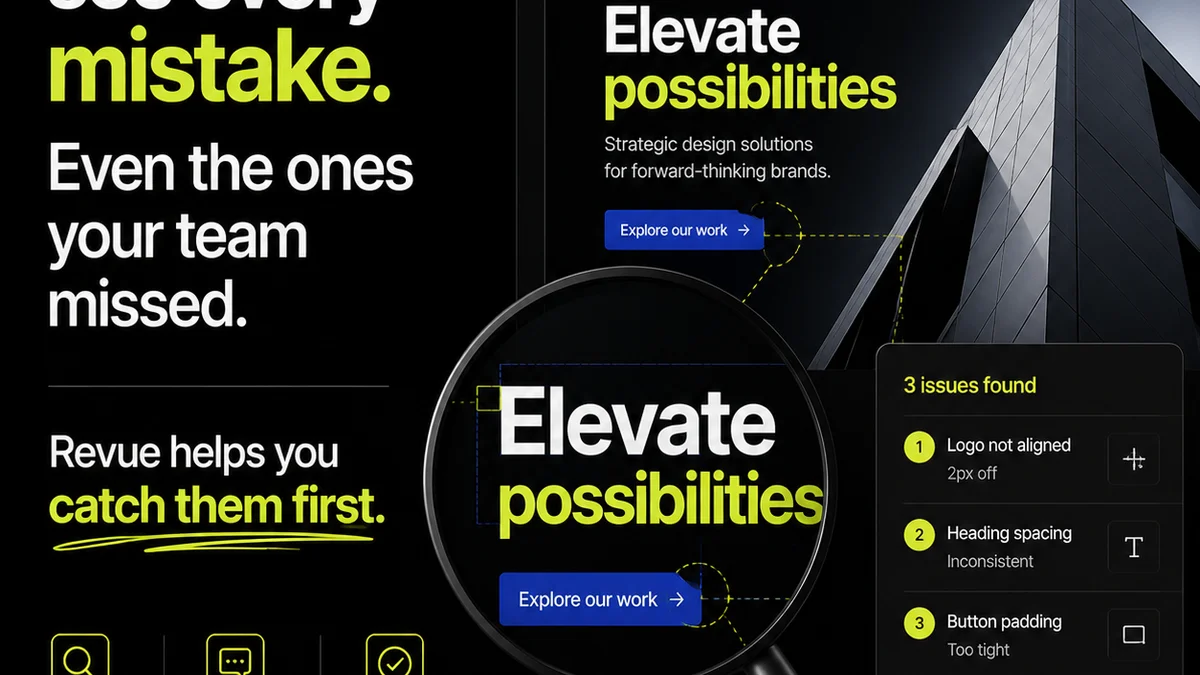
Revue is built to bring order to this chaos. It provides a central hub for all client feedback, acting as your single source of truth.
Teams can see exactly what needs to be revised, track the status of each revision, and get clear, contextual feedback directly on the creative assets.
This visibility streamlines the approval process, reduces miscommunication, and ensures that everyone is working from the latest version. It’s about making the feedback and revision cycle efficient and accountable, directly supporting your creative operations goals.
Final Thought
Creative operations isn't a destination; it's a continuous practice. It’s about building systems that allow creativity to flourish, not stifle it.
Are your operations serving your creative output, or are they becoming the bottleneck?
Frequently asked questions
What are the key components of a creative operations checklist?
A comprehensive creative operations checklist should cover workflow definition, intake and briefing, feedback and approval processes, resource management, quality assurance, and technology utilization.
How can I improve client feedback with a checklist?
By standardizing the feedback process with a checklist that defines roles, sets time limits for responses, requires actionable comments, and uses a central platform, you can make feedback more effective and less disruptive.
Why is resource management crucial for creative operations?
Effective resource management ensures that the right people are assigned to the right tasks, preventing burnout and optimizing capacity. This directly impacts project timelines, quality, and overall team well-being.
How does technology fit into a creative operations checklist?
Technology should support your defined processes. A checklist helps evaluate if tools solve specific workflow problems, integrate well with other systems, and are user-friendly, rather than just adding complexity.