Everyone talks about creative operations. They say it’s about efficiency. About processes. About tools.
None of that is wrong. But it’s incomplete.
The real truth about creative operations is that it’s the engine that turns creative talent into predictable, profitable business. It’s the difference between a frantic scramble and a smooth, repeatable delivery machine.
Without a robust creative operations checklist, you're flying blind. You're reacting, not strategizing. You're leaving money on the table and burning out your best people.
1. Defining Your Core Workflow Pillars
Before you can build a checklist, you need to understand the fundamental stages of your creative delivery. Think of these as the non-negotiable pillars of your operation.
Project Kickoff & Briefing
This is where it all begins. A clear, unambiguous brief is the bedrock of a successful project. Misunderstandings here cascade into costly rework later.
- Client brief intake form standardized?
- Internal brief review process defined?
- Stakeholder alignment confirmed before execution starts?
- Scope of work clearly documented and agreed upon?
Creative Development & Ideation
This is the heart of what you do. How do you capture and nurture great ideas while keeping them on track?
- Ideation sessions structured or ad-hoc?
- Concept development stages clearly defined?
- Internal creative reviews scheduled and effective?
- Feedback loops established for iterative progress?
Review, Revision & Approval
This stage is notorious for bottlenecks. Managing feedback and getting to a final sign-off requires rigor.
- Client review cycles documented?
- Revision rounds capped and managed?
- Clear approval mechanism in place (who signs off, when)?
- Version control for all creative assets maintained?
Production & Delivery
The final push. Getting the work out the door accurately and on time.
- Asset handoff requirements defined?
- Quality assurance (QA) checks standardized?
- Final file formatting verified?
- Delivery confirmation process established?
Post-Project Analysis
Learning from each project is crucial for continuous improvement.
- Project debrief scheduled?
- Lessons learned documented?
- Client feedback on process captured?
2. The Project Setup & Briefing Checklist
This is your first line of defense against scope creep and misaligned expectations. Get this right, and the rest of the project flows smoother.
Intake & Briefing
- Has the client signed off on the SOW/Proposal?
- Is the project brief complete, detailed, and unambiguous?
- Are all mandatory client stakeholders identified and available?
- Are client brand guidelines accessible and understood?
- Has the project manager confirmed project scope and deliverables with the client?
Internal Handoff
- Has the brief been reviewed internally by the project lead/creative director?
- Are project timelines realistic and agreed upon by the team?
- Are all necessary assets (logos, copy, previous work) provided?
- Is the project setup in your project management tool with clear tasks and deadlines?
- Has the team confirmed understanding of the brief and objectives?
A clear internal brief means less guesswork for your creative team.
3. The Creative Development & Review Checklist
This is where creativity meets structure. Balancing freedom with focus is key.
Concepting & Design
- Are there defined stages for concept exploration?
- Is there a clear understanding of the target audience and objectives for each concept?
- Are internal creative reviews scheduled at key milestones?
- Is feedback constructive, actionable, and aligned with the brief?
- Are you documenting key decisions and rationale?
Client Feedback Management
- Is there a clear process for submitting creative work for client review?
- Are review deadlines communicated clearly to the client?
- Are you using a centralized system for all client feedback?
- Is feedback consolidated from all stakeholders before presenting to the creative team?
- Are you identifying and clarifying ambiguous feedback immediately?
Ambiguous feedback is a project killer.
Revision & Iteration
- Are the number of revision rounds clearly defined in the SOW?
- Is there a process for evaluating if requested changes are out of scope?
- Are revisions tracked against the original brief and objectives?
- Is client sign-off obtained after each major revision round?
- Are you confirming that the final approved direction aligns with the project goals?
4. The Production & QA Checklist
The final stretch. Accuracy and attention to detail are paramount.
Asset Preparation
- Are final specs for all deliverables confirmed (file types, dimensions, color modes)?
- Are all copy and content elements proofread and approved?
- Are all necessary legal or compliance checks completed?
- Are brand assets (logos, fonts, colors) used correctly according to guidelines?
Quality Assurance (QA)
- Has a dedicated QA process been established?
- Is there a checklist for common errors (e.g., typos, broken links, incorrect sizing, wrong color profiles)?
- Has the work been tested across relevant platforms/devices as required?
- Has a final stakeholder (internal or client) given the go-ahead?
- Are all files named and organized according to project standards?
Delivery
- Are delivery instructions from the client confirmed?
- Are files uploaded to the correct platform or sent via the agreed method?
- Is delivery confirmation obtained from the client or platform?
- Are final working files archived appropriately?
A thorough QA process prevents embarrassing errors and client dissatisfaction.
5. Where Revue Fits In
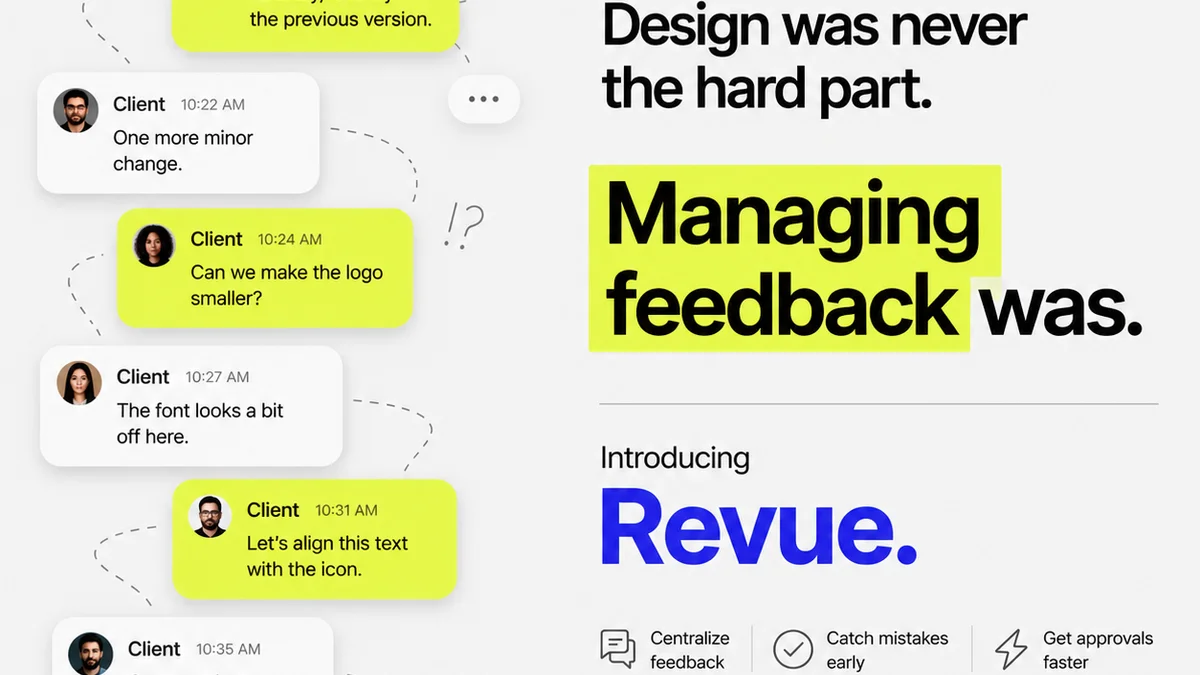
Managing creative workflows, especially the feedback and approval cycles, can become chaotic quickly. This is where a centralized platform like Revue becomes indispensable.
Instead of scattered email threads, endless Slack messages, or confusing shared docs, Revue provides a single source of truth for all creative assets and client feedback.
- Centralized Feedback: All stakeholder comments are logged against specific versions of the creative asset, eliminating confusion about which feedback is current or relevant.
- Revision Visibility: Track every iteration, every change, and every approval in one place. This transparency helps manage expectations and speeds up the sign-off process.
- Quality Checks: While Revue doesn't replace your QA process, its clear versioning and annotation tools ensure that the *right* version is being reviewed, and feedback is applied accurately, contributing to overall quality control.
- Streamlined Approvals: Formalize the approval process, ensuring that all necessary parties have signed off before a project moves to the next stage, reducing the risk of last-minute changes derailing delivery.
By integrating Revue into your workflow, you're not just adopting a tool; you're embedding a more rigorous, transparent, and efficient approach to creative operations.
6. The Ongoing Operations Audit
Your checklist isn't a static document. It needs to evolve.
Regular Reviews
- Schedule quarterly reviews of your operational checklists.
- Are processes still efficient?
- Are there new bottlenecks emerging?
- Has client feedback highlighted areas for improvement?
Team Input
- Actively solicit feedback from your project managers, designers, and account teams.
- They are on the front lines and know where the friction points are.
Adaptability
- Be willing to update and refine your checklists based on project outcomes and team insights.
- The best creative operations are agile operations.
Final Thought
Creative operations aren't just about ticking boxes. They're about building a system that allows your creative talent to do their best work, consistently, profitably, and without unnecessary stress.
Is your current checklist a tool for empowerment, or a bureaucratic hurdle?
Frequently asked questions
What is the most critical part of a creative operations checklist?
The most critical part is the project setup and briefing phase. Ensuring clarity and alignment here prevents costly errors and scope creep downstream. A well-defined brief is the foundation for everything that follows.
How often should I update my creative operations checklist?
You should conduct a formal review of your checklists at least quarterly. However, encourage ongoing feedback from your team. Adaptability is key; update processes as soon as you identify inefficiencies or bottlenecks.
Can a checklist really improve client feedback and approvals?
Yes, a well-structured checklist, especially when supported by a tool like Revue, standardizes the feedback process. It ensures all necessary stakeholders provide input, clarifies what needs approval, and tracks revisions systematically, leading to faster, more accurate approvals.
What's the difference between a creative operations checklist and a project plan?
A project plan details the specific tasks, timelines, and resources for a single project. A creative operations checklist, on the other hand, outlines the standardized processes and quality checks that should be applied across *all* projects to ensure consistency and efficiency in your agency's workflow.