Everyone talks about creative ops as a way to speed up production. Get more assets out the door, faster. That’s the goal, right?
None of that is wrong. But it’s incomplete.
The real value of creative operations for marketing teams isn't just speed. It’s about predictability. It’s about reducing chaos and the constant firefighting that drains your best people. It’s about building a creative engine that runs smoothly, consistently, and delivers quality work, not just quantity.
This is the hard truth: great creative operations aren't just about tools. They’re about process, people, and a relentless focus on what actually moves the needle.
1. Define Your Creative Workflow, End-to-End
You can't optimize what you don't understand. Most marketing teams operate on a series of implicit assumptions about how creative work gets done. This leads to blind spots and bottlenecks.
Map out every step. From initial brief to final delivery. Be brutally honest.
The Briefing Process
How are briefs created? Who owns them? Are they detailed enough? Do they include:
- Clear objectives and KPIs?
- Target audience definition?
- Mandatories and constraints?
- Brand guidelines?
- Deliverables and formats?
- Key messaging?
A weak brief is the root of many downstream problems. It’s the single most important input.
Concepting and Ideation
Where does this happen? Who is involved? How are ideas captured and shared?
Is there a defined process, or is it ad-hoc?
Creative Development
This is where the bulk of the work happens. Who’s responsible for what? What are the handoffs?
- Design
- Copywriting
- Video production
- Web development
Are roles clearly defined? Are dependencies understood?
Review and Feedback Cycles
This is often the biggest black hole. How is feedback collected? Who provides it? How is it consolidated?
Are there too many cooks in the kitchen? Is feedback specific and actionable, or vague and subjective?
Revision and Approvals
Once feedback is given, how are revisions managed? Who signs off? What constitutes a final approval?
How do you track versions? How do you prevent scope creep?
Final Delivery and Archiving
How is the final asset delivered? What format? Where is it stored? Is it easily searchable for future use?
Think about the long tail of asset usage.
2. Standardize Your Briefing Template
If your briefs are different every time, your output will be inconsistent. A standardized creative brief template is non-negotiable for efficient creative operations.
It forces clarity upfront. It ensures all necessary information is captured. It acts as a single source of truth for the project.
Your template should reflect the workflow you defined in step 1. It should prompt the right questions. It should be mandatory for all new projects.
Key Elements of a Standard Brief
- Project Title & Client/Internal Stakeholder
- Project Overview & Background
- Business Objectives & KPIs
- Target Audience Profile
- Key Message(s)
- Deliverables (format, size, quantity)
- Mandatories (logos, legal disclaimers, specific CTAs)
- Brand Guidelines & Tone of Voice
- Key Stakeholders & Approvers
- Timeline & Key Milestones
- Budget (if applicable)
- Examples/Inspiration (optional)
Don't make it a 50-page document. Make it comprehensive but concise. Train your stakeholders on how to fill it out effectively.
3. Implement Structured Feedback and Approvals
This is where most marketing teams hemorrhage time and goodwill. Unstructured feedback is the enemy of progress.
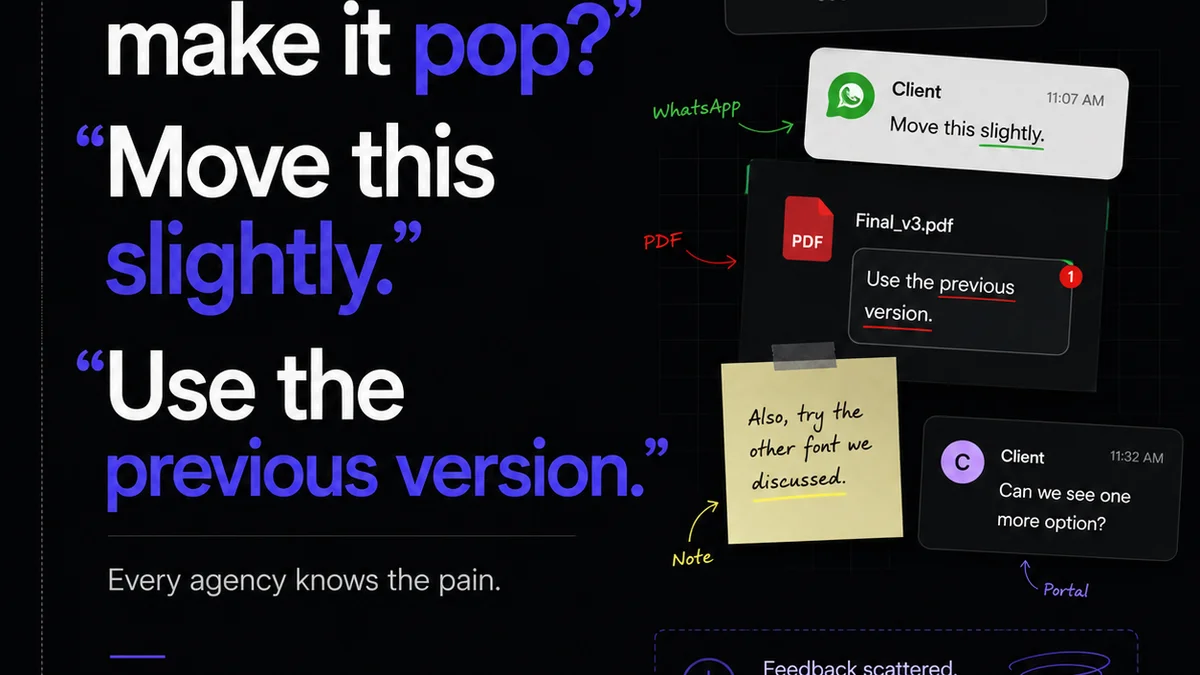
Think about the last time you got vague feedback like “make it pop” or “I don’t like it.” It’s useless. It stalls the project and frustrates creatives.
Define Feedback Stages
Not all feedback is created equal. Differentiate between:
- Internal Creative Review: Initial self-critique or peer review before client/stakeholder eyes.
- Stakeholder Review: Formal feedback from key decision-makers.
- Client Approval: The final sign-off.
Each stage should have a clear purpose and a defined set of participants. This prevents unnecessary noise.
Centralize Feedback Collection
Email threads, Slack messages, random documents – these are feedback black holes. All feedback needs to live in one place, attached to the specific creative asset.
This creates an audit trail. It ensures nothing gets lost. It makes consolidating comments manageable.
Establish Approval Authority
Who has the final say? Vague approval processes lead to endless revisions. Define who the decision-makers are upfront.
What happens if there’s disagreement? Having a clear escalation path is crucial.
4. Embrace Version Control and Audit Trails
“Which version are we on?” The question that haunts creative production. Without proper version control, you’re flying blind.
Every change, every revision, every approval needs to be logged. This is not about micromanagement; it’s about accountability and clarity.
Track All Changes
Every iteration of a creative asset should be saved and identifiable. This includes:
- Major version numbers (e.g., v1.0, v2.0)
- Minor revisions (e.g., v1.1, v1.2)
Each version should be associated with the feedback that prompted it and the individual who made the changes.
Maintain an Audit Trail
An audit trail provides a complete history of the project. It shows who requested what, who approved it, and when.
This is invaluable for resolving disputes, understanding project evolution, and identifying process breakdowns.
5. Automate Where Possible, Standardize Where Not
Creative operations isn't about eliminating human creativity. It's about removing the friction that hinders it.
Look for opportunities to automate repetitive tasks. This could be anything from asset resizing to sending reminder notifications.
Automation Opportunities
- Automated notifications for new tasks or feedback.
- Automated routing of assets to the next stage.
- Automated reporting on project status.
- Automated checks for brand guideline compliance (e.g., logo usage).
Where automation isn't feasible, standardization is your next best friend. Standardized templates, checklists, and processes reduce cognitive load and ensure consistency.
6. Measure, Analyze, and Iterate
You can’t improve what you don’t measure. Creative operations is an ongoing discipline, not a one-time fix.
Regularly review your processes. Identify bottlenecks. Solicit feedback from your team and stakeholders.
Key Metrics to Track
- Project turnaround time (from brief to final delivery)
- Number of revision cycles per project
- Time spent in review/approval stages
- Asset production volume
- Team utilization rates
- Stakeholder satisfaction
Use this data to refine your workflows. Make informed decisions about where to invest in tools or training. Continuous improvement is the goal.
Where Revue Fits In
Managing creative feedback, revisions, and approvals across multiple stakeholders can quickly become a chaotic mess. Email chains get lost, comments are missed, and version confusion reigns supreme.
This is precisely the problem Revue is built to solve for marketing teams.
Revue provides a centralized platform where all creative assets live. Stakeholders can provide clear, contextual feedback directly on the designs, mockups, or videos.
Revision history is automatically tracked, and approval statuses are crystal clear. This eliminates ambiguity and ensures everyone is working from the latest version.
By streamlining the feedback and approval process, Revue frees up your team to focus on what they do best: creating great work. It brings the predictability and control that effective creative operations demand.
Final Thought
Is your marketing team truly optimizing its creative output, or just chasing the next deadline? The difference lies in the operational rigor you apply. Building a predictable, efficient creative engine requires more than just talent; it demands a commitment to process, clarity, and continuous improvement.
Frequently asked questions
What is the primary goal of creative operations for marketing teams?
While speed is a benefit, the primary goal of creative operations is to bring predictability and efficiency to the creative process. It aims to reduce chaos, minimize bottlenecks, and ensure consistent delivery of quality work, rather than just increasing volume.
Why is a standardized creative brief template important?
A standardized brief template ensures that all necessary project information is captured consistently, forcing clarity upfront. It acts as a single source of truth, reducing ambiguity and the likelihood of downstream problems caused by incomplete or unclear requirements.
How can marketing teams improve their feedback and approval process?
Teams can improve by defining clear feedback stages (e.g., internal review, stakeholder review, client approval), centralizing all feedback on the specific asset, and establishing clear approval authority to prevent endless revisions and scope creep.
What role does technology play in creative operations?
Technology, like platforms for centralized feedback and version control, plays a crucial role in removing friction and streamlining workflows. Automation can handle repetitive tasks, while centralized systems ensure clarity and accountability throughout the creative process.