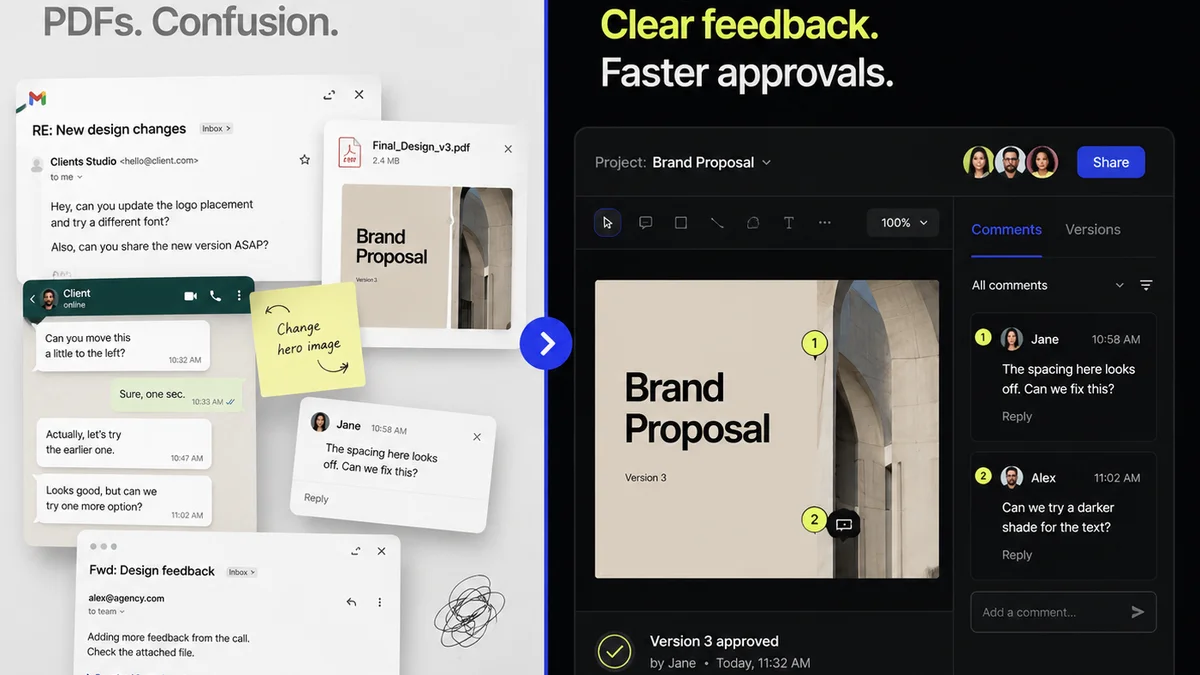
Everyone talks about creative operations. They say it’s about efficiency. About streamlining workflows. About getting more done with less.
None of that is wrong. But it’s incomplete.
The real hard truth about building a successful creative operations function is this: it’s not about the tools you buy or the templates you use. It’s about confronting the messy human element of creative work head-on.
It’s about clarity. Accountability. And making sure everyone knows who’s doing what, by when, and to what standard.
1. Defining Creative Operations Beyond the Buzzwords
Creative operations (or
Frequently asked questions
What's the difference between project management and creative operations?
Project management focuses on the timeline, budget, and resources for a specific project. Creative operations is broader, establishing the systems, processes, and standards for how all creative work is managed and executed across the entire organization to ensure consistent quality and efficiency.
Do I need a dedicated creative operations manager?
It depends on your team size and complexity. For smaller teams, responsibilities might be shared. As you grow, a dedicated role becomes crucial to champion, implement, and refine your operational systems. The key is that *someone* owns it.
What are the first steps to building creative operations?
Start by mapping your current workflows, identifying bottlenecks and points of friction. Then, define clear roles and responsibilities, and establish standardized processes for common tasks like brief intake, feedback, and approvals. Focus on the biggest pain points first.
How do creative operations improve client satisfaction?
By ensuring predictable delivery, consistent quality, and clear communication throughout the creative process, clients experience less frustration and more confidence in your agency's ability to execute their vision effectively. Fewer missed deadlines and revisions mean happier clients.