Everyone talks about KPIs for creative operations. They say you need to track turnaround times, client satisfaction, and budget adherence. None of that is wrong. But it’s incomplete.
The hard truth is that most creative operations KPIs are symptoms, not causes. Focusing solely on the numbers without understanding the underlying workflow is like treating a fever without diagnosing the infection.
1. The Myth of the "All-in-One" KPI Dashboard
The assumption is that a single dashboard can show you everything you need to know about your creative operations. It’s a seductive idea. Who wouldn’t want a magic screen spitting out all the answers?
But creative operations are complex. They involve people, processes, and technology working in concert. A dashboard can show you that a project is late, but it won't tell you *why* it’s late. Was it scope creep? A bottleneck in approvals? A lack of resources? Poor communication?
You need more than just data points. You need context.
Leading vs. Lagging Indicators
Most dashboards are filled with lagging indicators – metrics that tell you what happened. Project completion time. Client satisfaction scores (after the fact). Budget overruns.
What you really need are leading indicators. These are the metrics that predict future performance. They tell you what’s *likely* to happen if current trends continue.
- On-time brief submission: Are briefs coming in complete and on time?
- Internal review turnaround: How quickly are internal stakeholders providing feedback?
- Revision cycle efficiency: How many rounds of revisions are typically needed?
- Resource allocation accuracy: Are projects being staffed realistically from the start?
These leading indicators give you the chance to intervene *before* a problem becomes a crisis.
2. Beyond Turnaround Time: Measuring Real Efficiency
Turnaround time is the classic creative operations KPI. It’s easy to measure, and it feels important. Faster is better, right?
Not necessarily. What if your team is rushing through projects, cutting corners, and burning themselves out to meet an arbitrary deadline? The turnaround time might look good, but the quality suffers, and morale plummets.
True efficiency isn’t just about speed; it’s about effectiveness and sustainability.
The Cost of Rework
One of the biggest drains on creative operations is rework. This isn’t just about doing something twice; it’s about wasted time, resources, and energy.
Consider these questions:
- How much time is spent on revisions that are outside the original scope?
- How many projects require significant redos due to unclear initial feedback?
- What is the cost of client dissatisfaction leading to additional, unbilled work?
Software that helps you track scope creep and the number of revision rounds can be invaluable here. It highlights where communication is breaking down or where expectations are misaligned.
Resource Utilization vs. Utilization Rate
There’s a difference between keeping your team busy and utilizing their skills effectively.
A high utilization rate (meaning everyone is booked 100% of the time) can be a sign of trouble. It means there’s no buffer for unexpected tasks, sick days, or the inevitable “firefighting.” It also often leads to burnout and decreased quality.
Look for software that helps you track:
- Capacity planning: Do you have the right people with the right skills available when needed?
- Project pipeline health: Are future projects realistically estimated and scheduled?
- Team workload balance: Are some people overloaded while others are underutilized?
Effective creative operations management means optimizing resource allocation, not just maximizing utilization.
3. Client Feedback: The Black Hole of Creative Operations
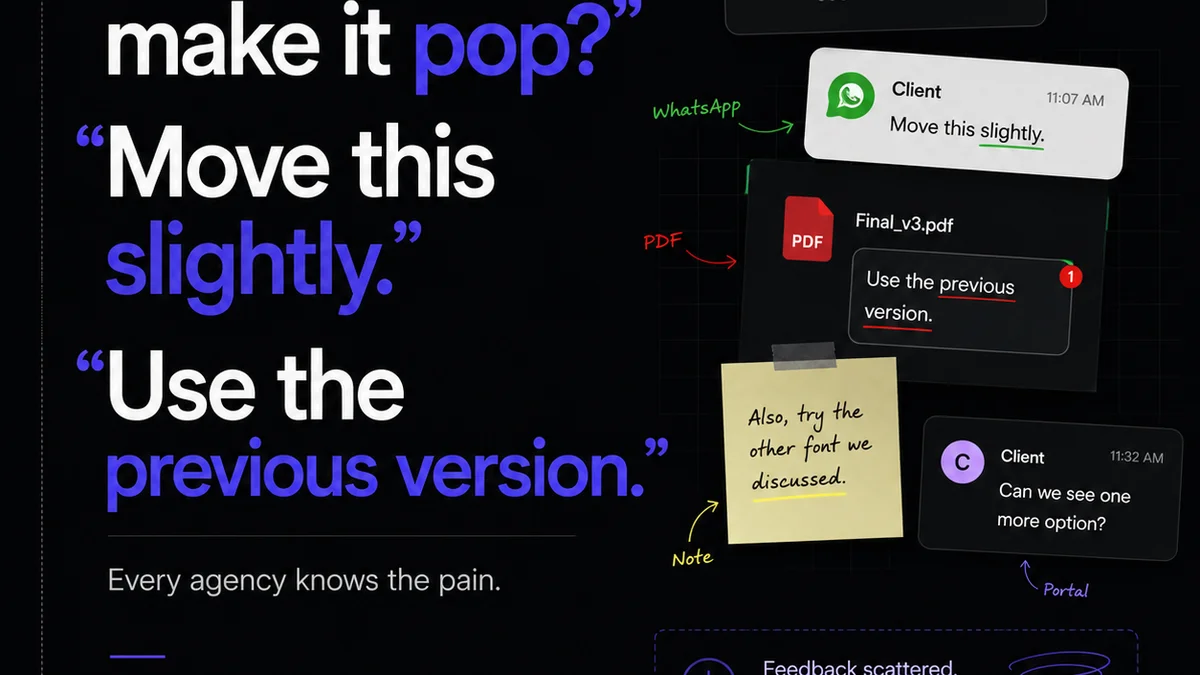
Client feedback is notoriously difficult to manage. Emails get lost, comments are vague, and different stakeholders provide conflicting input. This is where creative operations software can make a massive difference.
What should you look for in software that handles client feedback?
- Centralized feedback: All comments, annotations, and approvals in one place, tied to specific versions of the creative asset.
- Version control: Clear tracking of each iteration, so you always know which version is current and what changes were made.
- Actionable feedback: Tools that allow clients to draw on images, leave time-stamped video comments, or provide structured feedback that’s easy to act on.
- Approval workflows: Clear processes for who needs to approve what, with automated notifications and status tracking.
If your current system involves endless email chains and confusing spreadsheets, you’re losing valuable time and introducing unnecessary risk.
4. The Role of Technology in Measuring What Matters
You can’t improve what you don’t measure. But measuring the wrong things is worse than not measuring at all. It gives you a false sense of security or sends you down the wrong path.
Your creative operations software should enable you to track the leading indicators and the root causes of inefficiency, not just the surface-level symptoms.
Key Software Capabilities to Seek
When evaluating software for creative operations KPIs, prioritize these features:
- Project Management Integration: Seamless connection with your existing project management tools.
- Automated Reporting: Dashboards that pull data automatically, reducing manual entry and errors.
- Customizable Workflows: Ability to tailor processes to your agency’s specific needs.
- Communication Tracking: Features that log feedback, decisions, and approvals.
- Resource Management Tools: Visibility into team capacity and workload.
- Financial Tracking: Ability to link project time and resources to budget actuals.
Avoid tools that are overly complex or require extensive configuration. The goal is to simplify operations, not add another layer of complexity.
Where Revue Fits In
Revue is built to tackle the chaos of creative feedback and approvals head-on. It’s not just another project management tool; it’s a specialized platform designed for the unique challenges of creative workflows.
By centralizing client feedback, Revue provides a single source of truth. This eliminates lost comments, clarifies conflicting input, and drastically reduces the time spent chasing down information. You gain visibility into the revision process, understanding how many rounds are truly needed and where delays are occurring.
This directly impacts your ability to track key operational KPIs. You can see how efficiently feedback is being incorporated, how quickly approvals are being secured, and how much time is being saved by avoiding miscommunication and rework. Revue helps turn vague feedback into actionable tasks, leading to faster, more accurate project delivery.
5. Setting Realistic Goals and Iterating
Once you have the right software and are tracking the right KPIs, the next step is setting realistic goals. Don’t try to fix everything at once.
Start with one or two key areas. Perhaps it’s reducing the average number of revision rounds for design projects, or improving the on-time submission rate for creative briefs.
Set SMART goals:
- Specific: Clearly define what you want to achieve.
- Measurable: Ensure you can track progress with your chosen KPIs.
- Achievable: Set targets that are challenging but realistic for your team.
- Relevant: Align goals with overall business objectives.
- Time-bound: Establish a clear deadline for achieving the goal.
Regularly review your progress. Are you hitting your targets? If not, why? Is the goal too ambitious? Is there an unexpected bottleneck in the workflow? Use your KPI data to inform these discussions.
Creative operations are never static. They require continuous monitoring and adjustment. Your software should support this iterative process, providing the insights you need to adapt and improve.
Final Thought
Are you measuring the success of your creative operations, or just the symptoms of its failures? The right software and the right KPIs empower you to understand the root causes of inefficiency, enabling you to build a more resilient, effective, and profitable creative business.
Frequently asked questions
What are the most important KPIs for creative operations?
Focus on leading indicators that predict future performance, such as on-time brief submission, internal review turnaround time, revision cycle efficiency, and resource allocation accuracy. Lagging indicators like project completion time are useful but should be viewed in context.
How can software improve creative operations KPIs?
Software can automate data collection, centralize feedback, track revision rounds, manage approvals, and provide real-time visibility into project status and team capacity. This allows for more accurate measurement of efficiency, cost of rework, and client satisfaction.
What's the difference between utilization rate and effective resource utilization?
A high utilization rate means a team is booked solid, which can lead to burnout and decreased quality. Effective resource utilization focuses on optimizing team capacity, ensuring the right people with the right skills are available for projects, and maintaining a healthy workload balance.
Why is centralized feedback crucial for creative operations?
Centralized feedback eliminates lost comments, clarifies conflicting input, and reduces the time spent searching for information across emails and disparate tools. This leads to faster decision-making, fewer errors, and a more efficient revision process.