Everyone thinks creative operations manager software is all about task lists and spreadsheets. That it’s just a digital way to track deadlines and assign work.
None of that is wrong. But it’s incomplete.
The hard truth? Effective creative operations software isn’t about managing tasks; it’s about managing flow.
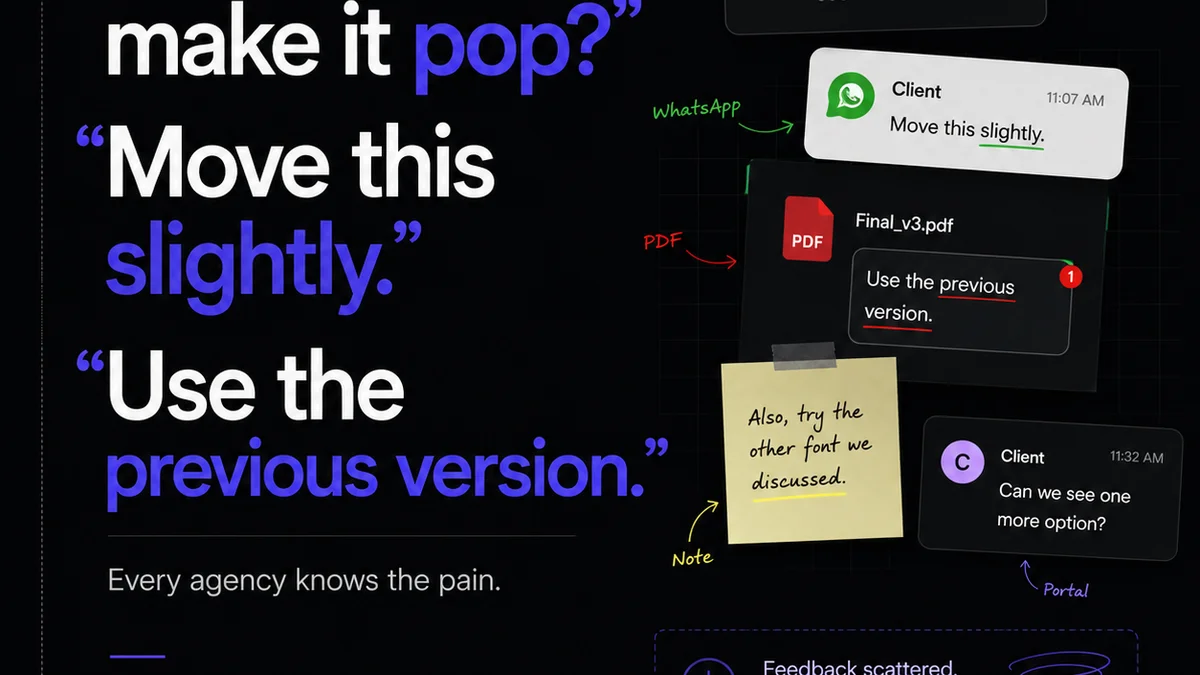
It’s about the messy middle of creative work: the feedback loops, the endless revisions, the client approvals that get lost in email chains. This is where projects get bogged down, where quality slips, and where your team’s time gets wasted.
If your operations software isn't tackling these bottlenecks, it's just another digital filing cabinet.
1. Centralized Client Feedback is Non-Negotiable
The single biggest drain on creative agency time isn't the creative work itself. It's the chaotic back-and-forth of client feedback.
Think about it: clients send notes via email, Slack, text, or even a quick phone call. You consolidate them. Someone adds their internal take. Then it goes back to the client for clarification. Each step is a potential misinterpretation, a lost detail, a delay.
Your creative operations software needs to kill this chaos. It needs a single source of truth for all client input.
The Core Functionality
- Direct Annotation: The ability for clients (or internal reviewers) to leave comments and markups directly on the creative asset.
- Version Control: Automatic tracking of different asset versions, so everyone sees the latest iteration with its associated feedback.
- Consolidated Notes: A central dashboard where all feedback for a specific asset or project is gathered, categorized, and actionable.
- Status Tracking: Clear indicators of whether feedback has been received, reviewed, addressed, and approved.
Without this, you're just digitizing inefficiency. You're still relying on scattered communication channels.
This isn't about making clients happier (though it helps). It's about making your team's life easier and your projects move faster. It’s about giving your creative operations manager the visibility they need.
2. Revision and Approval Visibility: The Project Lifeline
Once feedback is in, the real work—or the real waiting—begins. How do you manage revisions and ensure approvals happen smoothly?
This is where many operations tools fall short. They might track a deadline, but they don't inherently manage the *process* of revision and approval.
You need to see who is responsible for what, what the current status is, and when the next step is due. This isn't just for project managers; it’s crucial for creative directors, account managers, and even the creatives themselves.
Key Features to Demand
- Clear Assignment: Who is tasked with making the revision? Who is responsible for giving the final approval?
- Automated Reminders: Gentle nudges for reviewers and approvers when deadlines loom or when an asset is ready for their attention.
- Workflow Automation: The ability to set up pre-defined revision and approval stages that automatically move assets along once a step is completed.
- Audit Trails: A clear, indisputable record of who reviewed what, when they approved or rejected it, and any comments made. This protects your agency and your clients.
This level of visibility prevents the dreaded
Frequently asked questions
What is the primary goal of creative operations manager software?
The primary goal is to streamline the creative process by centralizing feedback, managing revisions and approvals efficiently, and ensuring quality control, rather than just tracking tasks.
Why is centralized client feedback so important?
Centralized feedback eliminates confusion, reduces misinterpretations, and saves significant time by providing a single source of truth for all client input, preventing notes from getting lost in email or chat.
How does revision and approval visibility benefit an agency?
It ensures accountability, speeds up project timelines through automated reminders and clear assignments, and provides an audit trail for every decision, protecting both the agency and the client.
What are the key components of quality control in creative operations software?
Key components include automated checklists, adherence to brand guidelines, proofreading tools, and integration with other QC systems to catch errors before final delivery.