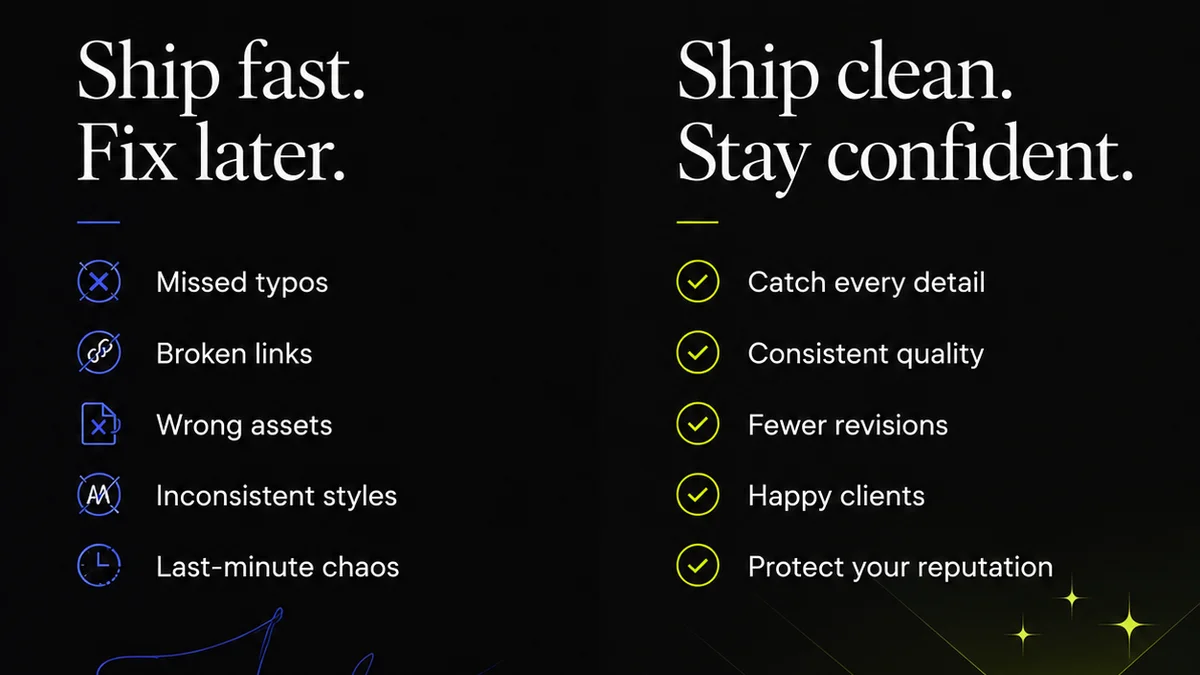
Everyone knows that poor creative operations cost agencies and in-house teams time. Time is money, so that’s a direct hit. But the real damage goes deeper. It’s not just about hours wasted; it’s about missed opportunities, damaged client relationships, and ultimately, lost revenue. You think you’re running a tight ship, but a few key operational mistakes are quietly hemorrhaging cash.
The hard truth? Your creative operations are likely costing you far more than you realize, not just in wasted hours, but in strategic value and client trust.
1. The Chaos of Uncentralized Feedback
This is the big one. Emails, Slack messages, random Word docs, scribbled notes on PDFs. Clients (and internal stakeholders) scatter feedback across a dozen platforms. Your team then spends hours trying to consolidate, decipher, and reconcile these disparate comments.
Sound familiar?
This isn't just annoying; it's a direct drain on resources. Every minute spent hunting down feedback is a minute not spent designing, strategizing, or client-servicing. It leads to:
- Misinterpretation of client intent.
- Costly revisions based on incomplete or incorrect information.
- Delays that push back project timelines and impact billing.
- Frustration for both the client and your team.
- The dreaded
Frequently asked questions
What are the most common creative operations mistakes?
The most common mistakes include uncentralized feedback, poor scope management, lack of clear processes, inefficient asset management, and inadequate communication. These often lead to wasted time, costly revisions, and client dissatisfaction.
How does uncentralized feedback cost businesses money?
Uncentralized feedback leads to wasted hours deciphering comments from multiple sources, misinterpretations that cause rework, and delays that push back project timelines. This directly impacts profitability and client satisfaction.
What is scope creep and how does it impact costs?
Scope creep is when project requirements expand beyond the original agreement without corresponding adjustments to budget or timeline. It costs money because your team works more hours than planned, often without additional compensation, eroding profit margins.
How can better asset management save money?
Efficient asset management prevents time wasted searching for files, reduces the risk of using outdated or incorrect assets, and ensures brand consistency. This saves hours of searching and prevents costly errors from using the wrong version.