Everyone talks about creative operations technology. They say it’s about efficiency. About streamlining workflows. About faster turnarounds.
None of that is wrong. But it’s incomplete.
The deeper truth is that creative operations technology isn't just about making things faster. It’s about making things *possible* that weren't before. It’s about unlocking capacity, improving quality, and ultimately, driving better business outcomes for agencies and in-house teams alike.
It’s about moving past the endless email chains and scattered feedback to a place of clarity and control. This is the real promise of ops tech.
1. The Myth of the 'All-in-One' Solution
The market is flooded with tools promising to do it all. Project management, asset management, client feedback, time tracking, invoicing – all under one roof. It sounds ideal, right?
The hard truth? There’s no single tool that excels at *everything* for *every* team. Trying to force a jack-of-all-trades into a specialized role often leads to frustration and workarounds.
Think about it:
- A robust project management tool might lack granular asset version control.
- A fantastic client feedback platform might not integrate seamlessly with your financial systems.
- An excellent digital asset management (DAM) system might be overkill for smaller teams or lack real-time collaboration features.
The assumption is that one tool simplifies everything. The reality is that a *connected ecosystem* of specialized tools, working in harmony, often provides more power and flexibility.
This requires a deliberate strategy, not just a subscription to the latest trending software.
2. Feedback Management: The Unsung Hero of Creative Ops
Client feedback. It’s the lifeblood of agency work, and often, the biggest bottleneck. Scattered emails, conflicting comments, missed revisions – it’s a recipe for disaster.
Many teams assume that simply having a place to *collect* feedback is enough. They might use shared docs, email threads, or even just verbal notes.
The hard truth: Passive feedback collection is a ticking time bomb. You need active, contextual, and actionable feedback management.
What does that look like?
- Centralized Hub: All feedback, for all assets, in one place. No more hunting through inboxes.
- Visual Annotation: The ability to click directly on an image or video and leave a comment. This eliminates ambiguity.
- Version Tracking: Clearly see which version of the asset feedback applies to. Essential for complex projects.
- Status Management: Track feedback from 'received' to 'actioned' to 'approved'.
- Clear Accountability: Know who provided what feedback and who is responsible for acting on it.
Without this level of structured feedback management, your team is constantly fighting fires, redoing work, and dealing with client frustration. It’s not just about collecting notes; it’s about orchestrating the revision process.
3. Revision & Approval Workflows: Where Projects Live or Die
The process of iterating on creative work is where most projects get bogged down. The assumption is that a simple 'send for approval' email is sufficient.
This couldn't be further from the truth. The hard truth is that unmanaged revision and approval workflows are a direct drain on profitability and team morale.
Consider the hidden costs:
- Extended Timelines: Delays in approvals cascade through the entire project schedule.
- Scope Creep: Unclear approval stages can lead to clients requesting work outside the original scope.
- Wasted Billable Hours: Team members spend time chasing approvals or clarifying feedback.
- Client Dissatisfaction: Slow processes and miscommunication erode client trust.
Effective creative operations technology provides clear visibility into these workflows. It defines stages, sets expectations, and automates reminders. It ensures that creative assets move smoothly from creation to final sign-off.
This isn't about micromanagement; it's about creating a predictable, transparent process that benefits both the agency and the client.
4. Quality Assurance: The Final Frontier of Control
Many teams view quality assurance (QA) as a final manual check. A quick look-over before delivery.
The hard truth: QA is not an afterthought; it’s an integrated part of the creative process, enabled by technology. Skipping or rushing QA is a direct path to costly mistakes and reputational damage.
What constitutes effective QA in a modern context?
- Brand Compliance Checks: Ensuring logos, colors, and messaging adhere to brand guidelines.
- Technical Specifications: Verifying that assets meet delivery requirements (e.g., file formats, dimensions, resolution).
- Accessibility Standards: Confirming that digital assets meet accessibility requirements (e.g., WCAG guidelines for web content).
- Cross-Platform Consistency: Checking how assets render across different devices and browsers.
- Proofreading and Accuracy: A final check for typos, grammatical errors, and factual correctness.
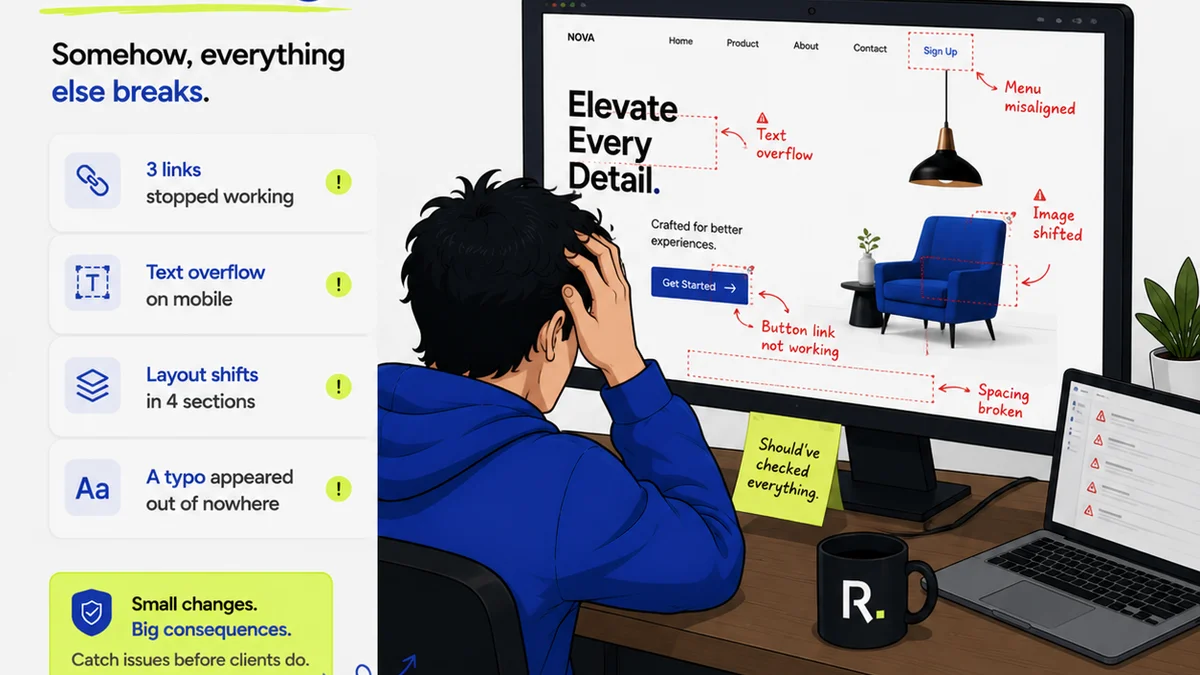
Creative operations technology can automate many of these checks. It can flag potential issues *before* they reach the client, saving time and preventing embarrassing errors.
This structured approach to QA ensures that only polished, compliant, and accurate work leaves your team.
5. Where Revue Fits In
The complexity of creative operations often leads teams to seek a centralized solution. They need a platform that understands the nuances of creative feedback and revision management.
This is where Revue shines. We’re built to address the core challenges of creative workflow management, not to be a generic task tracker.
Revue provides:
- Centralized Client Feedback: A single source of truth for all client comments, directly on the creative assets. Eliminate email chaos and version confusion.
- Clear Revision Visibility: Track every iteration, every comment, and every approval status. Understand the project's history at a glance.
- Streamlined Approval Processes: Define clear approval stages and get timely sign-offs, reducing project delays.
- Built-in Quality Checks: Ensure that all feedback is addressed and that assets meet project requirements before final delivery.
We focus on the critical path of creative delivery: getting feedback, making revisions, and getting approvals efficiently and accurately. By simplifying these complex interactions, Revue frees up your team to focus on what they do best: creating great work.
Final Thought
Creative operations technology isn't about replacing creativity with process. It's about enabling more creativity by removing the friction that holds teams back.
The tools you choose should empower your team, not burden them. They should clarify complexity, not add to it.
Are you using technology to truly enhance your creative output, or are you just adding another layer of digital noise?
Frequently asked questions
What is the main goal of creative operations technology?
The primary goal is to streamline workflows, improve efficiency, and enhance the quality of creative output by managing feedback, revisions, and approvals effectively. It's about enabling better creative work by removing operational friction.
Why isn't a single 'all-in-one' tool always the best solution?
No single tool excels at every aspect of creative operations. A connected ecosystem of specialized tools, chosen for their strengths and integrated effectively, often provides more power, flexibility, and better results than a jack-of-all-trades solution.
How can technology improve client feedback management?
Technology can centralize feedback, allow for visual annotations directly on assets, track versions, manage feedback status, and assign accountability. This moves feedback from scattered emails to an actionable, organized system.
What role does technology play in the revision and approval process?
Technology provides visibility into workflow stages, automates reminders, sets clear expectations, and tracks progress. This reduces project delays, prevents scope creep, and ensures a smoother path to final approval.
Can technology help with creative quality assurance (QA)?
Yes, technology can automate many QA checks, such as brand compliance, technical specification verification, and accessibility standards. It helps catch potential errors before work is delivered, reducing costly mistakes.