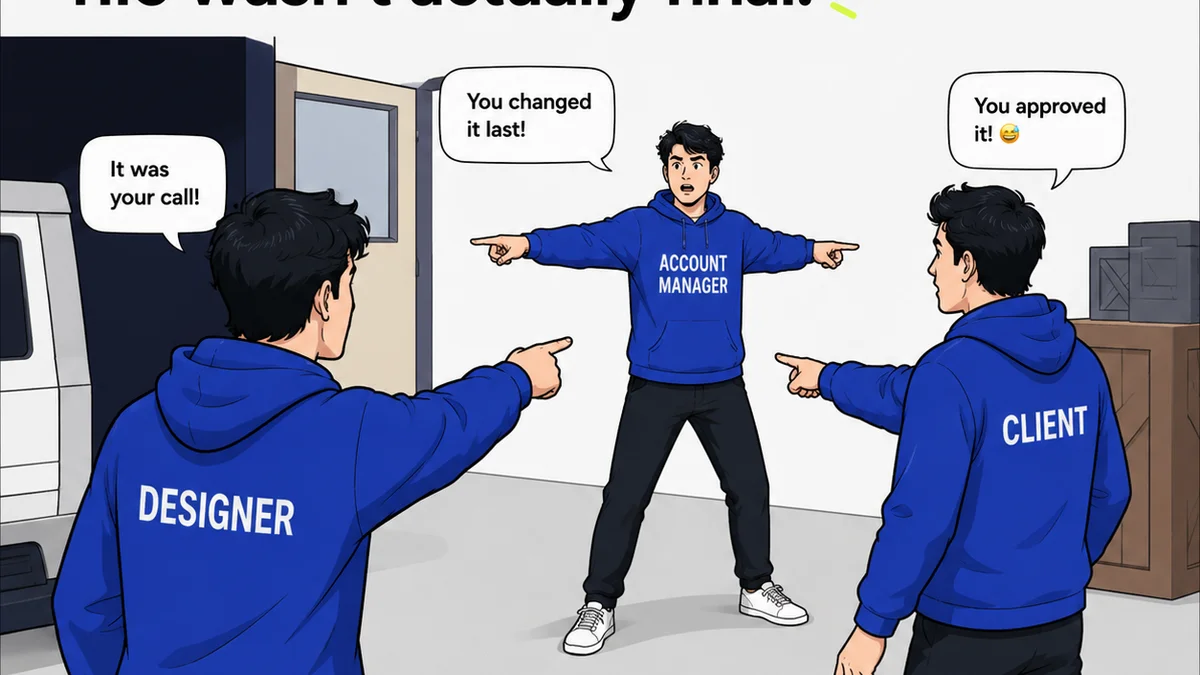
Everyone talks about the creative spark. The muse. The breakthrough idea. It’s where the magic happens, right?
None of that is wrong. But it’s incomplete.
The hard truth is that the most successful creative agencies and in-house teams don’t just *have* great ideas. They have systems to reliably *execute* them, again and again.
This is about creative process management. Not just the brainstorming, but the entire journey from brief to final delivery. It’s about turning brilliant concepts into polished, approved assets without the usual chaos.
1. Define Your Workflow, Not Just Your Process
Your creative process is the sequence of steps your team takes to develop and produce work. Your workflow is how you actually *do* that, day-to-day. They sound similar, but the distinction is critical.
A process might be: Brief -> Concept -> Design -> Feedback -> Revision -> Approval -> Delivery. That’s a roadmap.
Your workflow is the traffic management system on that road. It’s about who does what, when, and with what tools. It’s about dependencies, handoffs, and communication.
Common Workflow Bottlenecks
- Unclear roles and responsibilities during feedback rounds.
- Delayed approvals because the right person isn't available or informed.
- Designs getting lost or outdated versions being worked on.
- Lack of a clear quality assurance gate before final delivery.
Without a well-defined workflow, your shiny process document is just wishful thinking. You need to map the actual movement of work and information.
2. Standardize Your Briefing Process
Garbage in, garbage out. It’s an old adage, but it’s never been truer in creative production.
A weak brief is the root cause of countless revisions, missed deadlines, and frustrated clients. It’s not just about gathering information; it’s about gathering the *right* information, in a structured way.
Key Elements of a Strong Creative Brief
- Clear project objectives and desired outcomes.
- Target audience definition.
- Key messaging and calls to action.
- Mandatory brand guidelines and technical specifications.
- Deliverables and their specific requirements.
- Budget and timeline constraints.
- Stakeholder list and approval hierarchy.
This isn’t just a form to fill out. It’s a foundational agreement. Make it a mandatory first step for every project, big or small.
3. Implement Structured Feedback Loops
Feedback is essential. But unstructured feedback is a project killer.
Think about it: random emails, Slack messages, verbal comments, scribbles on a PDF. It’s a mess. It’s impossible to track, prioritize, or even understand.
Effective Feedback Practices
- Designate a single point person for collecting and consolidating feedback.
- Set clear deadlines for feedback submission.
- Require feedback to be specific and actionable, referencing project goals.
- Use a centralized platform where comments are attached directly to the asset.
- Distinguish between subjective aesthetic preferences and objective critiques.
This structured approach makes feedback manageable and ensures it’s constructive, not just noise.
4. Manage Revisions with Clarity
Revisions are part of the creative process. But
Frequently asked questions
What is the difference between a creative process and a creative workflow?
A creative process is the conceptual sequence of steps for developing creative work (e.g., ideation, design, refinement). A creative workflow is the practical, day-to-day execution of that process, detailing who does what, when, and with what tools, including handoffs and communication.
Why is a structured creative brief so important?
A structured brief ensures everyone starts with the same clear understanding of project goals, audience, deliverables, and constraints. This minimizes ambiguity, reduces misinterpretations, and leads to fewer off-target revisions, saving time and resources.
How can I make client feedback more constructive?
Establish clear feedback guidelines: designate a single contact, set deadlines, require specific and actionable comments tied to project goals, and use a centralized tool for feedback. Differentiate between subjective opinions and objective critiques.
What are the benefits of centralizing creative feedback?
Centralizing feedback consolidates all comments in one place, providing a clear audit trail, preventing miscommunication, making it easier to prioritize revisions, and ensuring all stakeholders are working from the same version of feedback. This drastically reduces confusion and accelerates approvals.