Everyone talks about optimizing the creative process. They’ll tell you it’s about inspiration, collaboration, and killer final assets. None of that is wrong. But it’s incomplete.
The hard truth? A smooth creative process isn't magic; it’s rigorous management. It’s about predictable workflows, clear communication, and ironclad accountability. Without these, even the most brilliant ideas crumble under the weight of disorganization.
This checklist isn't about reinventing the wheel. It’s about ensuring you’re building on a solid foundation. Let’s look at the critical checkpoints for effective creative process management.
1. Project Kickoff: Setting the Stage for Success
This is where most projects either soar or sink. A sloppy kickoff guarantees a bumpy ride.
Defining Scope and Objectives
What are we *actually* building? What problem does it solve? Who is it for?
- Clear, documented project brief
- Defined deliverables and their acceptance criteria
- SMART goals (Specific, Measurable, Achievable, Relevant, Time-bound)
- Stakeholder identification and roles
Budget and Timeline Realities
Dreams are free. Execution costs money and time.
- Realistic budget allocation for each phase
- Detailed project timeline with key milestones
- Buffer time for unforeseen issues
- Contingency planning for scope creep
Resource Allocation
Who’s doing what? Do they have the bandwidth?
- Team member assignments based on skills
- Confirmation of availability and workload capacity
- Identification of external dependencies (freelancers, vendors)
2. Briefing and Ideation: Clarity Over Chaos
A vague brief breeds vague work. This is non-negotiable.
The Power of a Great Brief
Your brief is the North Star. If it’s fuzzy, the team will drift.
- Comprehensive client input captured accurately
- Target audience defined with psychographics and demographics
- Key messaging and brand guidelines integrated
- Competitor landscape analysis included
- Mandatories and constraints clearly stated
Structured Ideation Sessions
Brainstorming shouldn't be a free-for-all. It needs direction.
- Defined objectives for each ideation session
- Diverse group participation
- Techniques for idea generation (e.g., mind mapping, SCAMPER)
- Mechanism for capturing and organizing ideas
- Criteria for evaluating and selecting concepts
3. Design and Development: The Iterative Grind
This is the longest phase, and where most communication breakdowns happen. It requires constant vigilance.
Version Control and Asset Management
Losing track of the latest file is a classic agency killer.
- Consistent file naming conventions
- Centralized storage for all project assets
- Clear versioning system (e.g., v1.0, v1.1, v2.0)
- Access controls to prevent accidental edits
Feedback Loops: Structured, Not Spontaneous
Unstructured feedback is noise. Structured feedback is actionable insight.
- Designated point person for feedback consolidation
- Clear deadlines for feedback submission
- Specific channels for feedback (avoiding scattered emails/chats)
- Tools for annotation and comment tracking
- Process for clarifying ambiguous feedback
Revision Management
Every revision should move the project forward, not sideways.
- Tracking of all requested revisions
- Assessment of impact on scope, budget, and timeline
- Client sign-off on each major revision stage
- Confirmation that revisions address the original brief
4. Review and Approval: The Gates of Go/No-Go
This is the moment of truth. Are we ready to launch?
Internal Quality Assurance (QA)
Don't let the client be the first to spot the typos.
- Checklist for brand consistency
- Verification against technical specifications (e.g., file formats, dimensions)
- Proofreading for copy and content accuracy
- Testing of interactive elements (if applicable)
- Cross-device and cross-browser testing (for digital assets)
Client Review Process
Make this stage efficient and objective.
- Clear presentation of final or near-final work
- Defined review period with strict deadlines
- System for capturing final approval or rejection
- Documentation of any final, minor tweaks
Final Asset Handoff
The culmination. Ensure everything is in order.
- All final, approved assets organized and packaged
- Delivery via agreed-upon method
- Confirmation of receipt by the client
- Archiving of project files and documentation
5. Post-Project: Learning and Improvement
The project might be over, but the learning never stops.
Project Retrospective
What went well? What didn't? How can we do better next time?
- Team debrief on process and outcomes
- Client feedback on the project experience
- Identification of lessons learned
- Actionable insights for future projects
Knowledge Management
Don't let valuable lessons disappear into the ether.
- Documenting best practices and templates
- Updating process documentation based on retrospectives
- Sharing insights across teams
Where Revue Fits In
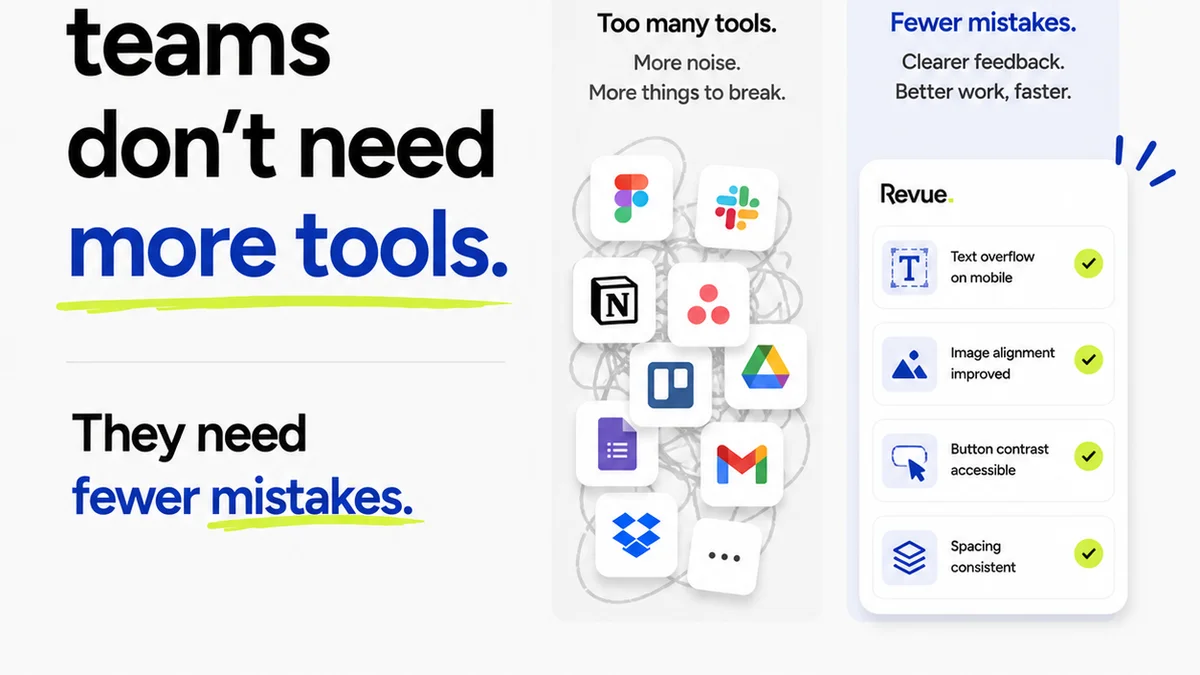
Managing creative workflows effectively requires visibility and control. Scattered feedback, unclear revision histories, and last-minute approval bottlenecks kill efficiency.
Revue is built to address these exact pain points. It centralizes client feedback, making it easy to track comments, manage revisions, and get clear approvals. You gain a single source of truth for every project, drastically reducing miscommunication and speeding up delivery.
No more digging through endless email threads or Slack messages. Revue provides a clear, visual timeline of feedback and revisions, ensuring everyone is on the same page. This structured approach directly supports the critical steps outlined in this checklist, from briefing clarity to final approval.
Final Thought
Is your creative process a well-oiled machine, or a collection of hopeful hacks? A robust creative process management checklist isn't about bureaucracy; it's about building a repeatable system that allows creativity to flourish, not flounder. It’s the difference between reacting to chaos and proactively steering towards excellence.
Frequently asked questions
What is the most crucial stage of creative process management?
While every stage is important, the project kickoff is arguably the most crucial. A clear, well-defined kickoff sets the foundation for the entire project, ensuring all stakeholders are aligned on objectives, scope, budget, and timelines. Poor kickoff management often leads to significant problems later in the process.
How can I ensure client feedback is actionable?
Actionable feedback comes from structure. Ensure clients provide feedback within defined channels and by specific deadlines. Encourage them to be specific, referencing the brief and objectives. For complex feedback, schedule a brief call to clarify any ambiguities. Centralized platforms like Revue help consolidate and organize feedback, making it easier to act upon.
What's the difference between review and approval?
Review is the process where stakeholders examine the work to provide feedback or identify issues. Approval is the formal sign-off that the work meets the project requirements and is ready to proceed or be delivered. Approval typically happens after the review and revision cycles are complete.
How often should I update my creative process management checklist?
Your checklist should be a living document. Update it after every project, especially after conducting a retrospective. Incorporate lessons learned, new tools, or changes in team structure or client needs. Aim for a review and potential update quarterly or bi-annually, or whenever a significant process issue arises.