Everyone talks about creative productivity. They sell you on time-blocking, deep work, and the mythical “flow state.”
None of that is wrong. But it’s incomplete. It often misses the messy reality of agency life.
The hard truth? Creative productivity isn’t about waiting for lightning to strike. It’s about building a system that captures sparks, fuels them, and delivers consistently.
1. Ditch the 'Inspiration' Myth
The romantic notion of the solitary artist waiting for divine inspiration is a killer. It’s an excuse for procrastination disguised as artistic temperament.
Creativity is a muscle. It needs regular, structured exercise, not just occasional bursts.
Agencies can’t afford to wait for a single genius to have a breakthrough. You need a process that allows multiple people to contribute, build on ideas, and iterate efficiently.
The Real Engine: Process, Not Personality
Your team’s ability to produce great work, on time and on budget, depends on a robust creative workflow. This means defining:
- Clear briefs and objectives.
- Defined roles and responsibilities.
- Standardized feedback loops.
- Reliable revision tracking.
- Streamlined approval gates.
When these elements are in place, the team doesn't wait for inspiration; they build momentum. Ideas emerge from structured collaboration, not from a single eureka moment.
2. Embrace Structured Chaos: The Power of Briefs
A brilliant idea without a clear brief is a ship without a rudder. It might look good, but it’s not going anywhere useful.
The brief is your creative compass. It defines the problem, the audience, the goals, and the constraints. Without it, you’re just guessing.
Too many agencies treat briefs as an afterthought. A quick email, a hastily scribbled note. This is where productivity goes to die.
What Makes a Powerful Creative Brief?
- The Why: What problem are we solving? What is the business objective?
- The Who: Who is the target audience? What do they care about?
- The What: What is the core message or deliverable? What are the key features/benefits?
- The How: What is the desired tone and style? What are the mandatory elements?
- The Where: What are the distribution channels? What are the technical specifications?
- The When: What are the key milestones and deadlines?
A well-defined brief sets clear expectations and provides a benchmark for success. It minimizes subjective interpretation later in the process.
3. Feedback Loops: The Art of Constructive Criticism
Feedback is the lifeblood of creative work. But bad feedback kills projects.
Generic comments like “I don’t like it” or “Make it pop more” are useless. They don’t guide the creative team; they just frustrate them.
Effective feedback is specific, actionable, and tied back to the brief.
Turning Feedback into Fuel, Not Fire
Here’s how to make feedback productive:
- Be Specific: Instead of “Needs more energy,” try “The headline could be more active, perhaps using a stronger verb like ‘Ignite’ instead of ‘Start’.”
- Be Actionable: Does the feedback suggest a concrete change or a direction for exploration?
- Be Objective: Ground feedback in the project goals, not personal preference. “This color palette doesn’t align with the target audience’s perceived value of luxury” is better than “I hate blue.”
- Be Timely: Deliver feedback promptly to avoid delaying subsequent stages.
- Be Consolidated: Avoid conflicting feedback from multiple sources. A single point of contact for consolidated feedback is ideal.
When feedback is clear and constructive, it accelerates iteration, leading to better outcomes faster.
4. Revision Management: Tracking Progress, Not Problems
Revisions are inevitable. Poor revision management is a choice.
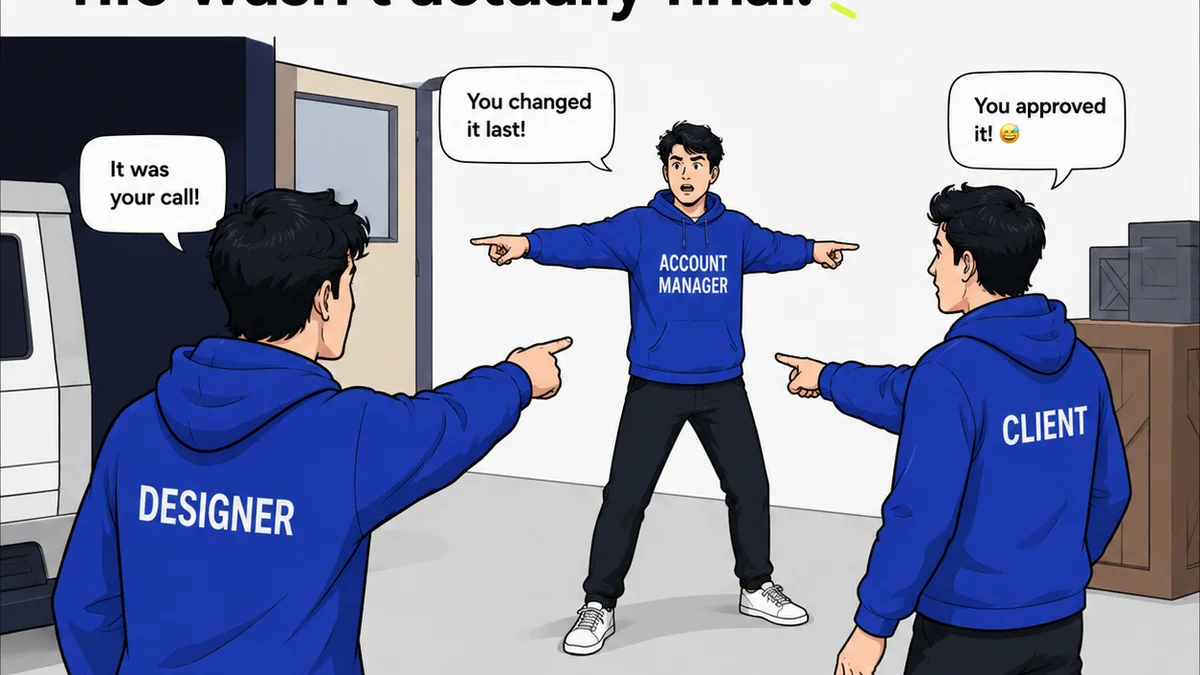
Scattered files, endless email chains, and confusion over which version is final waste hours and breed errors.
This isn't just inefficient; it's demoralizing. Creative teams can spend more time tracking down approvals than actually creating.
The Cost of Version Chaos
- Lost time searching for correct files.
- Duplicated effort on outdated versions.
- Missed deadlines due to unclear approval status.
- Increased risk of errors and inconsistencies.
- Team burnout from constant confusion.
A clear system for managing revisions ensures that everyone is working from the same, up-to-date asset. It provides a transparent history of changes and approvals.
5. Where Revue Fits In
Managing creative projects involves juggling many moving parts: client communication, asset versions, feedback, and approvals. Trying to keep this organized across emails, chat apps, and shared drives is a recipe for disaster.
This is where a centralized platform like Revue becomes essential for creative productivity.
Revue provides a single source of truth for your creative work. It streamlines the entire feedback and approval process:
- Centralized Feedback: All client comments and team notes live on the asset itself, eliminating scattered emails and chat messages. Stakeholders can comment directly on specific parts of an image, video, or document.
- Revision Visibility: Track every version and revision history easily. See who approved what and when, providing an audit trail and clarity on the project's evolution.
- Streamlined Approvals: Clearly define approval stages and get explicit sign-offs, reducing ambiguity and speeding up the go-live process.
- Quality Checks: Ensure that all feedback has been addressed and that the final output meets all project requirements before delivery.
By bringing order to the chaos of creative review, Revue helps teams move faster, reduce errors, and deliver better work with less friction.
6. Cultivating a Productive Environment
Productivity isn’t just about tools; it’s about culture.
An environment that fosters trust, clear communication, and psychological safety is crucial.
When team members feel safe to share ideas, admit mistakes, and give honest feedback, creativity flourishes.
Elements of a Productive Creative Culture
- Open Communication: Encourage honest dialogue and active listening.
- Clear Expectations: Ensure everyone understands project goals and their role.
- Autonomy and Trust: Empower individuals and teams to make decisions.
- Learning from Failure: Frame mistakes as learning opportunities, not personal failings.
- Recognition: Acknowledge effort and celebrate successes.
A supportive culture amplifies the effectiveness of any process or tool you implement.
Final Thought
The pursuit of creative productivity often gets bogged down in chasing the next hack or tool. But the real gains come from understanding and optimizing your team’s actual workflow.
Are you building a system that supports consistent, high-quality creative output, or are you still waiting for the muse to show up?
Frequently asked questions
What's the biggest mistake agencies make regarding creative productivity?
The biggest mistake is relying on sporadic inspiration rather than building a structured, repeatable workflow. This leads to inconsistent output and missed deadlines.
How can a creative brief improve productivity?
A clear, detailed brief acts as a roadmap, ensuring everyone understands the project's goals, audience, and constraints from the outset. This minimizes misunderstandings and rework later.
What makes feedback 'productive' in a creative context?
Productive feedback is specific, actionable, and tied to project objectives. It provides clear direction for improvement rather than vague personal opinions.
How does managing revisions impact a team's output?
Ineffective revision management leads to confusion, duplicated effort, and missed deadlines. A clear system for tracking versions and approvals streamlines the process and reduces errors.
Can a tool truly improve creative productivity?
Tools like Revue can significantly improve productivity by centralizing feedback, streamlining approvals, and providing version control. However, they work best when integrated into a well-defined process and a supportive team culture.