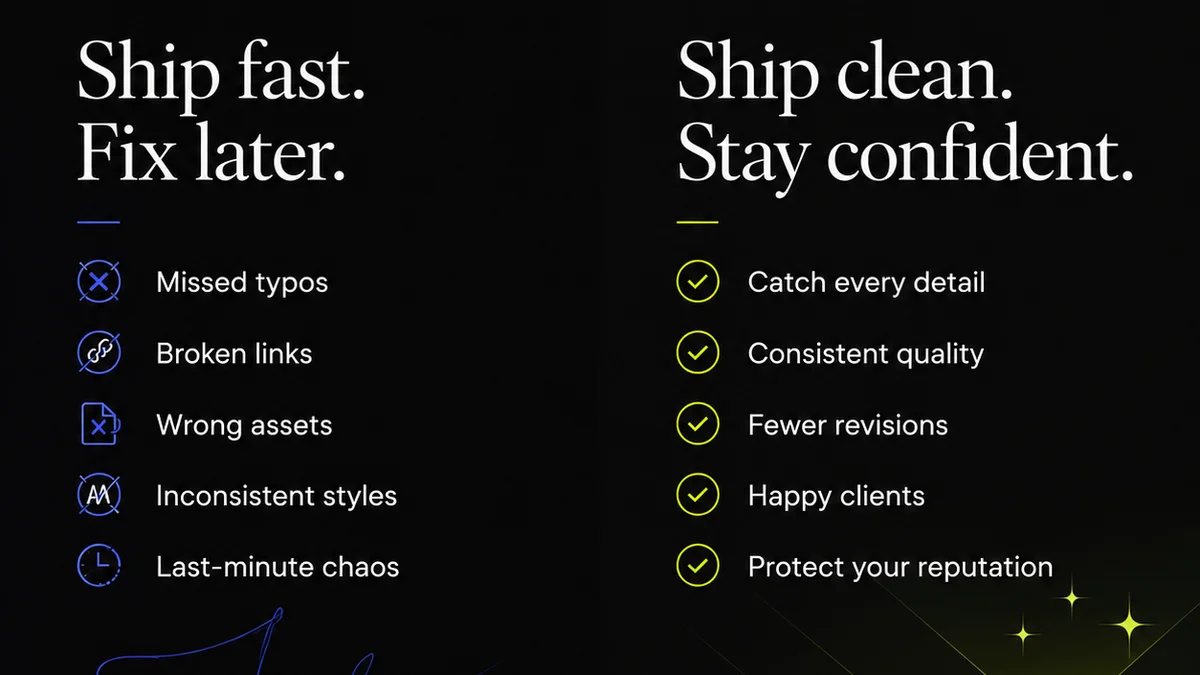
Everyone talks about creative productivity. It’s the buzzword du jour, the holy grail of agency life. You hear it in meetings, see it in articles, and feel the pressure to ‘be more productive.’
None of that is wrong. But it’s incomplete. It focuses on the *what* – more output – and misses the *why* and the *how*.
The hard truth? True creative productivity isn't about churning out more work. It's about enabling your team to do their best work, efficiently and sustainably, leading to better outcomes for clients and the agency.
1. The Myth of Constant Output
The assumption is that more creative work equals more success. More designs, more copy, more campaigns. This linear thinking is a trap.
It leads to burnout. It leads to rushed decisions. It leads to work that’s merely *done*, not *great*.
Real productivity is about quality, not just quantity. It's about the impact of the work, not just the volume.
The Cost of Overwork
When teams are pushed to produce constantly, the following suffers:
- Strategic thinking: No time to explore, to question, to connect dots.
- Client collaboration: Feedback loops become transactional, not strategic.
- Innovation: The spark of true creativity gets extinguished by deadlines.
- Team morale: Burnout is a productivity killer, plain and simple.
This isn't sustainable. It’s a race to the bottom.
2. Understanding Creative Bottlenecks
Where does work actually get stuck? It's rarely a lack of talent or effort. It's usually a systemic issue.
Think about your typical project. Where are the delays? Where is the back-and-forth that goes nowhere?
Common Bottlenecks in Creative Workflow
- Unclear briefs: Starting without a solid foundation.
- Ambiguous feedback:
Frequently asked questions
What is the difference between creative output and creative productivity?
Creative output is the sheer volume of work produced. Creative productivity is the efficiency and effectiveness with which high-quality, impactful work is created, often involving strategic thinking and sustainable practices rather than just high volume.
How can agencies avoid creative burnout?
Prioritize clear briefs, streamline feedback processes, set realistic deadlines, and foster a culture that values strategic thinking and well-being over constant output. Implementing tools for better workflow management is also key.
What are the signs of a bottleneck in a creative workflow?
Signs include prolonged review cycles, excessive back-and-forth on minor revisions, unclear feedback leading to rework, and team members feeling overwhelmed or constantly waiting for input from others.
How does client feedback impact creative productivity?
Unclear, ambiguous, or conflicting client feedback is a major productivity drain. Streamlining feedback collection and ensuring clarity through a centralized system reduces rework and speeds up approvals.