Everyone talks about tracking billable hours. It’s the default metric for creative agencies, the easy number to pull. But if you think billable hours directly equate to creative profitability, you’re missing the real story. None of that is wrong. But it’s incomplete.
The hard truth? Profitability isn’t just about how much time you log; it’s about how effectively that time translates into *value* for your clients and *revenue* for your agency. Focusing solely on hours masks inefficiencies, scope creep, and missed opportunities.
Let’s cut through the noise and talk about the metrics and tools that actually reveal your creative agency’s true financial health.
1. Beyond Billable Hours: The Real Profitability Indicators
Billable hours are a *component* of profitability, not the sole determinant. Think of it like this: you can have a lot of hours logged, but if those hours are spent on low-value tasks, rework, or client communication that goes nowhere, your profitability tanks.
True profitability metrics look at the *outcome* of those hours. They measure:
- Client satisfaction and repeat business.
- The efficiency of your production process.
- The actual margin on projects, not just revenue.
- The lifetime value of a client relationship.
These are the numbers that tell you if your agency is actually *thriving*, not just busy.
Understanding Project Margin
This is fundamental. Project margin is the revenue generated from a project minus the direct costs associated with delivering it. Direct costs include:
- Salaries and benefits of team members directly working on the project.
- Software licenses used exclusively for that project.
- External vendor costs.
- Specific production expenses.
A healthy project margin means you’re not just covering your costs; you’re building profit that can be reinvested in your business.
Client Lifetime Value (CLV)
This metric looks beyond individual projects. CLV estimates the total revenue a client is expected to generate for your agency over the entire duration of their relationship. High CLV indicates strong client retention and satisfaction, which are powerful indicators of sustainable profitability.
Agencies with high CLV typically have robust processes for client management and deliver consistent, high-quality work that keeps clients coming back.
Resource Utilization vs. Realization
Utilization is the percentage of a team member’s available time that is spent on billable or directly productive work. Realization is the percentage of the *budgeted* or *estimated* hours for a project that were actually used.
High utilization is good, but if realization is poor (meaning projects consistently go over budget on hours), you might be busy but not profitable. Conversely, low utilization can signal understaffing or poor project allocation.
2. Essential Metrics for Creative Agencies
To get a clear picture of your agency’s financial performance, you need to track specific, actionable metrics. These go beyond simple time tracking.
Gross Profit Margin
This is the profit remaining after deducting the cost of goods sold (COGS) or, in agency terms, the direct costs of delivering services. It’s calculated as:
(Total Revenue - Cost of Goods Sold) / Total Revenue * 100%
For agencies, COGS primarily includes direct labor costs (salaries, benefits for those working on projects) and direct project expenses.
Net Profit Margin
This is the ultimate measure of profitability. It’s calculated after all expenses, including overhead (rent, utilities, administrative salaries, marketing), have been deducted from revenue.
(Net Income / Total Revenue) * 100%
A healthy net profit margin ensures your agency can sustain itself, grow, and weather economic downturns.
Client Acquisition Cost (CAC)
How much does it cost to land a new client? This includes marketing, sales salaries, software, and any other expenses related to acquiring new business. A high CAC can quickly erode profitability, especially if client lifetime value is low.
(Total Sales & Marketing Costs) / Number of New Clients Acquired
Revenue Per Employee
This simple metric helps you understand the productivity and efficiency of your team. It’s a good indicator of how well your agency is leveraging its human capital.
Total Revenue / Number of Employees
On-Time Delivery Rate
While not a direct financial metric, consistently missing deadlines leads to client dissatisfaction, rework, and potential loss of future business. This impacts profitability indirectly but significantly.
3. Tools to Track Creative Profitability
You can’t manage what you don’t measure. Fortunately, there are tools designed to give you visibility into these critical metrics. The key is integration – bringing financial data, project management, and client communication together.
Project Management Software with Financial Tracking
Tools like Asana, Monday.com, or Wrike can track project progress and time, but many lack deep financial integration. You need software that can tie time logged directly to project budgets and client billing.
Look for platforms that offer:
- Budget vs. Actual tracking.
- Resource allocation and capacity planning.
- Invoicing and expense tracking.
- Integration with accounting software.
Accounting Software
This is non-negotiable. QuickBooks, Xero, and Sage are standard for a reason. They track your income, expenses, payroll, and generate essential financial reports like profit and loss statements and balance sheets.
The crucial step is ensuring your project management data flows accurately into your accounting system. This often requires manual input or integration bridges.
Dedicated Agency Management Software
These platforms are built specifically for creative agencies and often combine project management, time tracking, client management, and financial reporting into a single ecosystem. Examples include:
- FinancialForce: Integrates with Salesforce, offering robust PSA (Professional Services Automation) capabilities.
- Workamajig: A comprehensive solution for project management, accounting, and resource planning.
- Function Point: Focuses on project management, time tracking, and financial visibility for agencies.
These tools aim to reduce the need for multiple disparate systems and manual data reconciliation, which is a major source of errors and lost time.
CRM Systems
Customer Relationship Management (CRM) systems like HubSpot, Salesforce, or Zoho CRM are vital for tracking client interactions, sales pipelines, and ultimately, client lifetime value. Connecting your CRM to project and financial data gives you a 360-degree view of client profitability.
Business Intelligence (BI) Tools
For more advanced agencies, BI tools like Tableau, Power BI, or even advanced features within some agency management platforms can create custom dashboards. These allow you to visualize trends, identify outliers, and gain deeper insights into your profitability drivers.
4. Where Revue Fits In
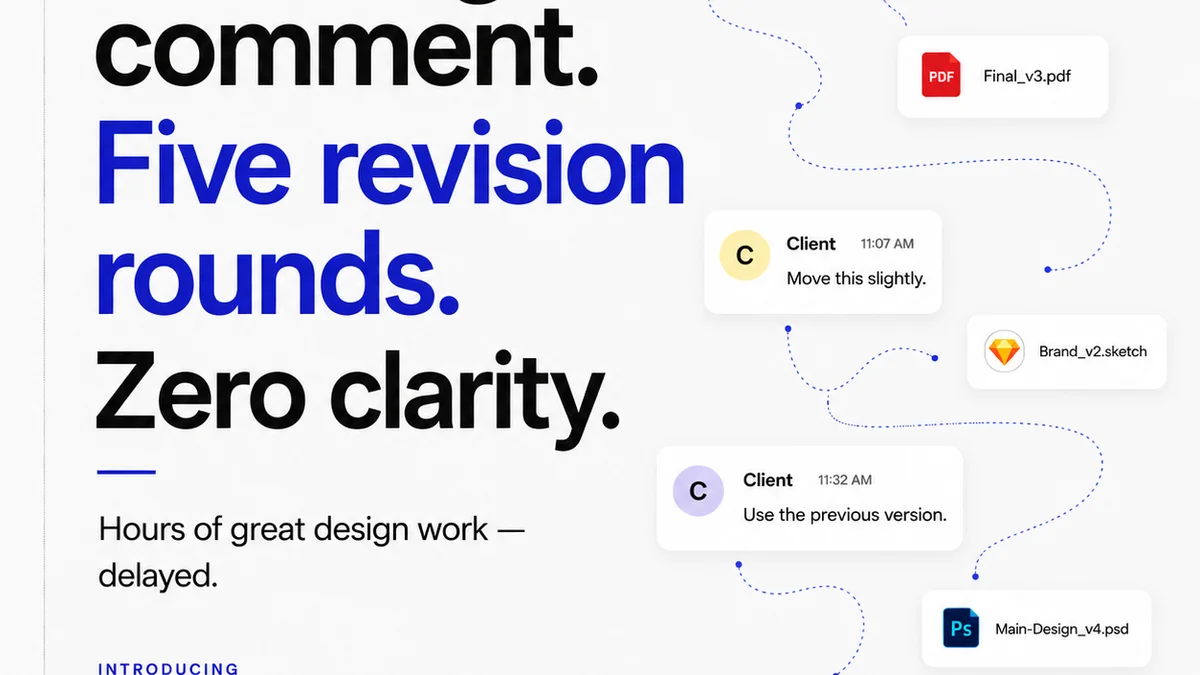
Managing creative projects involves a complex dance between client expectations, team execution, and financial realities. Disconnected feedback, endless revision cycles, and unclear approval chains are silent profit killers.
This is where a centralized feedback and approval platform like Revue becomes essential for profitability.
Centralized Client Feedback
When feedback is scattered across emails, Slack messages, and random documents, it’s easy to miss crucial details or misinterpret instructions. This leads to rework, wasted hours, and frustration – all direct hits to your project margin.
Revue consolidates all client comments and approvals in one place, directly on the creative asset. This clarity means your team spends less time searching for feedback and more time executing it correctly the first time.
Streamlined Revisions and Approvals
Manual approval processes are slow and prone to error. Waiting for sign-offs, chasing stakeholders, and managing version control manually drains valuable billable time. It also creates a bottleneck that delays project completion and invoicing.
Revue provides a clear, auditable trail of revisions and approvals. Stakeholders can provide feedback and sign off directly, drastically reducing turnaround times and ensuring everyone is working from the latest approved version. This speed directly impacts your realization rates and speeds up your cash flow.
Enhanced Quality Control
Before a project goes live or is delivered, ensuring it meets all requirements and quality standards is critical. Rushing through quality checks or missing small but significant errors can lead to costly client complaints, mandatory fixes post-delivery, or damage to your agency’s reputation – all impacting long-term profitability.
Revue’s structured review process helps teams conduct thorough quality checks, ensuring that what’s delivered is accurate, complete, and meets client expectations from the outset. This proactive approach minimizes post-delivery issues and protects your margins.
By bringing structure and transparency to the feedback and approval loop, Revue helps your agency reduce wasted time, minimize costly errors, and improve client satisfaction – all contributing to a healthier bottom line.
5. The Human Element: Culture and Profitability
Tools are only as good as the people using them. Even the best profitability metrics and software won't magically fix underlying issues if your agency culture isn't aligned.
Transparency and Communication
Are your team members aware of project budgets and profitability goals? When teams understand the financial implications of scope creep or inefficient workflows, they become more invested in finding solutions. Open communication about project health fosters a shared sense of responsibility.
Continuous Improvement
Profitability isn't a one-time fix; it's an ongoing process. Regularly review your metrics. What worked last quarter might not work this quarter. Encourage your team to identify bottlenecks and suggest process improvements. A culture that embraces learning and adaptation is a profitable one.
Client Collaboration Best Practices
Educate your clients on your process. Clearly define scope, communication channels, and the revision process. When clients understand and respect your workflow, it reduces friction and helps keep projects on track financially.
This involves setting expectations early and often. A well-managed client relationship is a profitable one.
Final Thought
Are you measuring what truly matters for your creative agency’s success? Billable hours are a starting point, but they’re a poor destination. True creative profitability comes from understanding the value you deliver, the efficiency of your operations, and the strength of your client relationships.
By adopting the right metrics, leveraging integrated tools, and fostering a culture of financial awareness, you can move beyond just being busy to being genuinely and sustainably profitable.
Frequently asked questions
What are the most important profitability metrics for a creative agency?
Key metrics include Gross Profit Margin, Net Profit Margin, Client Lifetime Value (CLV), Client Acquisition Cost (CAC), and Revenue Per Employee. These go beyond simple billable hours to reveal true financial health.
How does tracking billable hours differ from tracking profitability?
Billable hours track the time spent on client work, which is an input. Profitability measures the financial outcome of that time, considering revenue, direct costs, overhead, and client value. High billable hours don't guarantee high profitability if the work is inefficient or low-value.
What kind of tools are best for tracking creative agency profitability?
Integrated solutions are best. This includes project management software with financial tracking, robust accounting software, dedicated agency management platforms (PSAs), and CRM systems. The goal is to connect project execution data with financial outcomes.
Can software like Revue directly improve creative agency profitability?
Yes, by centralizing feedback, streamlining revisions, and providing clear approval trails, Revue reduces wasted time, minimizes costly rework, and speeds up project completion and invoicing. This directly protects project margins and improves operational efficiency.