Everyone thinks creative project management is about tasks. Gantt charts, deadlines, who’s doing what. That’s not wrong. But it’s incomplete.
The hard truth? Effective creative project management is less about tracking tasks and more about orchestrating a complex dance between creativity, client expectations, and operational reality. It’s about building a system that allows your team to do their best work, consistently.
1. Define Scope Like a Surgical Strike
Scope creep isn't an act of nature; it's a failure of definition. Too often, we start projects with a vague handshake agreement and a prayer.
A robust creative project management checklist demands crystal-clear scope definition upfront. This isn't just about deliverables; it's about understanding the 'why' behind the 'what'.
Understanding the Core Brief
Before a single pixel is designed or a word is written, ensure everyone involved understands:
- The ultimate business objective.
- The target audience and their needs.
- Key performance indicators (KPIs) for success.
- The core problem the creative solution must solve.
Setting Boundaries
A good checklist forces you to define what's *out* of scope as much as what's in. This prevents endless 'can you justs' down the line.
- Specify excluded features or functionalities.
- Clarify what constitutes a 'revision' versus a 'new request'.
- Document assumptions made during scoping.
This upfront rigor saves countless hours and headaches.
2. The Communication Cadence: Less Chat, More Clarity
Agency and in-house creative teams often drown in communication. Slack channels buzz, emails pile up, and meetings proliferate. Is it effective?
Rarely. The real win in communication is clarity, not volume. Your project management checklist should enforce a deliberate communication strategy.
Scheduled Touchpoints
Don't leave communication to chance. Build it into the process.
- Daily stand-ups (keep them short and focused).
- Weekly client status reports (standardized format).
- Regular internal creative reviews.
- Dedicated Q&A sessions for specific deliverables.
Feedback Loops That Work
Client feedback is the lifeblood of creative work, but it can also be a project killer if unmanaged. Your checklist needs to define how feedback is gathered, processed, and acted upon.
- Who is authorized to give feedback?
- What is the expected turnaround time for feedback?
- How will feedback be consolidated and prioritized?
- What is the mechanism for clarifying ambiguous feedback?
This structured approach minimizes misinterpretation and ensures feedback drives progress, not paralysis.
3. Resource Allocation: The Art of the Possible
Talent is finite. Client demands are infinite. Project management is about bridging that gap without burning out your team.
A checklist forces you to confront resource realities head-on. It’s not about assigning tasks; it’s about assigning the *right* tasks to the *right* people at the *right* time, considering their capacity and skillset.
Skill-Based Assignment
Are you assigning the senior designer to a task that a junior could handle? Is your copywriter being asked to do UX writing without the right background?
Your checklist should prompt consideration of:
- Required skills for each task.
- Team member expertise and availability.
- Opportunities for mentorship and skill development within assignments.
Capacity Planning
This is where many creative project management checklists fall short. They list tasks but ignore the human element of workload.
Ensure your process includes:
- Estimating task duration realistically, including buffer time.
- Tracking team member workloads against capacity.
- Identifying potential bottlenecks *before* they occur.
- Having a plan for reallocating resources when needed.
This isn't micromanagement; it's responsible stewardship of your most valuable asset: your people.
4. Quality Assurance: The Gatekeeper of Excellence
It’s easy to get caught up in deadlines and client approvals, letting quality slip through the cracks. A project might be delivered on time and on budget, but if it's not good, it's a failure.
A comprehensive checklist embeds quality assurance at multiple stages, not just as a final check.
Internal Reviews and Critiques
Establish formal internal review stages before client-facing work.
- Peer reviews for design and copy.
- Technical reviews for functionality and performance.
- Brand consistency checks.
Pre-Launch/Pre-Delivery Checks
This is your final line of defense. A standardized checklist ensures nothing critical is missed.
- Proofreading and copyediting.
- Asset verification (correct formats, resolutions, file names).
- Cross-browser/cross-device testing.
- Accessibility checks (WCAG compliance is crucial).
- Final stakeholder sign-off.
This systematic approach protects your agency's reputation and ensures client satisfaction extends beyond the immediate project.
5. Risk Management: Anticipating the Storm
Projects rarely go exactly as planned. Unexpected issues – client delays, technical glitches, team absences – are almost guaranteed.
A good creative project management checklist includes a proactive risk assessment and mitigation plan.
Identifying Potential Pitfalls
Brainstorm potential risks early on. Consider:
- Client-side dependencies (e.g., providing assets, timely approvals).
- Technical challenges (e.g., platform limitations, software bugs).
- Team-related issues (e.g., illness, unexpected departures).
- External factors (e.g., market changes, regulatory shifts).
Developing Contingencies
For each identified risk, outline a potential response.
- What is the backup plan if a key team member is unavailable?
- How will delays in client feedback be handled?
- Who is authorized to make decisions in a crisis?
- What are the communication protocols during unexpected events?
Being prepared transforms potential crises into manageable challenges.
Where Revue Fits In
Managing creative projects effectively is about more than just a checklist; it’s about having the right tools to enforce that checklist.
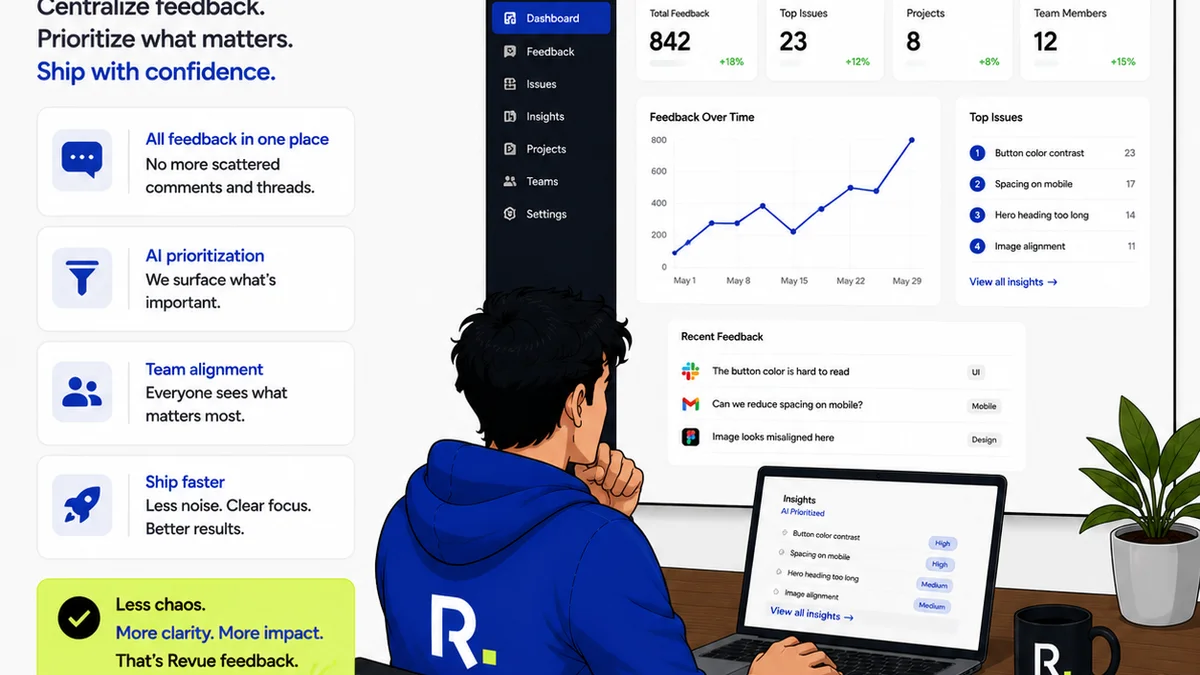
Revue is built for the realities of creative workflows. It centralizes client feedback, making it easy to capture, organize, and act upon. No more hunting through endless email threads or Slack messages for that one crucial comment.
Our platform provides clear visibility into revision and approval stages. Everyone knows where a project stands, reducing confusion and speeding up the process. Automated version control and audit trails ensure accountability and a clear history of changes.
Finally, Revue helps enforce quality checks by providing a structured environment for feedback and approvals, ensuring that creative work meets standards before it’s finalized.
Final Thought
Is your creative project management checklist a rigid set of rules, or a flexible framework designed to empower your team and delight your clients? The difference isn't just semantics; it's the difference between projects that merely get done and projects that truly excel.
Frequently asked questions
What's the difference between a task list and a project management checklist?
A task list simply outlines what needs to be done. A project management checklist, especially for creative work, goes deeper. It defines the processes, communication protocols, quality gates, and risk mitigation strategies that ensure a project is not only completed but completed successfully and efficiently.
How can I prevent scope creep with a checklist?
A robust creative project management checklist includes a detailed scope definition section. This means clearly documenting not only what is included in the project but also what is explicitly excluded, defining what constitutes a revision versus a new request, and getting sign-off on these boundaries before work begins.
How do I ensure client feedback is managed effectively?
Your checklist should define a clear feedback process. This includes specifying who is authorized to provide feedback, setting expected turnaround times, establishing how feedback will be consolidated and prioritized, and outlining a method for clarifying ambiguous comments. Centralizing this, perhaps with a tool like Revue, is key.
Why is quality assurance crucial in creative project management?
Quality assurance is vital because delivering a project on time and budget isn't enough if the creative output is subpar. A checklist embeds QA at multiple stages, from internal reviews and critiques to pre-launch technical and accessibility checks, protecting your agency's reputation and ensuring client satisfaction.