Everyone talks about creative project management. They say you need the right tools, the latest software, maybe a dedicated PM. None of that is wrong. But it’s incomplete.
The hard truth? A truly effective creative project management system isn't about the tools you use. It’s about the underlying process you build. It’s about understanding the chaos of creativity and building guardrails, not roadblocks.
1. Stop Managing Tasks, Start Managing Flow
The default is to think of project management as task management. Assign task A, track task B, chase task C. This works for widgets on an assembly line. It breaks creatives.
Creatives don't work in a straight line. They iterate. They brainstorm. They hit dead ends and backtrack. They need space to think, not just a checklist.
The Illusion of Control
Assigning a task like “Design Logo” is meaningless. What’s the brief? Who’s reviewing it? What’s the deadline for feedback? What’s the final deadline? Without context, the task is just a vague instruction.
This leads to endless clarification emails, missed details, and work that misses the mark. You’re managing the *appearance* of progress, not the actual progress of the creative output.
Focus on Handoffs and Bottlenecks
A better approach is to map your creative workflow. Where does work come in? What are the key stages? Who owns each stage? Most importantly: where are the critical handoffs and where do things typically get stuck?
Think of it like a river. You can’t control every drop of water, but you can understand the riverbed, identify the rapids, and clear the debris that causes blockages. Your project management system should do the same for creative work.
- Identify each distinct phase of your creative process (e.g., Briefing, Concepting, Design, Review, Revision, Finalization).
- Define clear deliverables and acceptance criteria for each phase.
- Map the handoffs between team members and departments.
- Pinpoint common bottlenecks – where does work pile up or get delayed?
2. Define Clear Roles, Not Just Titles
Who is actually responsible for what? This sounds obvious, but in creative teams, it’s often fuzzy.
Is the Creative Director approving the final design, or just providing strategic guidance? Is the Account Manager responsible for gathering client feedback, or just relaying it? Ambiguity kills projects.
The “Everyone’s Responsible” Trap
When everyone is responsible, no one is responsible. This is a common pitfall in agencies and in-house teams alike. You end up with tasks falling through the cracks because no single person felt the ownership.
A clear RACI matrix (Responsible, Accountable, Consulted, Informed) can be overkill for some teams, but the principle is vital. You need to know who is doing the work, who owns the outcome, who needs to weigh in, and who just needs to be kept in the loop.
Empower Ownership at Each Stage
Your system should clarify these roles for every project. Who is the primary point of contact for a specific deliverable? Who has the final say on creative direction? Who manages the budget for a particular phase?
This clarity empowers individuals. It reduces the need for constant status meetings. And it ensures that accountability rests with specific people, not a nebulous group.
3. Centralize Feedback, Not Just Files
File-sharing platforms are great. But they don’t solve the feedback problem. You need a single source of truth for creative input.
Email chains get lost. Slack messages are ephemeral. PDFs with comments are hard to track. This is where most creative projects go off the rails.
The Problem with Scattered Input
Imagine getting feedback on a website design. You have comments from the client in an email, notes from the marketing director in Slack, and a PDF markup from the CEO. How do you reconcile these? Which comment takes precedence?
This fragmentation leads to confusion, duplicated effort, and designs that try to satisfy conflicting requests. It’s a recipe for mediocre outcomes.
Structured Feedback Loops
Your project management system must facilitate structured feedback. This means:
- A single place to view the creative asset and all associated feedback.
- The ability to link feedback directly to specific elements of the design.
- Clear indication of who provided the feedback and when.
- A mechanism to track whether feedback has been addressed or requires further discussion.
- Version control that clearly shows which version is being reviewed and which is the latest approved iteration.
This structured approach ensures that all input is captured, organized, and actionable. It removes the guesswork and allows creatives to focus on making the necessary adjustments.
4. Visibility into Revisions and Approvals
You can’t manage what you can’t see. This is especially true for the revision and approval stages, which are often the most opaque parts of a creative project.
When did the client approve version 3? Who requested that last-minute change? Is this version ready for final sign-off, or is it still in flux?
The Black Box of Revisions
Without clear visibility, revisions can feel like a black box. Work goes in, changes come out, but the process in between is often undocumented and misunderstood.
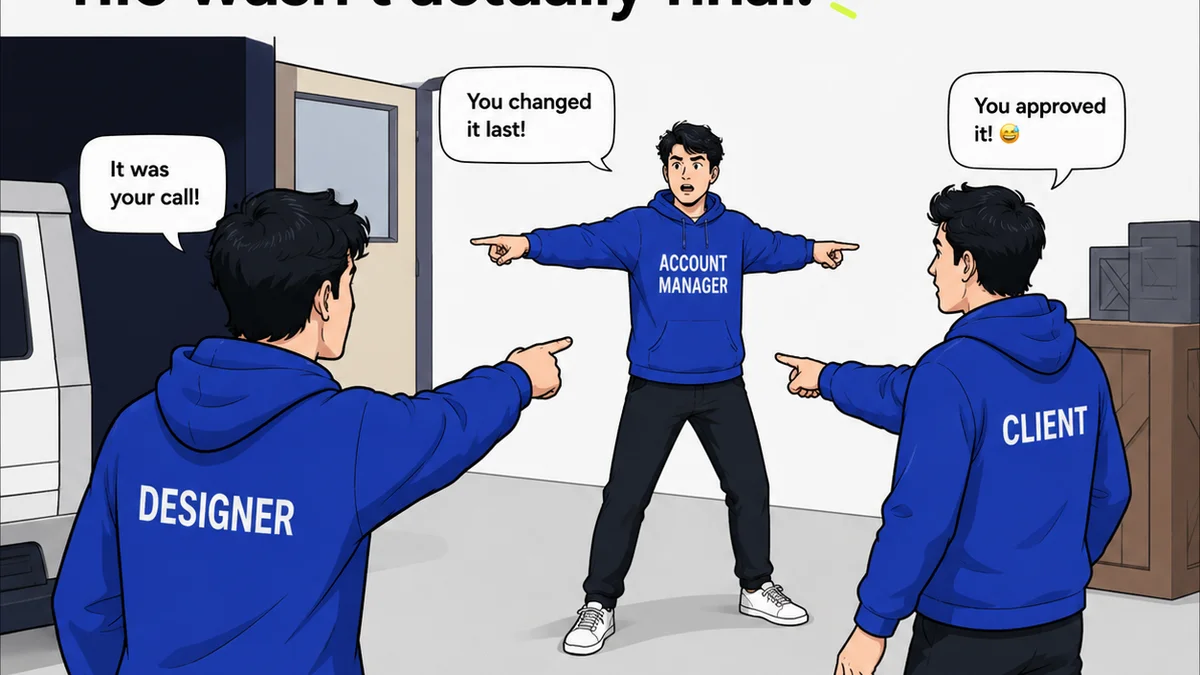
This leads to scope creep, missed deadlines, and frustration on both sides. The client might think they approved something that the agency sees as a draft, or vice versa.
Tracking Every Step
A robust system provides a clear audit trail for every iteration. It shows:
- Which version is currently live or being worked on.
- Who requested changes for each version.
- Who reviewed and approved each version.
- The date and time of each action.
This transparency builds trust and accountability. It ensures everyone is on the same page regarding the project's status and history.
5. Integrate Quality Checks, Don't Bolt Them On
Great creative work isn’t just about aesthetics. It’s about functionality, brand consistency, and meeting objectives. Quality checks are essential, but they’re often an afterthought.
Rushing a final QA pass before launch is a common mistake. It’s like building a beautiful house and then realizing the plumbing doesn’t work.
The Post-Design Panic
Teams often treat QA as a final hurdle rather than an integrated part of the process. This means issues are discovered late, leading to expensive and time-consuming fixes, or worse, launching flawed work.
This reactive approach to quality damages client relationships and the agency’s reputation.
Building Quality In
Your system should bake quality checks into the workflow. This can include:
- Checklists for common requirements (e.g., accessibility standards, brand guidelines adherence, technical specifications).
- Automated checks where possible (e.g., broken link checkers, image optimization).
- Defined review gates at key stages, not just at the end.
- Clear sign-off procedures that confirm quality standards have been met.
By making quality an ongoing consideration, you prevent issues from snowballing and ensure the final output is polished and effective.
Where Revue Fits In
Building a robust creative project management system requires bringing these elements together. You need a central hub that facilitates clear communication, organized feedback, and visible progress.
Revue is designed precisely for this. It provides a structured environment for managing creative assets and client feedback, eliminating the chaos of scattered communication.
With Revue, you can:
- Centralize all feedback: Comments are attached directly to the creative asset, linked to specific elements, and attributed to the reviewer. No more hunting through emails or Slack.
- Streamline revisions: Version control is built-in, showing clear progression and making it easy to track changes and approvals.
- Gain visibility: See exactly who has reviewed what, who needs to provide feedback, and the status of approvals in real-time.
- Ensure quality: By having all feedback and versions in one place, it’s easier to conduct thorough quality checks before final delivery.
Revue helps you move from reactive task management to proactive workflow orchestration. It’s about creating a system where great creative work can thrive.
Final Thought
The most successful creative agencies and teams don’t just manage projects; they manage clarity. They build systems that guide the creative process, protect the work, and ensure predictable, high-quality outcomes.
What’s the single biggest bottleneck in your current creative workflow? And what small change could you implement today to start addressing it?
Frequently asked questions
What's the difference between task management and creative project management?
Task management focuses on individual to-dos, common in linear production. Creative project management emphasizes the overall flow, iteration, and collaboration inherent in creative work, focusing on handoffs, feedback loops, and final output quality.
How can I improve client feedback management?
Centralize feedback on the creative asset itself, link comments to specific elements, clearly attribute feedback, and track its resolution. Avoid scattered input via email, Slack, or disparate documents.
What are the key components of a creative project management system?
A strong system includes clear roles and responsibilities, defined workflow stages, centralized feedback mechanisms, visible revision and approval tracking, and integrated quality checks throughout the process.
How does a project management system help with creative bottlenecks?
By mapping the workflow, a system helps identify where work typically gets stuck. This visibility allows teams to proactively address these bottlenecks, whether through better resource allocation, clearer briefs, or improved communication.